


To master trigger control through dry fire practice, you’ll need to establish a dedicated training space clear of live ammunition and follow strict safety protocols. Start with fundamental drills like the coin balance and wall drill to develop smooth, consistent trigger press mechanics. Focus on maintaining sight alignment while executing a controlled squeeze, and incorporate breath control for enhanced stability. These proven exercises build the essential muscle memory needed for precision marksmanship – but they’re just the beginning of your journey.
Key Takeaways
- Practice the Coin Drill by balancing a coin on your front sight while executing slow, smooth trigger presses.
- Perform Wall Drills against a blank surface to maintain perfect sight alignment throughout trigger press.
- Use the Index Finger Drill to isolate trigger finger movement without disturbing grip or sight picture.
- Execute Controlled Reset Timing drills to master trigger reset while maintaining consistent forward pressure.
- Incorporate laser training cartridges for immediate visual feedback on trigger control technique.
Understanding the Fundamentals of Trigger Control
Mastering trigger control sets you apart as a proficient shooter, serving as the foundation for accurate marksmanship. Your fundamental shooting skills depend heavily on developing a consistent, smooth trigger pull that doesn’t disturb your sight alignment. You’ll need to focus on maintaining steady pressure while managing your breathing rhythm.
During dry fire practice, you’ll want to concentrate on proper trigger finger placement and controlled movement through the entire trigger press and reset cycle. Dry fire drills using tools like DryFireMag help you build muscle memory without the interference of recoil anticipation. Your trigger control skills will improve as you practice maintaining sight picture throughout the firing sequence. Remember, it’s not about speed – it’s about developing a methodical, precise trigger press that you can replicate consistently. Focus on eliminating jerky movements that compromise accuracy.
Essential Dry Fire Safety Protocols
Before initiating any dry fire training session, you must establish and follow strict safety protocols that eliminate the possibility of negligent discharge. Start by designating a specific safe zone for your practice, ensuring it’s free of live ammunition and features a proper backstop. You’ll need to verify your firearm is completely unloaded by conducting a thorough chamber and magazine check.
When working on trigger control skills through dry fire practice, always maintain your firearm pointed at your designated target area. Even during these training sessions, treat your weapon as if it’s loaded. Store all live ammunition in a separate room from your practice area to prevent any possibility of mixing training and live-fire scenarios. These safety protocols aren’t optional – they’re essential steps that protect you while developing your firing skills.
Setting Up Your Training Space
A well-organized training space serves as the foundation for effective dry fire practice. When setting up your area for dry firing, you’ll need to designate a specific zone that’s completely separate from live fire training areas.
Choose a location with a reliable backstop and clear sight lines for trigger pull practice without disturbing the sight picture.
Before each dry fire session, verify it’s safe to handle your firearm by securing all live ammunition in a separate location. You’ll want to establish a consistent visual reference point, such as a marked target on your backstop wall.
Keep your practice area clutter-free and clearly defined to maintain focus during training. By creating dedicated boundaries for your Dry Fire Training space, you’ll develop disciplined habits that translate to improved shooting performance.
Basic Trigger Control Drills

Basic trigger control begins with mastering the fundamentals of press and reset using proven drills like the Coin Drill, which develops your ability to press smoothly without disturbing sight alignment. You’ll want to focus on maintaining consistent pressure through the entire trigger press while keeping the front sight crisp and steady.
The Wall Drill specifically helps you identify and control the trigger’s reset point, allowing you to develop muscle memory for proper trigger manipulation.
Press and Reset Fundamentals
Mastering trigger control forms the foundation of accurate shooting, whether in live fire or dry practice. Before starting any drill, verify your gun is empty and remove all ammunition from the training area.
Begin with the Slow Squeeze Drill to develop smooth trigger presses while maintaining sight alignment. Focus on your front sight as you press the trigger with steady, even pressure.
Next, practice the Index Finger Drill, isolating your trigger finger’s movement from the rest of your grip. Once you’ve mastered these basics, incorporate Trigger Reset Practice to develop quick, controlled resets after the firing pin drops.
The Wall Drill helps refine your focus on the front sight while executing trigger control. For an advanced challenge, try the Coin Drill – if you can press without dropping the coin, you’re maintaining excellent trigger discipline.
Trigger Wall Control Drills
Trigger wall control drills consistently build the essential foundation for precise shooting mechanics. You’ll develop muscle memory and master trigger control through these proven dry fire exercises.
| Drill Name | Key Focus |
|---|---|
| Coin Drill | Balance coin while pressing trigger |
| Wall Drill | Maintain sight picture on fixed point |
| Index Finger Drill | Isolate trigger finger movement |
| Slow Squeeze Drill | Smooth, consistent press |
| Trigger Reset Drill | Quick reset and follow-through |
Start with the wall drill, focusing on your front sight while practicing proper trigger press. Progress to the coin drill to refine your grip stability. The index finger drill isolates your trigger control mechanics, while the slow squeeze drill develops consistent pressure. Finally, master the trigger reset drill to build speed without sacrificing accuracy. Remember to maintain proper safety protocols during all dry fire practice sessions.
Advanced Precision Techniques

To master controlled reset timing, you’ll need to focus on feeling the trigger’s forward movement and catching the reset point without releasing too far forward. You can enhance your follow-through by maintaining sight alignment throughout the entire trigger press and reset cycle, even during dry fire practice.
These advanced techniques work together to build the neural pathways needed for exceptional trigger control, allowing you to maintain precision while increasing your shooting speed.
Controlled Reset Timing
When developing advanced shooting skills, controlled reset timing stands as a critical component for achieving rapid, precise shots. To master this technique during your dry fire practice, you’ll need to focus on smoothly resetting the trigger while maintaining steady pressure and control.
Key steps for mastering controlled reset timing:
- Start with a shot timer and pull the trigger with consistent pressure, focusing on a clean break
- As you fire, concentrate on feeling the trigger reset point and immediately prepare for the next shot
- Practice transitioning between targets while maintaining this reset rhythm to build muscle memory
Your goal is to develop a natural cadence that allows for quick, accurate follow-up shots. Regular dry fire practice using controlled reset timing will significantly enhance your overall trigger control and shooting performance.
Advanced Follow-Through Techniques
Advanced follow-through techniques represent a cornerstone of precision shooting that separates novice shooters from experts. To master these skills, you’ll need to focus on maintaining a consistent sight picture throughout your smooth trigger press while incorporating controlled breathing patterns.
Start by practicing dry fire drills that emphasize keeping your sight alignment stable after the break of the shot. You’ll want to track your front sight deliberately, building the muscle memory needed for superior follow-through. Using visual feedback tools like laser training cartridges can help you verify your technique’s effectiveness.
Combine advanced shooting techniques with rhythmic breathing to enhance stability during trigger control. Remember to maintain focus on your sight picture even after the simulated shot breaks. This disciplined approach to follow-through will translate directly to improved accuracy during live fire sessions.
Incorporating Movement and Speed
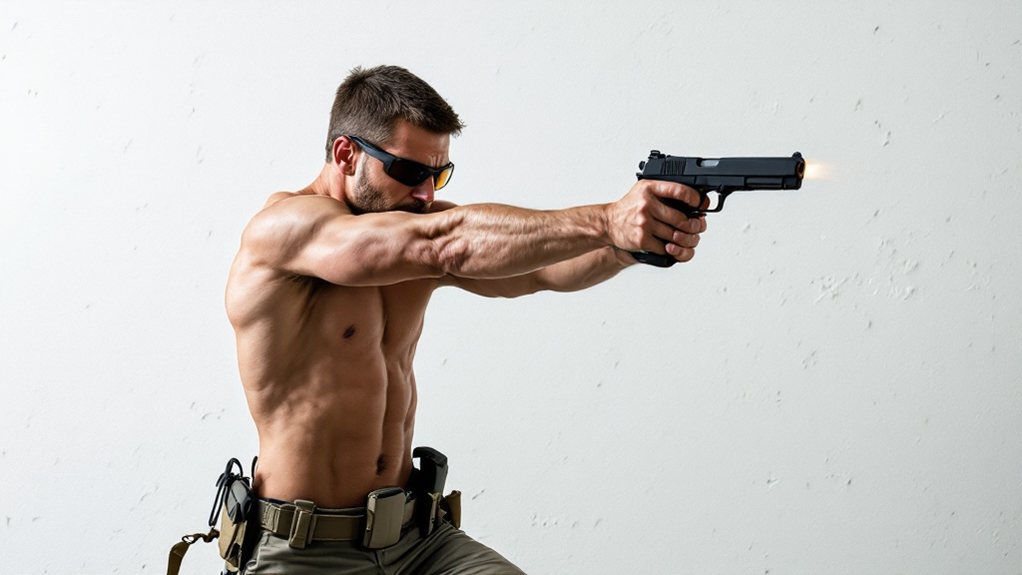
The addition of movement and speed elements transforms basic dry fire practice into dynamic training that better reflects real-world scenarios. To enhance your shooting skills without live ammunition, incorporate these essential movement drills to build muscle memory and improve your trigger control:
- Set up your shot timer and practice transitioning between different positions while maintaining proper trigger press technique for every shot
- Execute multiple target transitions and barricade work, focusing on smooth, controlled movements while maintaining accuracy
- Practice drawing from concealment, combining fluid gun handling with precise trigger control
You’ll maximize the benefits of dry fire practice by gradually increasing speed while maintaining proper form. Remember to verify your firearm is completely clear and follow all safety protocols during every training session.
Training With Dryfiremag Tools
Modern DryFireMag tools have revolutionized dry fire practice by introducing innovative features that enhance your training experience. The Smart DryFireMag’s laser-compatible system provides immediate feedback during your dry-fire training, helping you develop proper trigger control and refine your fundamental skill development.
To maximize your training with dryfiremag tools, replace traditional dummy rounds and snap caps with the DryFireMag system. You’ll benefit from seamless Target Transition drills while maintaining consistent firearm handling mechanics. The system works across various firearm models, allowing you to build muscle memory through repetitive, focused practice.
Whether you’re a beginner or advanced shooter, DryFireMag’s comprehensive approach delivers real-time feedback that helps identify areas for improvement. You can customize your dry fire practice sessions to address specific training goals and track your progress effectively.
Measuring Progress and Performance
Successfully measuring your dry fire performance requires systematic tracking of key metrics and consistent data collection. To understand the importance of progress tracking, you’ll need proper tools like a shot timer and target system that provide quantifiable feedback on your shooting accuracy and trigger control.
Record baseline metrics before starting your dry fire target practice, including draw-to-first-shot times and groups at slide lock.
Track your progression through consistent practice using modern tools like MantisX, which analyzes trigger control and movement.
Document performance data after each session, focusing on accuracy, speed, and proper use of cover and concealment.
Frequently Asked Questions
What Is the Difference Between a Trigger and a Dry Fire Mag?
A trigger is your firearm’s mechanical component that initiates the firing sequence, while a DryFireMag is your training tool for trigger reset practice without live ammunition.
You’ll find that triggers require manual reset between shots, but DryFireMags automatically reset, allowing continuous practice of sight alignment maintenance and trigger press consistency.
While triggers are essential for actual shooting and recoil management, DryFireMags focus on improving your target acquisition speed and precision shot placement during dry fire stance training.
What Is the Dry Fire Rule?
Like a pilot’s pre-flight checklist, the dry fire rule demands you treat every firearm as if it’s loaded. Before starting dry fire practice, you’ll need to triple-check your weapon’s clear, remove all live ammunition from the room, and verify you’re using a proper backstop.
This fundamental safety protocol allows you to focus on proper trigger discipline, sight alignment practice, and target acquisition skills without risk. Remember: always follow basic firearm safety rules, even during practice.
What Is Trigger Control?
Trigger control is a fundamental shooting technique where you maintain steady pressure on the trigger while preserving your sight picture and aim point. You’ll need to master trigger press mechanics, focusing on smooth rearward movement without disturbing your sight alignment.
It’s essential to develop trigger finger independence and discipline, understanding proper reset recognition practice. Your follow-through and recoil management strategies are crucial components of trigger control principles for achieving consistent accuracy.
Is Dry Firing Bad for Your Gun?
Dry firing isn’t inherently bad for your gun, but you’ll need to take proper precautions. For centerfire firearms, you can safely dry fire while conserving ammunition and preserving barrel life. However, you’ll want to maintain proper lubrication and regular cleaning to prevent malfunctions.
For rimfire guns, always use snap caps to protect the firing pin. When done correctly, dry firing helps develop muscle memory, improve trigger sensitivity, and enhance sight alignment without causing excessive gun wear.
Conclusion
Mastering your trigger control through dry fire practice isn’t a sprint – it’s a methodical journey that demands your consistent dedication. You’ll need to apply these drills systematically, always adhering to safety protocols while tracking your progress. Whether you’re using basic press-outs or advanced transition drills, remember: every deliberate trigger press builds your foundation. Stay focused, maintain discipline, and you’ll see measurable improvements in your shooting performance.


0 Comments