


Daily dry fire practice builds essential muscle memory and shooting fundamentals through focused repetition without the cost of live ammunition. You’ll develop precise trigger control, improve your draw stroke, and master target transitions in a controlled environment. When combined with proper safety protocols and training tools like snap caps and shot timers, dry fire transforms your techniques into reliable, subconscious actions. Discover how this proven training method can accelerate your firearms proficiency.
Key Takeaways
- Daily dry fire practice builds essential muscle memory and neural pathways for proper shooting technique without the cost of live ammunition.
- Regular trigger control practice through dry firing develops precise, subconscious movements that transfer directly to live-fire performance.
- Consistent dry fire training allows unlimited repetitions to master fundamentals like sight alignment and draw stroke without range restrictions.
- Daily practice helps develop split-second decision-making skills and improves speed-to-precision balance in a controlled environment.
- Dry firing every day strengthens proper form under stress while eliminating distractions of recoil and muzzle rise.
Building Muscle Memory Through Daily Repetition
Through consistent dry-fire practice, you’ll develop critical muscle memory that translates directly to improved performance with your firearm. Daily practice allows your brain and muscles to internalize proper trigger control, sight alignment, and weapon manipulation techniques through focused repetition.
Dedicating 10-15 minutes to training each day helps cement these fundamental skills into your subconscious. When you’re executing proper trigger manipulation repeatedly without live ammunition, you’re building neural pathways that make correct technique second nature. Consistent dry fire practice enables you to maintain proper form under stress, as your muscle memory takes over during high-pressure situations.
Your hands will naturally find the correct grip, your eyes will align the sights properly, and your trigger finger will execute smooth, controlled pulls – all because you’ve programmed these movements through disciplined daily practice.
Essential Equipment for Effective Dry Fire Training
While dry fire practice can be done with minimal equipment, having the right tools ensures both safety and maximum training effectiveness. You’ll need snap caps or dummy rounds to protect your firearm’s firing pin and internal components during practice sessions.
A laser training system provides immediate feedback on your shot placement, helping you refine your technique without live ammunition.
To measure your progress, incorporate a shot timer app to track your speed and precision. A safe backstop is non-negotiable for all firearm owners engaging in dry fire training.
Consider investing in a trigger reset device to develop consistent trigger control and enhance your muscle memory. These tools, when used together, create a comprehensive dry fire training system that maximizes the benefits of your practice while maintaining safety protocols.
Mastering the Perfect Trigger Press Without Ammunition
A perfect trigger press forms the bedrock of accurate shooting, and dry fire practice provides the ideal environment to master this fundamental skill. When you practice dry firing, you’ll develop precise trigger control without the interference of recoil or muzzle rise. Daily repetition builds essential muscle memory, transforming your trigger press into a seamless, subconscious action.
| Training Element | Live Fire | Dry Fire |
|---|---|---|
| Cost Per Rep | High | None |
| Recoil Impact | Present | None |
| Practice Volume | Limited | Unlimited |
| Focus Quality | Divided | Complete |
| Skill Retention | Moderate | High |
Common Dry Fire Mistakes and How to Avoid Them
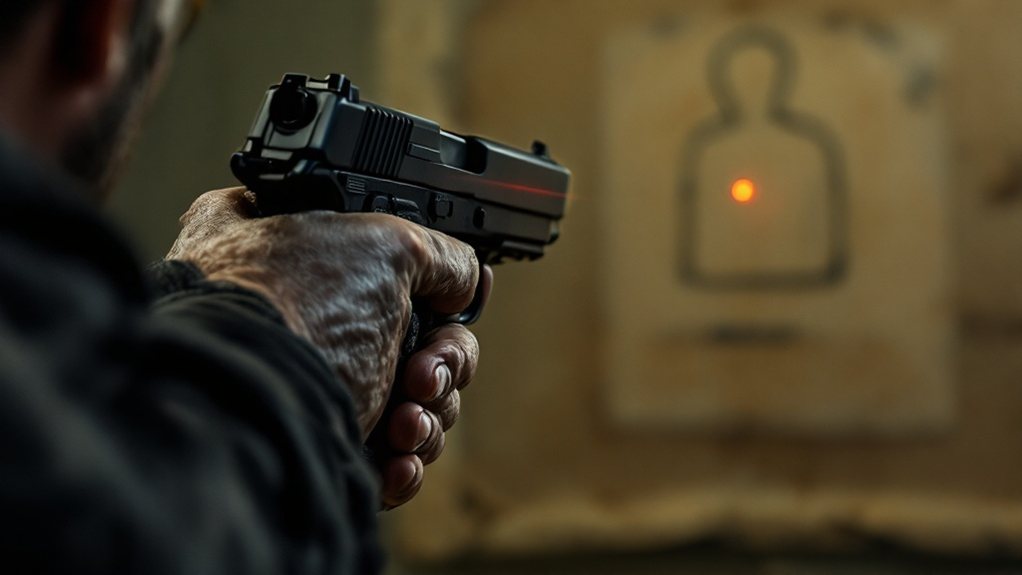
Despite dry fire’s significant training benefits, many shooters unknowingly develop bad habits that can hinder their progress and potentially compromise safety. The most common mistakes include failing to verify your firearm is unloaded, not using snap caps when recommended, and practicing without a proper backstop.
You’ll want to avoid rushing through your trigger press or neglecting your sight picture during practice sessions. Don’t dry fire without a specific training goal in mind, and never skip your safety checks.
Another critical error is practicing draws from an unstable holster or using improper draw techniques.
Maintain focus during each dry fire session and resist the urge to practice in areas where live ammunition is present. If you’re unsure about proper technique, seek qualified instruction before developing incorrect habits.
Tracking Progress With Shot Timers and Training Apps
Shot timer apps provide precise measurements of your split times and reaction speeds during dry fire practice, allowing you to establish baseline performance metrics. You’ll want to document your training data daily in a range book or digital log, noting specific drills completed and areas that need refinement.
Measure Split Times Accurately
Tracking your dry fire performance with precision requires modern shot timing technology. Using tools like PACT Club Timer Pro, Mantis Laser Academy, and SIRT Laser Training lets you measure split times and draw times with professional-grade accuracy. You’ll get detailed metrics on your transition speeds and technical execution.
| Metric | What to Track | Target Goal |
|---|---|---|
| Draw Time | Time to first shot | Sub 1.5 sec |
| Split Time | Shot-to-shot speed | 0.25-0.30 sec |
| Transitions | Target-to-target | Under 0.5 sec |
| Total Time | Full string speed | Under 3.0 sec |
Record your performance data daily to identify trends and areas needing improvement. By consistently monitoring these metrics during dry fire practice, you’ll develop smoother technique while gradually increasing your speed. This data-driven approach ensures measurable progress in your training routine.
Record Daily Training Data
Maintaining detailed records of your dry fire training sessions provides critical data for performance analysis and improvement. You’ll want to track metrics like draw time, target transitions, and reload speeds every day to identify trends and areas needing work.
Using tools like Mantis X or dedicated training apps helps automate data collection during your dry practice. These systems measure minute changes in movement, timing, and consistency that you might miss through observation alone. Record not just quantitative data but also qualitative notes about grip pressure, sight picture, and trigger control.
Create a standardized format for logging your training data to ensure consistent measurement over time. This systematic approach allows you to objectively evaluate progress, adjust your dry fire routine, and optimize your training focus for maximum effectiveness.
Compare Performance Over Time
Quantifiable data from shot timers and training apps lets you measure concrete improvements in your dry fire performance. By tracking your progress five days a week, you’ll see measurable decreases in draw times and split times within weeks. Use snap caps and make sure you’re logging each session to establish baseline metrics.
Incorporating dry fire data analysis helps identify specific areas needing refinement, from grip consistency to trigger control. When you compare your performance across months of practice, you’ll spot trends that translate directly to live fire training at the range. Training apps can reveal whether you’re developing bad habits or making steady progress in your fundamentals.
The objective metrics provide clear evidence of skill development, helping maintain your motivation for every practice session while documenting your journey toward mastery.
Advanced Dry Fire Drills for Skill Development
Transitioning between multiple targets with precision requires mastery of both your weapon’s front sight tracking and your body mechanics. You’ll need to practice complex target arrays that challenge your ability to move efficiently while maintaining sight alignment and proper trigger control.
Working with varied target positions will help you develop the critical balance between speed and accuracy, allowing you to build confidence in your shooting fundamentals through consistent dry fire repetition.
Complex Target Transitions
When you’re ready to advance beyond basic dry fire fundamentals, complex target transition drills will dramatically enhance your defensive shooting capabilities. As any experienced Firearms Instructor will confirm, practicing these drills develops crucial speed and accuracy for dynamic scenarios.
Set up multiple USPSA cardboard targets at different distances and angles to simulate realistic shooting situations. You’ll want to practice transitioning between 3-5 targets while maintaining proper form as you dry fire. These drills challenge your visual processing and decision-making skills, especially when incorporating shoot/no-shoot scenarios.
Regular practice of complex target transitions strengthens your ability to identify threats quickly and execute precise shots under stress. When you draw from the holster, focus on smooth, deliberate movements while maintaining awareness of your surroundings. This advanced training method will significantly improve your overall shooting competency.
Speed-to-Precision Balance
The delicate balance between speed and precision represents one of the most challenging aspects of firearms mastery. By incorporating structured dry practicing with both precision-focused and speed-oriented drills, you’ll develop the ability to optimize your speed-to-precision balance effectively.
Start by using timed drills with a shot timer and visual feedback systems, like laser training cartridges, to measure your performance objectively. Track your accuracy metrics while gradually increasing your presentation speed to identify your optimal performance threshold.
As you alternate between slower, deliberate movements and faster target engagements, you’ll build the adaptability needed for various tactical situations. This systematic approach to dry practicing helps you develop the split-second decision-making skills essential for both self-defense and competitive shooting scenarios, ensuring you can maintain accuracy while operating at higher speeds.
Safe Dry Fire Practices and Training Environment
Safety serves as the cornerstone of effective dry fire practice, requiring strict adherence to fundamental protocols before, during, and after each training session. You must always verify your firearm is completely unloaded and pointed in a safe direction before beginning any dry fire drill. Install a proper backstop in your training environment that can stop live rounds, even though you’re working with an unloaded firearm.
To protect your weapon’s internal components, use snap caps or dummy rounds during practice. Maintain strict discipline throughout your dry fire session, eliminating distractions that could compromise safety. Before starting your training routine, review your firearm’s manual to ensure you’re following manufacturer-specific guidelines for safe dry fire practice. Remember, building good habits in a controlled environment translates to better performance in live fire situations.
Integrating Dry Fire With Live Range Sessions
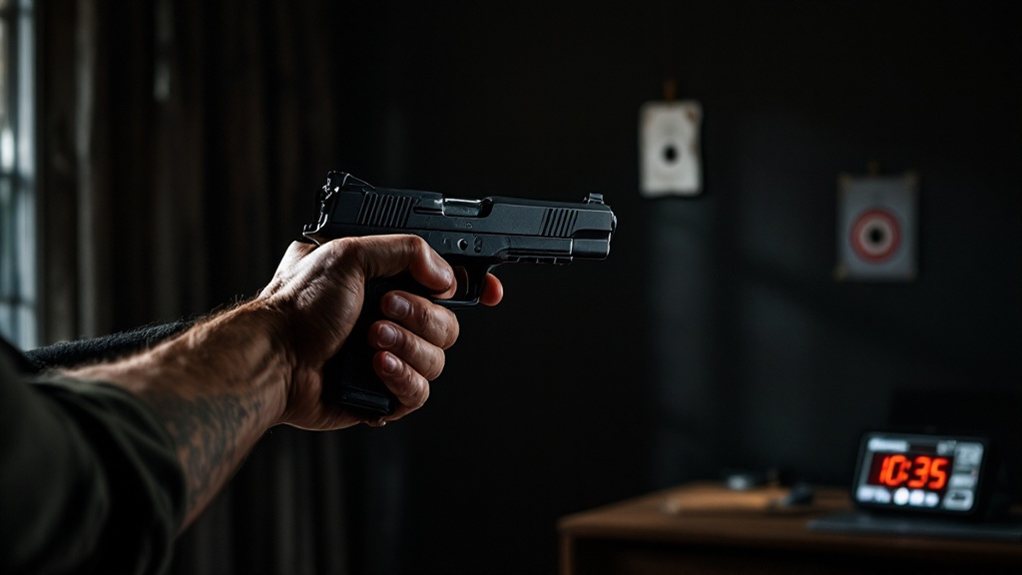
Building a comprehensive firearms training program requires seamless integration between dry fire practice and live-fire range sessions. You’ll need to maintain a consistent practice routine that balances both training methods to maximize your shooting proficiency.
Your dry fire sessions should focus on developing specific techniques and fundamental skills that you’ll later validate during live-fire range sessions. While daily dry fire practice builds your foundation, it’s essential to test your progress through periodic live-fire training. This transfer of learning helps you identify areas needing adjustment in your training regimen.
Don’t make the mistake of replacing live-fire with dry fire practice. Instead, use dry fire as a complementary tool that enhances your range sessions. By dedicating even a few minutes each day to dry fire, you’ll see significant improvements when you’re on the range.
Frequently Asked Questions
What Are the Benefits of Dry Firing?
Dry firing offers you significant technique improvement and muscle memory development through consistent practice. You’ll achieve trigger control mastery and accuracy enhancement without expending ammunition, making it a cost-effective practice method.
Your coordination betterment occurs naturally as you refine fundamental skills. Through regular dry firing, you’ll maintain shooting proficiency while reducing live fire consumption.
This training method ensures you’re developing proper mechanics in a controlled, safe environment.
Can You Dry Fire Too Much?
While you might think more practice is always better, you can definitely dry fire too much. Excessive practice without proper rest can lead to improper positioning, lack of focus, and muscle fatigue.
Without adequate preparation and sufficient technique, you’ll risk developing poor coordination habits. You’ll also face diminishing returns from inadequate feedback and potential overconfidence in skills. It’s best to limit sessions to 15-20 minutes and ensure proper recovery between practices.
Why Is Dry Fire so Bad?
Dry fire isn’t inherently bad, but improper technique damages your firearm and creates safety concerns. You’ll risk potential weapon malfunction, especially with rimfire guns, if you’re not using snap caps.
Without proper safety protocols, you’re facing increased safety concerns and potential legal consequences. Your insufficient muscle memory development and inadequate trigger control practice from poor form can lead to bad habits.
The lack of realistic simulation limits your training effectiveness.
What Is the Dry Fire Rule?
Practice makes perfect, and that’s exactly what the dry fire rule emphasizes. You’ll need to dry fire your firearm daily while focusing on key fundamentals: trigger control, sight alignment, muzzle discipline, and grip adjustment.
This rule ensures you’re consistently working on follow-through practice, magazine changes, drawing from holster, and reload sequences. You should dedicate 5-10 minutes each day to these drills, maintaining strict safety protocols throughout your practice sessions.
Conclusion
Your dry fire practice is the foundation that’ll build your shooting mastery, much like a sculptor repeatedly chiseling stone to reveal perfection. Through daily dedication, you’re forging neural pathways that transform mechanical movements into fluid art. Remember: maintain your safe training environment, stay disciplined with proper technique, and you’ll see your skills crystallize into instinctive excellence. When you step onto the live range, you’ll reap the rewards of your consistent practice.


0 Comments