


Your state’s firearm storage requirements depend on where you live, as laws vary significantly across all 50 states. Currently, 26 states maintain specific protective storage laws while 13 states have no formal requirements. The strictest regulations exist on the West Coast and Northeast, with Southern and Midwestern states being less restrictive. Storage mandates typically address lock types, ammunition separation, and child access prevention. Understanding your local requirements will ensure proper compliance and safety.
Key Takeaways
- Storage requirements vary significantly by state, with 26 states having protective storage laws and 13 states having no regulations.
- Western and Northeastern states typically mandate specific lock types and strict storage methods for all firearms.
- Check if your state requires trigger locks, locked containers, or gun safes, as approved storage methods vary by jurisdiction.
- Verify if your state has Child Access Prevention laws, which may require secure storage when minors are present.
- Look up local penalties for non-compliance, as enforcement methods include criminal charges, fines, and civil liability.
Current State Storage Requirements Overview
Currently, state-level firearm storage requirements vary significantly across the United States, with 26 states implementing protective storage laws focused on child safety and 13 states maintaining no such regulations. These laws establish different standards for gun ownership responsibilities, particularly regarding secure storage practices.
The requirements differ in how they define key aspects, such as the age threshold for “children” – ranging from under 14 to under 18 years old. Storage mandates also vary in their timing and scope, with some taking effect when firearms aren’t under immediate control, while others only apply after a child gains access.
Research demonstrates the effectiveness of these storage requirements, showing up to 85% reduction in youth-related firearm incidents, including unintentional shootings, school violence, and suicides.
Storage Law Variations by Region
The geographical distribution of firearm storage laws reveals distinct regional patterns across the United States. You’ll find the strictest safe gun storage requirements along the West Coast and Northeast, where states typically mandate specific lock types and storage methods. These regions often require gun owners to prevent unauthorized Gun access through secured containers or trigger locks.
In contrast, the Southern and Midwestern states generally maintain less restrictive storage laws, with many having no current law mandating specific storage methods. Some states in these regions only address storage requirements when firearms are present in homes with minors.
Mountain states typically fall between these extremes, often implementing moderate storage requirements that focus on preventing access by prohibited persons while maintaining quick access for self-defense.
Child Access Prevention Measures
Child Access Prevention measures in your state will dictate specific requirements for securing firearms when minors are present in the home. You’ll need to understand your local storage regulations, as requirements range from mandatory locks on all firearms to liability provisions if a child gains unauthorized access.
Your compliance with CAP laws is essential, as proper storage methods can prevent both unintentional injuries and reduce suicide risks among young people.
State Storage Law Variations
State laws regarding firearm storage around minors differ dramatically across the U.S., with requirements ranging from strict mandatory storage protocols to minimal oversight. You’ll find that states like Massachusetts and California enforce strict gun storage requirements, mandating locks and secure containers, while other states have no specific storage laws at all.
Child Access Prevention (CAP) laws vary significantly in their scope and penalties. Some states impose criminal liability if a minor gains access to an improperly stored firearm, while others only address intentional provision of weapons to minors.
Your state’s storage practices requirements may include specific provisions about trigger locks, gun safes, or ammunition storage. It’s critical to understand your local regulations, as state gun law variations can mean the difference between compliance and serious legal consequences.
Access Prevention Requirements
Implementing effective access prevention measures begins with understanding CAP laws and their direct impact on firearm safety. You’ll find that Child Access Prevention (CAP) laws significantly reduce unintentional injuries by holding adults accountable for unsafe gun access. Currently, 16 states and DC mandate locked storage when firearms aren’t under immediate control.
Key requirements you should know about CAP laws:
- Adults face liability for allowing unauthorized access to firearms
- Nine states require trigger locks with new firearm purchases
- Healthcare providers can offer storage guidance to enhance compliance
Your physician’s involvement can make a difference, as research shows that those who receive professional counseling are more likely to adopt secure storage practices. These requirements directly contribute to lower adolescent suicide rates when properly implemented.
Secure Storage Compliance Standards
You’ll need to comply with your state’s specific requirements for securing firearms, which may include using approved trigger locks, cable locks, or certified gun safes.
Your storage solution must prevent unauthorized access by keeping guns unloaded, locked, and physically separated from ammunition according to state-mandated standards.
To meet access prevention requirements, you’re responsible for maintaining direct control of your firearms or ensuring they remain securely stored using prescribed locking methods when not in use.
Lock Types and Methods
Secure storage compliance standards recognize three primary lock types for firearms: trigger locks, locked containers, and gun safes. Each method serves to prevent unintentional access, suicide, and domestic violence by creating physical barriers to gun access.
When selecting a storage solution, you’ll need to consider these essential requirements:
- Trigger locks must physically block the trigger mechanism, making the firearm inoperable until the lock is removed
- Locked containers require tamper-resistant construction and child-resistant features to prevent unauthorized entry
- Gun safes need proper fire resistance and must be securely anchored to prevent removal
Your chosen storage method must effectively prevent access by children and prohibited individuals while maintaining compliance with applicable regulations. Each lock type offers distinct advantages depending on your specific security needs.
State-Specific Storage Standards
State firearm storage requirements vary significantly across jurisdictions, with each state establishing distinct standards for how gun owners must secure their weapons. You’ll need to check your specific state’s laws, as requirements range from strict mandates to basic guidelines for preventing unauthorized access.
Some states require all firearms to be stored with trigger locks or in secured safes when not in use, while others focus primarily on preventing child access. Massachusetts, for instance, mandates that all guns be stored with locking devices, whereas Texas emphasizes secure storage only when minors might access firearms.
California’s regulations include specific standards for storage devices and criminal penalties for violations that result in firearm injuries. You’re responsible for knowing and following your state’s current storage requirements.
Access Prevention Requirements
When storing firearms in compliance with access prevention requirements, owners must implement specific security measures that create meaningful barriers against unauthorized handling. These rules align with current health policy recommendations aimed to prevent gun injuries and unintended access.
To meet essential access prevention standards, you’ll need to:
- Install tamper-resistant locks or safes that withstand forced entry attempts and ensure no unauthorized person gains access
- Store ammunition separately from firearms in secure, locked containers that require distinct access credentials
- Position storage units in areas that allow for regular monitoring while keeping them out of plain sight
You’re responsible for maintaining these preventive measures consistently, as proper storage significantly reduces the risk of firearm-related accidents and unauthorized use.
Penalties and Enforcement Methods
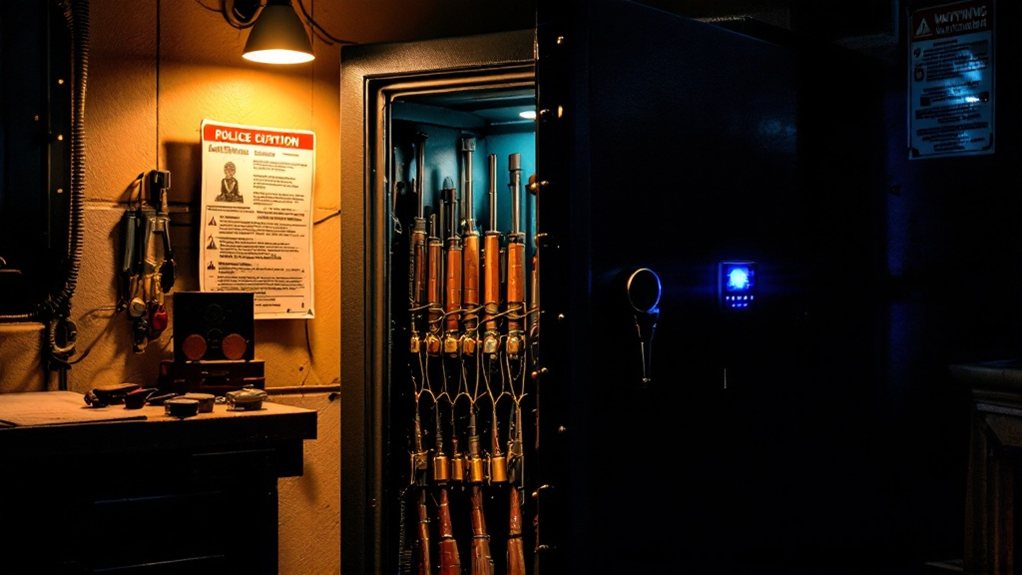
The enforcement of firearm storage laws combines penalties and compliance mechanisms to promote responsible gun ownership. You’ll face criminal charges, fines, or civil liability in many states if you fail to prevent unauthorized access to your firearms, particularly when violations result in health impacts or violence. These consequences become more severe if improper storage leads to injuries and deaths.
Law enforcement’s ability to monitor storage compliance is typically limited, often relying on self-reporting or post-incident investigations. However, some jurisdictions authorize officers to remove firearms from your home if you’re deemed a threat to safety.
While enforcement balances public safety with individual rights, it’s primarily achieved through a multi-faceted approach of education, incentives, and penalties. Your compliance helps prevent death and injury while avoiding legal consequences.
Impact on Firearm-Related Incidents
Strong evidence demonstrates that proper firearm storage requirements directly reduce preventable deaths and injuries across multiple categories. Research shows these requirements can reduce unintentional firearm injuries among children by up to 85% while lowering overall suicide rates in states with robust prevention laws.
Understanding the impact of storage requirements reveals three critical findings:
- Firearm suicide attempts have a 91% fatality rate, significantly higher than other methods
- States implementing comprehensive storage laws see measurable decreases in gun-related death rates
- Healthcare provider counseling on safe storage practices increases adoption of protective measures
When combined with mental health services and other prevention strategies, proper storage requirements create a multi-layered approach that effectively reduces firearm-related injuries. This data-driven evidence supports the implementation of comprehensive storage policies.
Recent Legislative Changes and Updates
Building upon established evidence of storage requirements’ effectiveness, recent years have witnessed significant legislative momentum across multiple states to strengthen firearm storage laws.
Research shows these updates aim to reduce both gun violence and nonfatal gun injuries by implementing stricter storage protocols.
Massachusetts’ 2021 legislation has set new standards for securing firearms from prohibited individuals, while Vermont’s 2022 law requires comprehensive storage solutions when weapons aren’t under direct control.
California’s expanded regulations now address storage requirements beyond home settings. These changes reflect growing awareness of the connection between proper storage and prevention of unauthorized access, particularly in cases involving mental health concerns.
However, you’ll find considerable variation in requirements across states, as many jurisdictions haven’t yet adopted comprehensive storage policies.
Frequently Asked Questions
What Are the Conditions for Gun Storage?
You’ll need to follow essential gun storage conditions by using proper trigger locks to prevent unauthorized firing. Store your firearms in secure gun cabinets that are locked and inaccessible to children or prohibited persons.
Consider disassembled firearm storage as an extra safety measure, keeping components separate. Always maintain unloaded ammunition storage in a different locked location from your firearms. These measures help prevent accidents and unauthorized access.
What States Require Guns to Be Locked Up?
You’ll find a staggering 26 states have implemented proper storage techniques for firearms. Notably, California, Colorado, Connecticut, Delaware, Maryland, Massachusetts, Michigan, Minnesota, Nevada, and New York lead the charge in safe firearm handling requirements.
These laws address legal liability concerns by mandating secure storage to prevent unauthorized access. Community gun education efforts have helped establish these regulations, which vary by state in terms of age definitions and timing of storage requirements.
Do You Have to Lock up Your Guns in Texas?
Texas doesn’t legally require you to lock up your guns, except in cases where children under 17 might gain access to loaded, readily dischargeable firearms.
While it’s not mandatory, responsible ownership practices suggest you should store firearms in a secure location, unloaded and separate from ammunition. Taking proper precautions through safe access measures like gun safes, trigger locks, or lockboxes helps prevent accidents and unauthorized use of your firearms.
Can I Legally Store Firearms in a Storage Unit?
While you can legally store firearms in a storage unit, you’ll need to follow strict unattended storage requirements. You must ensure your firearms are properly secured, unloaded, and inaccessible to unauthorized persons.
Unlike residential storage guidelines, storage unit facilities may have additional rules beyond state laws. It’s essential to check both your state’s concealed carry storage regulations and the facility’s specific accessible storage procedures before proceeding. Document everything and maintain proper insurance coverage.
Conclusion
Understanding your state’s firearm storage laws is as crucial as a lock on your front door. You’ll need to stay current with both local and state requirements, as regulations can change rapidly. Proper storage compliance not only protects you legally but also prevents unauthorized access and accidents. Review your state’s specific mandates, implement the required security measures, and maintain documentation of your compliance efforts.


0 Comments