


For your AR-15 trigger, Milcom TW25B synthetic grease is the top choice, offering superior lubrication and long-lasting protection compared to standard oils. You’ll want to apply it sparingly to critical contact points like trigger pins, sear surfaces, and disconnector springs. While other options like moly grease or lithium-based lubricants work adequately, TW25B’s advanced formulation delivers the smoothest trigger pull and best environmental resistance. Understanding proper application techniques will maximize your trigger’s performance.
Key Takeaways
- Milcom TW25 grease is considered the top choice for AR-15 triggers, providing smooth operation and long-lasting performance.
- Molybdenum-based grease is manufacturer-recommended and offers excellent wear protection for trigger group components.
- Break-Free CLP or Mobil 1 20W-50 provide effective wet lubrication for reliable trigger function in most conditions.
- Lithium grease works well for general-purpose trigger lubrication and maintains consistency across different temperatures.
- Full synthetic grease like TW25B is optimal for cold climates while tackier greases suit dusty environments.
Understanding AR-15 Trigger Mechanisms
While the AR-15’s trigger mechanism may appear simple at first glance, it’s actually a precise assembly of components that work together to provide consistent functionality. You’ll find that the engagement surfaces of trigger parts require proper dressing and squaring to ensure smooth operation, which directly affects your shooting performance.
When it comes to maintaining these critical parts, you’ll need to consider both cleaning and lubrication carefully. While oil is a common lubricant choice, you don’t want to over-lubricate your trigger group, as excess oil can attract debris. Instead, you’ll often find that specialized grease formulations, particularly moly grease, provide better long-term performance. Your choice of lubricant should also account for environmental conditions, as different settings may require specific grease types to maintain optimal trigger function.
Top Recommended Oils for Trigger Groups
Several proven lubricants stand out for AR-15 trigger groups, with Milcom TW25 grease leading the pack for achieving optimal trigger pull characteristics. You’ll find that while any grease can work, you should use lubricants sparingly for best results.
| Lubricant Type | Best Use Case | Application Tips |
|---|---|---|
| Milcom TW25 | Smooth Pulls | Apply Thin Layer |
| Moly Grease | Manufacturer Spec | Use Sparingly |
| Lithium Grease | General Purpose | Clean First |
| ATF Fluid | Budget Option | Small Drops Only |
| Anti-seize | Heavy Duty | Minimal Amount |
Before applying CLP, Lucas gun oil, or Frog Lube, thoroughly degrease your trigger group using brake cleaner, carb cleaner, or acetone. This ensures proper adhesion of your chosen lubricant and prevents contamination that could affect trigger performance.
Dry vs. Wet Lubrication Methods
Two distinct approaches exist when lubricating AR-15 triggers: dry and wet methods, each offering unique benefits and tradeoffs. While products like Rem Oil and Hoppes Oil can be used sparingly for dry lubrication, you’ll likely experience cycling issues during extended range sessions with minimal lubrication.
The wet method, using products like Break-Free CLP or motor oils such as Mobil 1 20W-50, proves more effective for AR platforms. You’ll find that heavier lubrication helps flush away carbon buildup from the direct impingement system. For optimal results, apply lithium grease to your bolt lugs, cam pin, and carrier contact points, then supplement with oil during range sessions. This combination provides superior protection against wear while maintaining reliable function. Remember, even minimal lubrication is better than running your AR completely dry.
Critical Trigger Lubrication Points
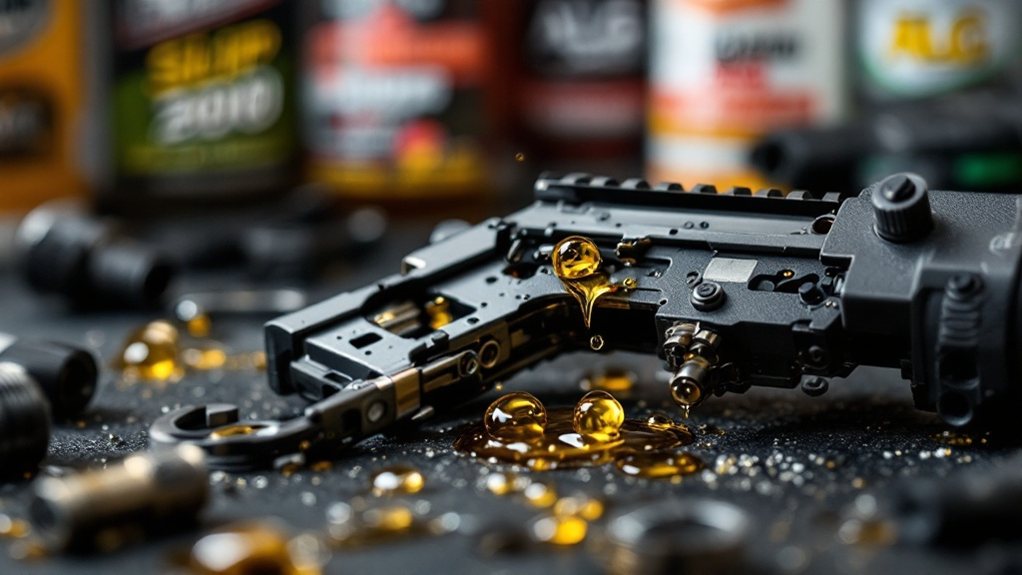
You’ll need to focus on three main areas when lubricating your AR-15 trigger group: the trigger pin contact points, the sear engagement surfaces, and the disconnector spring contact points.
Before applying any lubricant, ensure these critical surfaces are properly cleaned and dressed to achieve optimal metal-to-metal contact.
Apply your chosen lubricant sparingly to these areas, as excess grease or oil will only attract debris and potentially compromise trigger function.
Trigger Pin Contact Areas
When maintaining your AR-15’s trigger system, proper lubrication of the pin contact areas stands as one of the most critical maintenance tasks. You’ll need to focus on three key points: the trigger pin, disconnector pin, and sear engagement surfaces, as these areas experience the most metal-on-metal contact during operation.
Apply a light coating of quality lubricant, such as Mil-Comm TW25B grease, to these specific contact points. Remember, less is more – you don’t want excess lubricant attracting debris that could compromise your trigger group’s performance. A thin layer is sufficient to reduce friction and enhance trigger feel while preventing premature wear.
Make it a habit to inspect these contact areas regularly, checking for signs of wear or dry spots that might need attention. This proactive approach ensures consistent, smooth trigger operation.
Sear Engagement Surfaces
The sear engagement surfaces represent three critical lubrication points in your AR-15’s trigger system: the hammer hook, disconnector tip, and trigger sear. These metal surfaces experience high pressure during operation and require proper lubrication to function smoothly and reliably.
For these sear engagement surfaces, you’ll want to use grease rather than oil. Grease stays in place better under pressure and provides superior protection for these intensely stressed moving parts. Apply a thin, even layer of grease to each contact point, ensuring complete coverage without excess buildup.
Focus particularly on the hammer hook where it meets the trigger sear, as this interface experiences the most friction. The disconnector tip also needs careful attention since it controls reset timing and prevents hammer follow.
Disconnector Spring Points
Proper lubrication of disconnector spring points stands as a crucial factor in achieving a smooth, consistent trigger pull in your AR-15. While many debate the best oil for triggers, lightweight grease actually performs better at these critical contact points.
For optimal performance, you’ll want to:
- Apply specialized trigger grease like Mil-Comm TW25B directly to the disconnector spring points
- Use just enough lubricant to coat the contact surfaces without over-applying
- Check these points during regular maintenance to ensure proper lubrication remains
When your disconnector spring points lack proper lubrication, you’ll notice a gritty, inconsistent trigger pull that can affect your shooting accuracy. By maintaining these vital areas with the right grease, you’ll preserve the crisp, predictable trigger break that’s essential for precision shooting with your AR-15.
Environmental Factors and Oil Selection
Selecting an optimal lubricant for your AR-15 trigger requires careful consideration of environmental exposure conditions. Weather conditions can significantly impact how your lubricant performs, making it crucial to choose products suited for your operating environment.
In cold climates, you’ll want to use a full synthetic grease like TW25B rather than thin oils to prevent sluggish trigger operation. For dusty or sandy environments, applying a light coat of tackier grease helps resist contamination better than standard oils.
When operating in high heat or humid conditions, you’ll need corrosion-inhibiting lubricants like Militec-1 or CorrosionX to protect your trigger components from rust and degradation. The key is matching your oil and grease selection to the specific environmental challenges you’ll face, ensuring reliable trigger performance regardless of conditions.
Application Techniques and Best Practices
Before applying any lubricant to your AR-15 trigger group, you’ll need to thoroughly degrease it using brake cleaner, carb cleaner, or acetone.
You should focus on applying the lubricant sparingly to strategic contact points where the trigger components interact with each other. Whether you choose Milcom TW25, moly grease, or lithium-based products, ensure you’re using minimal amounts to prevent over-lubrication that could attract debris and affect trigger performance.
Strategic Trigger Point Lubing
When applying lubricant to your AR-15 trigger, strategic placement and minimal quantity are crucial for optimal performance. Whether you’re using Best Gun Oil, Break Free CLP, lithium grease, auto transmission fluid, or anti-seize, you’ll want to first thoroughly degrease the trigger group using brake cleaner or acetone.
For optimal trigger performance, follow these key lubrication points:
- Apply a thin layer of Milcom TW25 grease to the trigger sear engagement surface
- Place minimal lubricant on the disconnector contact points
- Add a light coat to the hammer hooks where they interface with the trigger
Clean Before Oil Application
A proper cleaning routine serves as the foundation for effective trigger lubrication. Using a good solvent that’s best for cleaning, thoroughly remove any existing oil, debris, and carbon buildup from your trigger assembly. Pay special attention to all metal parts where there’s contact between parts moving against each other.
Before applying new oil, ensure the trigger components are completely dry and free from solvent residue. You’ll want to clean before oil application to prevent contamination and ensure optimal lubrication performance. Use cotton swabs or a microfiber cloth to reach tight spaces, and compressed air to blow out any remaining particles. This preparation makes it easy to apply fresh lubricant effectively and ensures the oil adheres properly to the metal surfaces, maximizing your trigger’s performance and longevity.
Common Lubrication Mistakes to Avoid
Proper lubrication of your AR-15 trigger requires avoiding several critical mistakes that can impact performance and reliability. When maintaining your firearm, be mindful of these common errors that can compromise function.
- Don’t over-apply oil to carrier contact points or bolt lugs, as excess lubricant attracts debris and can cause build-up in the ejection port, leading to malfunctions
- Avoid using FrogLube or white grease exclusively on trigger components, as these products can thicken and cause sluggish trigger response in cold temperatures
- Never assume that because you’ve tried CLP on other firearm parts, it’s suitable for all trigger components – some specialized trigger parts require specific lubricants
Remember that proper lubrication is about applying the right amount of the correct product in the appropriate locations, not simply adding more oil.
Maintenance Schedule and Reapplication Guidelines
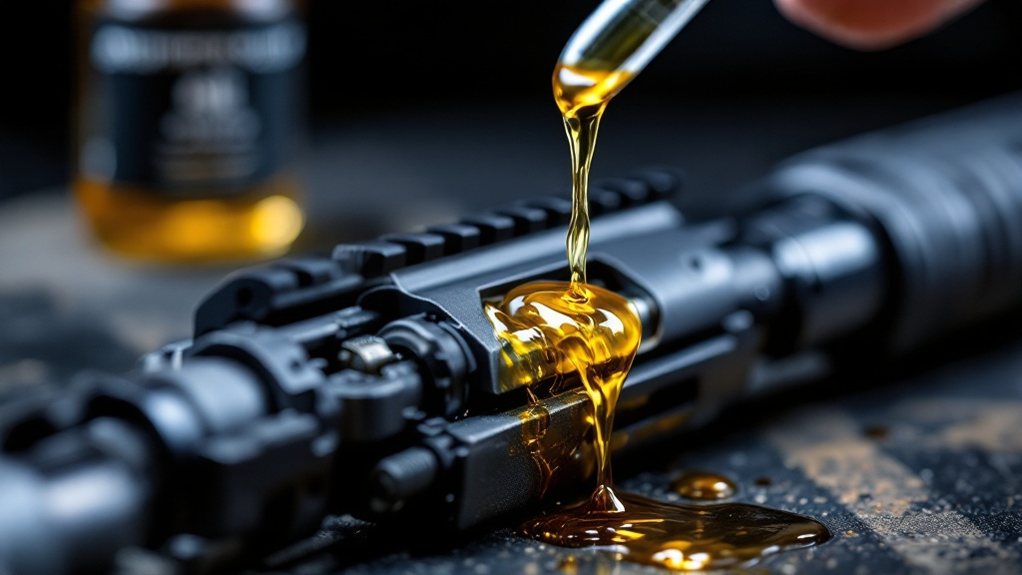
Regular trigger maintenance follows a schedule determined by three key factors: round count, environmental exposure, and lubricant type. You’ll need to service your trigger group every 500-1,000 rounds, using your gun cleaning kit to remove old residue before applying fresh gun lube.
While motor oil might seem like a budget option, it’s not the best choice for trigger components that are several years old. Instead, opt for specialized products like Moly-based greases such as TW25B. When applying lubricant, use a light touch – excess oil attracts debris and can impair function.
After cleaning and lubing, verify smooth trigger operation before returning your AR-15 to service. In harsh environments or after heavy use, you’ll want to increase maintenance frequency to prevent wear and ensure reliable performance.
Frequently Asked Questions
What Is the Best Oil to Use on an AR-15?
You’ll get the best results using gun-specific oils like Mil-Comm TW25B or similar thick lubricants for your AR-15. Proper lubrication technique involves applying oil sparingly to key contact points.
Follow a recommended cleaning schedule every 500-1000 rounds, considering environmental conditions that may affect wear. For effective corrosion prevention, focus on suitable gun oils rather than general-purpose lubricants.
Regular maintenance is crucial – remember to clean thoroughly before applying new oil.
What Gun Lube Do Navy Seals Use?
Like shadows moving through the night, Navy SEALs rely on proven weapon maintenance protocols. You’ll find their rifle lubrication standards center around Breakfree CLP and Slip 2000 EWL as primary mil spec weapon oils.
For specialized firearm lubricants, they often turn to Mil-Comm TW25B grease. Operator lubricant preferences may include Mobil 1 synthetic oil for combat focused lubrication techniques. Some SEALs combine these products, adapting their approach based on mission-specific needs.
What Parts Need to Be Oiled on an AR-15?
You’ll need to focus on key areas for proper AR-15 lubrication. Apply oil to the bolt carrier group, ensuring complete coverage of the bolt lugs and carrier rails.
Your buffer tube requires light lubrication where the buffer spring operates. Give attention to the trigger group components with specialized grease.
Don’t forget chamber surfaces need minimal oil to prevent corrosion. While maintaining the magazine well and muzzle device, keep lubrication minimal to avoid attracting debris.
Is WD-40 Good for Oiling Guns?
No, you shouldn’t use WD-40 for lubricating mechanisms in firearms. While WD-40 is great for water displacement, it’s not designed for maintaining performance in guns. Instead of preventing rust and avoiding corrosion, it can actually increase these issues over time.
You’ll want to use proper gun oils specifically formulated for reducing friction and enhancing longevity in firearms. These specialized lubricants can withstand the high pressures and temperatures that gun mechanisms experience.
Conclusion
Selecting the optimal oil for your AR-15 trigger symbolizes the balance between reliability and performance – much like a tightrope walker’s precision. You’ll want to maintain your trigger group with high-quality, low-viscosity oils like Slip 2000 EWL or ALG Go-Juice, applying them precisely to critical contact points. Remember, your trigger’s longevity depends on proper lubrication intervals and correct application techniques, just as a well-oiled machine maintains its mechanical symphony.


0 Comments