


Key signs of AR15 bolt wear include cracked or chipped locking lugs, flattened firing pin tips, and worn extractors. You’ll notice erratic ejection patterns, premature feed ramp marks on cartridges, and incomplete chamber lockup when your bolt is deteriorating. Check your gas rings for proper tension and inspect the cam pin hole for elongation. Regular inspection of these components with proper gauges and tools will help you identify critical wear before catastrophic failure occurs.
Key Takeaways
- Cracked, chipped, or rounded edges on bolt lugs indicate significant wear and potential failure points.
- Erratic ejection patterns and incomplete chamber lockup suggest deteriorating bolt components.
- Excessive firing pin protrusion or a flattened/pitted tip shows wear requiring immediate attention.
- Worn or damaged extractor can cause unreliable cartridge extraction and ejection problems.
- Elongated cam pin hole in bolt body signals advanced wear and compromised bolt integrity.
Visual Indicators of BCG Component Wear
Regular inspection of your bolt carrier group (BCG) reveals critical visual signs of wear that require monitoring. Check your bolt lugs for cracks, chips, or rounded edges, which indicate excessive wear from repeated cycling.
Examine the gas rings for proper tension and spacing; if they’re aligned or showing significant gaps, they’ll need replacement. Your firing pin should maintain its original profile without flattening at the tip or excessive pitting on the surface.
Look for abnormal wear patterns on the bolt’s exterior surface, particularly where it interfaces with the carrier. Check for chrome flaking, unusual discoloration, or scoring marks. The bolt’s extractor should retain proper spring tension and show no chipping along its engagement surface.
Any asymmetrical wear patterns on your BCG components warrant immediate attention.
Critical Wear Points on the Bolt Assembly
Understanding five key wear points on your AR15 bolt assembly helps identify potential failure areas before they become critical. When inspecting your bolt carrier group, focus on these essential components that experience significant stress during firing cycles.
- Inspect your bolt’s locking lugs carefully for chips, cracks, or breakage – these components handle immense pressure and can fail catastrophically
- Check your extractor for damage, particularly if you’re using steel-cased ammunition
- Examine the firing pin tip for signs of erosion or deformation from gas jetting
- Monitor the cam pin hole in your bolt body for excessive wear or elongation
If you notice significant wear in any of these areas, or if your gas rings no longer maintain proper seal, it’s time to consider installing a new bolt assembly in your AR.
Measuring Bolt Carrier Group Tolerances
You’ll need precision measuring tools like a headspace gauge and calibrated calipers to properly assess your bolt carrier group tolerances. Testing headspace requires both GO and NO-GO gauges to verify the critical distance between the bolt face and chamber shoulder remains within specifications.
Measuring key dimensions of your BCG components helps identify wear patterns before they lead to malfunctions or safety issues.
Gauge Critical BCG Dimensions
To properly evaluate AR15 bolt carrier group wear, precise measurements of critical dimensions must be taken using specialized gauges and measuring tools. You’ll need to check specific areas of the carrier and bolt carrier key for premature wear that could affect proper function and quality control standards.
- Check carrier key screws torque at 35-40 inch/pounds using a calibrated torque wrench
- Measure firing pin protrusion with a specialized gauge (.028″ to .036″ is typical spec)
- Verify bolt carrier tail diameter using micrometers (.949″ minimum)
- Test gas ring sealing by standing bolt carrier vertically – it shouldn’t drop under its weight
Focus on these measurements because they’re critical indicators of BCG health. Even small deviations from factory specifications can lead to reliability issues. Regular gauging helps identify problems before they affect performance.
Proper Headspace Testing Methods
Proper headspace testing represents one of the most critical safety checks you’ll perform on an AR15 bolt carrier group. You’ll need to use a calibrated go/no-go gauge set to measure the distance between the bolt face and the barrel extension’s chamber face when the Upper is assembled.
Start by removing the buffer and spring to access the BCG. Insert a new round into the chamber, then close the bolt. The go gauge should allow complete lockup, while the no-go gauge shouldn’t permit the bolt to fully close. If your bolt closes on a no-go gauge, you’re likely dealing with excessive wear on the lugs or cam surfaces. This condition can lead to dangerous malfunctions like pierced primers or gas leaks. Regular testing helps identify worn components before they create catastrophic failures during operation.
Performance Symptoms of a Deteriorating Bolt
Your AR15’s erratic ejection patterns provide the first clear indication of bolt deterioration, as worn lugs and gas rings disrupt the normal cycling sequence. You’ll notice premature feed ramp marks on your cartridges when a deteriorating bolt struggles to properly chamber rounds, often leaving distinct scratches or gouges on the case bodies.
Bolt locking failures become apparent when you experience incomplete chamber lockup, resulting in extraction issues and potential double-feeds due to compromised lug engagement with the barrel extension.
Erratic Ejection Patterns
One of the earliest warning signs of a deteriorating AR15 bolt is erratic ejection of spent brass casings. When you notice your brass landing in inconsistent directions, particularly around the 2 o’clock position, it’s often indicating excessive wear on critical bolt components.
Your AR-15 bolt carrier’s worn bolt lugs can create inadequate lockup with the barrel extension, leading to unreliable ejection patterns. A deteriorating extractor spring and worn surfaces will struggle to properly grip and release spent casings. Poor gas system tuning, especially overgassing, accelerates bolt wear and creates unpredictable ejection. Unusual wear patterns on critical bolt surfaces directly impact extraction and ejection reliability.
These erratic ejection patterns typically worsen over time as bolt wear progresses, making it crucial to address these issues promptly to maintain your rifle’s reliability.
Premature Feed Ramp Marks
Feed ramp marks appearing prematurely on AR-15 bolts serve as clear indicators of accelerating component deterioration. When you examine your bolt from time to time, you’ll want to check specifically for unusual wear patterns on the feed ramps. A bolt that fails to properly guide rounds into the chamber often shows excessive wear marks, suggesting possible manufacturing defects or heat treatment issues.
Regular inspection of your feed ramps is essential, as significant wear can lead to reliability problems with your AR-15. You’ll need to evaluate how the bolt interfaces with the gas tube and other components, as irregular wear patterns may signal deeper issues. If you notice premature Wear on the Bolt’s feed ramps, consider replacing the component before it causes feeding malfunctions or compromises your firearm’s performance.
Bolt Locking Failures
Beyond feed ramp issues, bolt locking failures represent a serious symptom of AR-15 bolt deterioration. When your bolt fails to properly lock, you’ll notice inconsistent gas pressure distribution and compromised recoil impulse. This malfunction can prevent the bolt from fully rotating and seating a round into the chamber, leading to potential safety risks and reliability issues.
Your bolt carrier group won’t fully go into battery position, causing the operating system to short-stroke. The buffer spring tension becomes irregular, resulting in timing problems during cycling. You’ll experience frequent failure-to-feed malfunctions as the bolt doesn’t lock consistently. The bolt lugs show uneven wear patterns and may not engage properly with the barrel extension.
These symptoms indicate critical wear that requires immediate attention to maintain your rifle’s reliability and safe operation.
Gas System Impact on Bolt Longevity
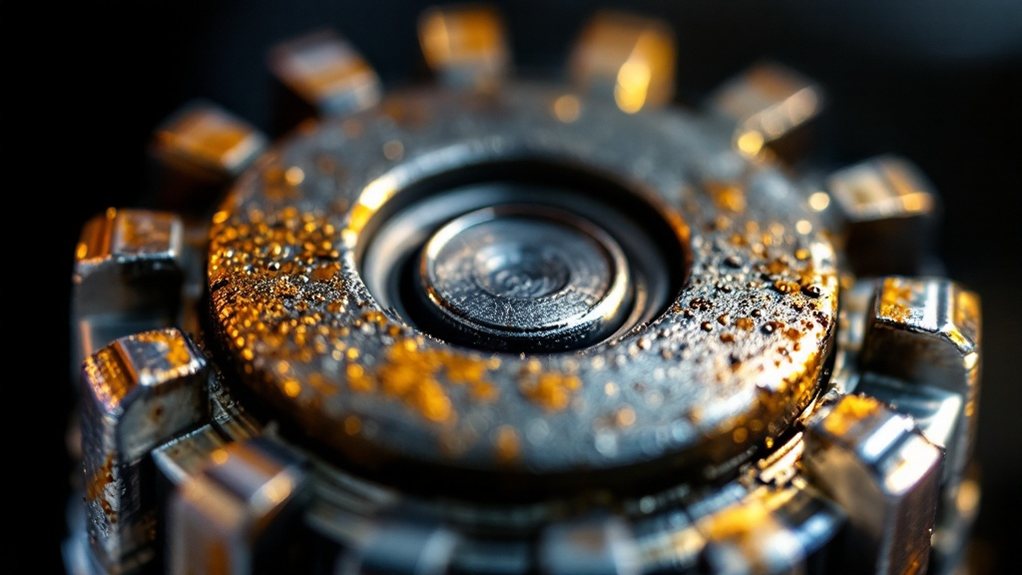
The gas system’s configuration plays a pivotal role in determining your AR-15 bolt’s operational lifespan. When your rifle is overgassed, excessive pressure forces your bolt carrier group to cycle with heightened violence, accelerating wear on critical components. An adjustable gas block can help you fine-tune gas flow, preventing premature bolt deterioration.
If you’re running a suppressor, you’ll need to regulate your gas system to compensate for increased back pressure. A weak buffer spring combined with an improperly sealed gas key can cause irregular bolt cycling, leading to uneven stress distribution across your bolt lugs. Even a small amount of play in your gas system affects how your bolt impacts the barrel extension on the last round.
Regular inspection of your spring and buffer assembly ensures optimal gas system performance, extending your bolt’s service life.
Proper Inspection Techniques and Tools
Regular inspections call for specific tools and systematic procedures to properly evaluate your AR-15 bolt’s condition. You’ll need a basic set of tools, including an Allen wrench, hammer spring tester, and gauges specifically designed for bolt inspection.
- Check the pin hole diameter using a precision gauge – excessive wear here can indicate a failing bolt
- Test your buffer and spring tension to ensure proper bolt cycling and prevent premature wear
- Examine the bolt face with a magnifying glass for cracks radiating from the extractor or ejector
- Use a spent case to verify proper extractor tension and function
Keep a spare bolt on hand for comparison during inspections. This allows you to spot subtle differences that might indicate wear patterns requiring immediate attention. Regular documented inspections help track wear progression over time.
Maintenance Schedules for BCG Components
Maintaining a consistent schedule for bolt carrier group (BCG) component maintenance directly builds upon your inspection findings. You’ll need to regularly clean and inspect your bolt carrier, gas key, firing pin, and cam pin to ensure reliable operation.
Check your gas rings every few thousand rounds, as they’re prone to wear and can affect your rifle’s performance. You should replace them when signs of deterioration appear. Pay special attention to the gas key screws, ensuring they remain properly staked to prevent loosening during operation. Your firing pin requires periodic cleaning and inspection to prevent light primer strikes.
For Mil-Spec BCGs, establish a systematic maintenance routine that includes thorough cleaning after each range session and detailed component inspection every 3,000-5,000 rounds. Replace any parts showing cracks, chips, or excessive wear.
Choosing Quality Replacement Parts

Selecting quality BCG components demands careful attention to material specifications and manufacturing standards. When you need to replace your bolt carrier group, choosing mil-spec parts made from Carpenter 158 steel ensures optimal performance in your upper receiver.
- Verify proper gas key staking on new BCGs before installation – poorly staked keys can loosen and cause malfunctions
- Check manufacturer testing documentation for proof of high-pressure and magnetic particle inspection
- Confirm material specifications match mil-spec requirements, particularly for critical components
- Look for proper coating application and surface treatment
Before you remove the handguard and take your upper apart, research reputable manufacturers known for quality control. Don’t compromise on BCG quality when upgrading your rifle – a substandard bolt carrier group can damage your new barrel and create reliability issues that are costly to fix.
Frequently Asked Questions
What Is the Life Expectancy of an AR-15 Bolt?
Your AR-15 bolt can last between 5,000 to 20,000 rounds with proper lubrication and maintenance. However, this life expectancy depends heavily on factors like extractor spring condition, firing pin integrity, and bolt face erosion.
You’ll need to monitor bolt carrier tilt and cam pin wear regularly. Higher quality bolts made from properly heat-treated steel will typically outlast economy options. You’ll get better longevity using brass-cased rather than steel-cased ammunition.
Do AR Bolt Carriers Wear Out?
Yes, your AR bolt carrier will wear out over time. You’ll notice carrier head discoloration, extractor spring fatigue, and firing pin breakage as early warning signs.
Regular inspection should focus on gas ring deterioration, lugs wear patterns, and cam pin groove erosion. While these components are designed for durability, they’re not indestructible. You’ll need to monitor wear patterns and replace parts when necessary to maintain optimal function and reliability.
What Wears Out on an AR-15?
Your AR-15’s key wear points include several critical components. You’ll need to monitor your firing pin health for mushrooming or cracks, check magazine reliability to prevent feeding issues, and assess trigger group function for consistent breaks.
Keep an eye on your gas tube condition for proper cycling, watch for buffer spring wear that can affect cycling speed, and track barrel accuracy as rounds accumulate. Regular inspection helps identify these common wear points early.
What Does an AR-15 Bolt Catch Do?
Like a faithful gatekeeper, your AR-15’s bolt catch serves as a critical control mechanism. When you’ve fired your last round, the bolt catch springs into action, catching and holding the bolt carrier group in its rearward position.
You’ll need regular bolt catch inspection and cleaning to ensure smooth operation. The bolt catch function relies on proper bolt catch spring tension, and if you notice inconsistent performance, bolt catch adjustment or replacement may be necessary.
Conclusion
Regular inspection of your AR-15’s bolt carrier group will detect critical wear patterns before catastrophic failure occurs. Consider the case of a competitive shooter who discovered hairline cracks in his bolt lugs during routine maintenance, preventing a potential malfunction during a match. You’ll extend your BCG’s service life by measuring wear points against manufacturer specifications, monitoring gas ring tension, and replacing components at recommended round counts.


0 Comments