


Regular inspection of your AR15 bolt carrier reveals key wear indicators you’ll need to monitor. Check for irregular, jagged surfaces on gas rings, smooth uniform wear on bottom surfaces, and proper gas key alignment. You’ll want to examine critical stress points like the cam pin channel and carrier rails for scoring or deformation. Proper bolt extension should measure between 0.014″ and 0.084″ from the carrier face. Understanding these wear patterns ensures reliable function and safety of your firearm system.
Key Takeaways
- Inspect carrier rails for smooth, uniform wear patterns and avoid deep grooves or galling that indicate excessive metal-to-metal contact.
- Check the gas key for proper alignment, secure mounting screws, and absence of gaps between mating surfaces.
- Look for smooth, polished surfaces on bottom of carrier rather than pitting or irregular wear patterns.
- Examine cam pin channel for unusual scoring or deformation, which may indicate misalignment or component stress.
- Verify gas key staking points remain intact and mounting screws show no signs of loosening or shearing.
Visual Indicators of Gas Ring Deterioration
Three key visual indicators help identify worn gas rings on your AR15 bolt carrier. First, inspect the surface condition of your gas rings closely – worn rings will show an irregular, jagged appearance that looks “eaten away” compared to new rings.
Second, if you’re using three-piece gas rings, test for looseness by gently shaking the bolt carrier; excessive bolt movement indicates worn rings requiring replacement.
Third, while one-piece rings might pass traditional bolt drop tests, you’ll need to account for different surface treatments like phosphate, chrome, or nitride, as these affect testing reliability.
When you spot any of these wear indicators, don’t replace just one ring – install a complete new set of gas rings. This ensures proper sealing and prevents potential function issues caused by mixing worn and new components.
Checking Bolt Carrier Surface Wear Patterns
Regular inspection of bolt carrier surface wear patterns reveals vital information about your AR15’s operational health. You’ll want to examine your carrier’s contact surfaces for signs that indicate potential issues or normal wear.
| Surface Area | Normal Wear | Warning Signs |
|---|---|---|
| Bottom | Smooth, uniform | Excessive wear, pitting |
| Sides | Even patterns | Galling, deep grooves |
| Cam Pin Area | Light wear lines | Deep scratches |
| Gas Ring Contact | Consistent marks | Uneven patterns |
| Rail Surfaces | Polished look | Heavy scoring |
When inspecting your bolt carrier, you’ll notice smooth, uniform patterns are typical with regular use. However, if you spot localized wear spots, discoloration, or significant pitting, your carrier may need immediate attention. Lengthwise grooves from the cam pin typically indicate high round counts, while irregular wear patterns might signal gas system issues or improper assembly.
Gas Key Alignment and Security Assessment
You’ll want to begin your gas key inspection by examining the component’s alignment with the carrier body and checking for any visible gaps between the mating surfaces that could compromise the gas seal.
Next, verify the proper torque of the mounting screws using a specialized gauge tool, ensuring they meet manufacturer specifications and show no signs of backing out.
Your final check should focus on the gas key’s internal bore condition, where carbon buildup or erosion could indicate seal issues that require immediate attention.
Visual Inspection Methods
Proper assessment of your AR15’s gas key begins with a methodical visual inspection of its alignment and security features. You’ll need to examine the carrier key’s mounting position, ensuring it sits flush against the bolt carrier with no visible gaps that could compromise gas seal integrity.
When inspecting your gas key, check for deformation, cracks, or surface erosion where it meets the gas tube. Pay particular attention to the mounting screws, looking for signs of loosening or shearing. You’ll want to verify that thread-locking compound is present and the screws remain securely fastened. If you notice the threads in the carrier have become wallowed out, you’ll need to replace the component.
A thorough inspection of these areas helps maintain optimal cycling performance and prevents gas leakage issues.
Proper Torque Verification
Following a thorough visual inspection, verifying the gas key’s torque specifications becomes the next priority in maintaining optimal bolt carrier performance. You’ll need to confirm that the Key Screws meet manufacturer requirements to ensure a proper gas seal.
- Check each gas key screw individually with a calibrated torque wrench, comparing values against your manufacturer’s specifications
- Apply appropriate thread-locking compound when re-securing loose screws to prevent future movement
- Replace any damaged or stripped screws immediately to maintain gas system integrity
If you discover loose gas keys during verification, don’t simply re-torque the existing screws. Install new screws with fresh thread-locker to establish a reliable seal. This proactive approach prevents potential malfunctions and extends your bolt carrier’s service life. When properly torqued, your gas key should maintain consistent performance through thousands of rounds.
Key-to-Carrier Gas Seal
A reliable gas seal between the carrier key and gas tube forms the heart of your AR-15’s cycling system. When inspecting your bolt carrier group, you’ll need to verify that the gas key maintains proper alignment with the dimensions of the carrier and shows no signs of deformation or damage.
Check the gas key screws for any movement or looseness, as these are critical components that maintain the seal integrity. If you notice any wiggling or rotation of the screws, you’ll need to remove them, apply fresh thread-locking compound, and retorque to specification.
Look for carbon buildup or erosion around the key-to-carrier junction, as these can indicate a compromised seal. If you discover any physical damage to the gas key itself, you’ll need to replace the entire bolt carrier group to restore proper function.
Measuring Bolt Extension and Retention
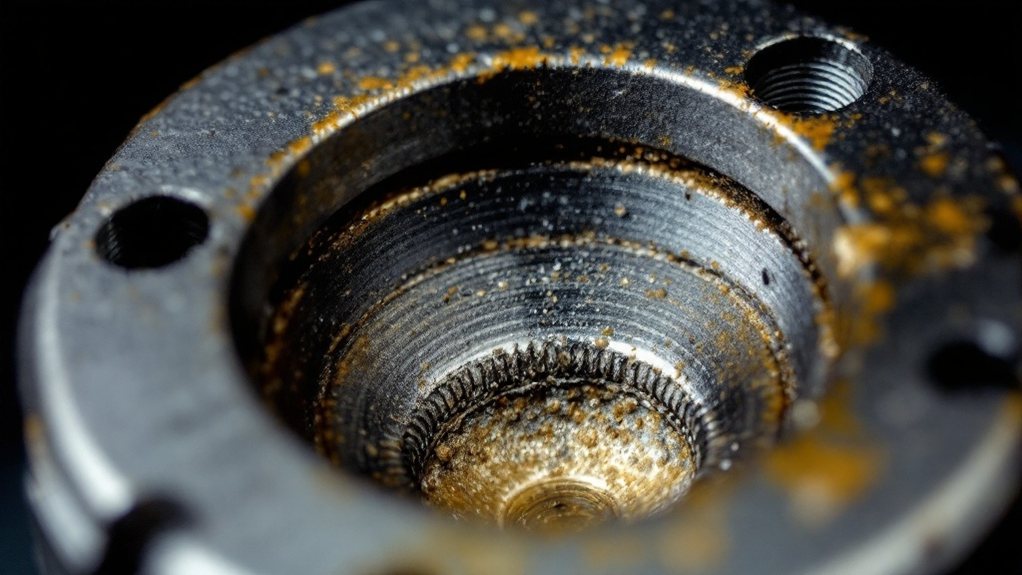
The two critical measurements for evaluating bolt carrier health are extension length and retention pressure. Your bolt should extend and retract smoothly while maintaining proper engagement with the firing pin retaining pin. To properly assess these measurements, you’ll need a precise set of calipers and a bolt carrier gauge.
Measure the bolt extension with the bolt in its fully forward position – the ideal measurement should be between 0.014″ and 0.084″ from the carrier face.
Check retention pressure by testing the bolt’s resistance to rotation when fully extended.
Verify the firing pin retaining pin sits flush and doesn’t show signs of walking out during operation.
If you notice any measurements outside these specifications or irregular movement patterns, it’s time to replace worn components or seek professional inspection.
Examining Critical Stress Points
Once you’ve completed measuring bolt extension and retention, specific stress points on your AR15 bolt carrier require careful inspection. Begin by examining the bolt carrier group’s cam pin channel for signs of unusual wear, scoring, or metal deformation. You’ll want to check the edges where the cam pin contacts the carrier, looking for any burrs or excessive material displacement.
Next, inspect the gas key’s staking points and mounting screws for any looseness or shearing. Check the carrier’s rails for consistent wear patterns and ensure there’s no galling or metal transfer.
Pay special attention to the bolt lugs where they lock into the barrel extension, as these areas experience significant pressure during firing. Look for cracks, chips, or uneven wear that could indicate alignment issues or material fatigue.
Testing Bolt Carrier Movement and Function
Proper testing of bolt carrier movement requires systematic inspection of multiple components working in concert. You’ll need to assess both the bolt carrier group’s function and individual parts for signs of wear or damage.
- Hold your bolt carrier vertically with the bolt extended – if it drops freely, your gas rings need replacement
- Check your gas key screws for any signs of loosening or shearing, as these are common failure points on bolt carriers
- Test bolt closure using a field gauge in a new barrel to verify proper headspace and function
While chrome-lined bolt carriers rarely wear out from normal use, they can break after extensive shooting. You should regularly disassemble and compare components to identify potential issues before they lead to malfunctions. Pay special attention to cracked bolts and worn gas rings during your inspection.
Common Wear Areas on Chrome Lining

During regular inspections of your bolt carrier group, understanding chrome lining wear patterns helps identify potential problems before they become critical failures. Pay particular attention to areas where your bolt carrier interfaces with the gas tube and experiences the most friction.
You’ll want to examine the gas key and cam pin areas closely, as these locations typically show the first signs of chrome wear. Look for shiny spots, pitting, or discoloration that indicates the chrome lining is thinning.
The bolt carrier slide rails and rear section are also susceptible to accelerated wear patterns that require your attention.
To protect these surfaces, ensure you’re applying a drop of oil to high-friction areas during maintenance. Regular lubrication and proper cleaning will help preserve the chrome lining, extending your bolt carrier’s service life and maintaining reliable function.
Essential Tools for Carrier Inspection
To effectively inspect your AR-15 bolt carrier, you’ll need several precision measurement and observation tools in your maintenance kit. A magnifying glass combined with bright lighting will help you spot surface defects, while a digital borescope enables detailed examination of internal components like the gas key and cam path.
For precise measurements and thorough inspection, you’ll want to include these essential tools:
- Micrometers for measuring critical dimensions of bolt lugs and cam pin holes
- Bolt carrier check gauge to verify proper headspace and lock-up
- Cleaning rod with patches to prepare surfaces for detailed examination
These tools allow you to conduct methodical inspections, identifying potential issues before they lead to malfunctions. Regular checks using proper measurement tools help maintain your rifle’s reliability and extend its service life.
Recognizing Material Fatigue Signs
Material fatigue in AR-15 bolt carrier groups manifests through specific visual and physical indicators that you can identify during your routine inspections. Look for deep grooves, pitting, or surface discoloration on your bolt carrier group, as these signs indicate potential material breakdown. You’ll want to pay particular attention to high-stress areas where the buffer spring contacts the carrier.
If you’re using a carrier made from 8620 or 9310 steel, you’ll need to be especially vigilant as these materials have lower tensile strength compared to Carpenter 158 steel. Watch for cracks, chips, or structural anomalies that could lead to failure. High round counts and improper gas pressure can accelerate wear, so maintain proper cleaning and lubrication schedules.
When you spot significant wear patterns, replace your bolt carrier group with a high-quality, properly heat-treated component.
Determining Replacement Timing and Criteria
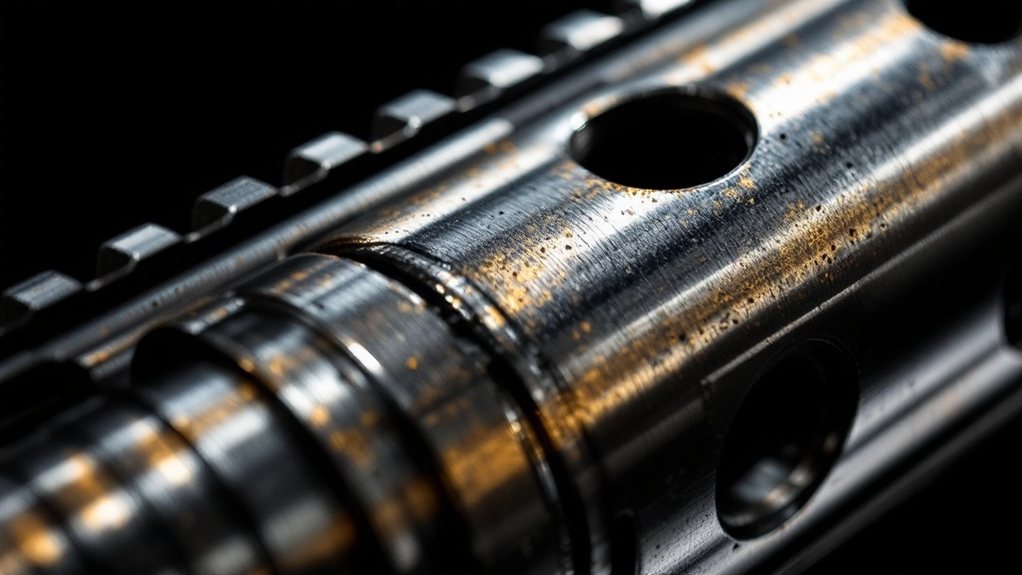
Understanding when to replace your bolt carrier group requires a systematic evaluation based on measurable criteria and usage patterns. While bolt carriers can last through tens of thousands of rounds, regular inspection helps prevent failures during critical moments. Your replacement decision should rely on observable wear and tear indicators rather than arbitrary timelines.
Replace your bolt carrier if you notice cracks, especially near the cam pin hole, or severe surface deformation that affects smooth cycling.
Consider replacement when your gas rings no longer maintain proper seal, evidenced by the bolt carrier failing the standing test.
Evaluate replacement if throat erosion exceeds manufacturer specifications or if you observe abnormal carrier tilt that causes uneven wear.
Monitor these indicators during your regular maintenance routine to maintain optimal rifle performance and reliability.
Frequently Asked Questions
Do AR Bolt Carriers Wear Out?
Your AR-15 bolt carrier won’t typically wear out under normal use thanks to its chrome lining. While you’ll need periodic bolt carrier inspections, complete replacement is rare.
You’re more likely to encounter breakage issues, like sheared gas key screws, than actual wear-out. You can maximize your bolt carrier’s lifespan through proper maintenance and replacing wear items like gas rings when needed. Most quality bolt carriers will last through thousands of rounds.
What Does BCG and CH Mean?
Like the engine of a car, your rifle’s BCG and CH are vital components. BCG stands for bolt carrier group – it’s the heart of your AR-15’s operating system, containing the bolt, carrier, and other crucial parts that cycle rounds through your weapon.
CH stands for charging handle, which you’ll use to manually pull the BCG rearward when loading or clearing your rifle. Together, they’re essential for your firearm’s reliable operation.
What Wears Out on an AR-15?
You’ll need to monitor several key components on your AR-15 for wear. The most common wear points include your extractor, which can weaken over time, and firing pin wear that occurs from regular use.
Buffer spring fatigue is another area to watch, as it can affect cycling reliability. Gas rings will gradually wear down, and you should inspect your firing pin retaining pins periodically. Don’t forget to check carrier key screws for proper torque.
Are All AR-15 Bolt Carriers Interchangeable?
No, not all AR-15 bolt carriers are interchangeable. While mil-spec carriers often share similar fit and function characteristics, you’ll find that commercial variants can differ in material composition and dimensions. You’ll need to ensure compatibility with your specific upper receiver, as mixing different specs can cause reliability issues.
When selecting a replacement bolt carrier, you should verify it matches your rifle’s specifications and manufacturer’s requirements.
Conclusion
You’ll maximize your AR15’s reliability by regularly checking these critical wear points with almost obsessive attention to detail. Even microscopic gas ring deterioration or carrier surface anomalies can snowball into catastrophic failures. Monitor your bolt carrier’s condition religiously – a single overlooked stress point might mean the difference between flawless operation and complete system failure. Don’t wait until it’s too late; inspect methodically and replace components proactively.


0 Comments