


Your AR15’s bolt carrier group needs replacement when you notice five key warning signs: inconsistent chambering and sluggish cycling, visible wear on bearing surfaces like bolt lugs and carrier rails, gas ring failures causing erratic performance, changes in bolt movement and fitment including incomplete lockup, and deterioration of the chrome lining in high-friction zones. Understanding these indicators will help you maintain optimal function and prevent potential malfunctions through timely replacement.
Key Takeaways
- Deep scoring marks or excessive wear along the carrier rails indicate metal-on-metal damage requiring immediate replacement.
- Inconsistent or sluggish cycling of the bolt carrier group, especially when manually operating the charging handle.
- Visible gaps or damage to gas rings that cause poor sealing and affect proper cycling performance.
- Elongation or unusual wear patterns in the cam pin path that can lead to improper bolt rotation.
- Chrome lining shows significant deterioration with shiny patches or exposed base metal on bearing surfaces.
Inconsistent Chambering and Cycling Issues
When your AR15 exhibits inconsistent chambering or cycling problems, a worn bolt carrier is often the culprit. You’ll notice rounds only partially entering the chamber or experiencing sluggish movement when manually operating the bolt carrier group. These symptoms typically indicate wear on critical bearing surfaces of the carrier.
To diagnose the issue, you’ll want to rack the action and observe the bolt carrier’s movement. If it feels stiff or inconsistent, remove the bolt carrier group for closer inspection. Look for signs of unusual wear patterns or damage on the carrier’s surfaces. A reliable troubleshooting method is to temporarily install a known good bolt carrier in your rifle and test function. If the problems resolve, you’ve confirmed your original carrier needs replacement to restore proper cycling and reliability.
Visual Signs of Wear on Bearing Surfaces
Visual inspection of your AR15 bolt carrier’s bearing surfaces reveals several key indicators of wear that require attention. You’ll need to examine specific areas where the bolt and carrier interact during cycling.
| Surface Area | Normal Condition | Signs of Wear |
|---|---|---|
| Bolt Lugs | Even finish | Chipping/cracks |
| Gas Rings | Tight seal | Visible gaps |
| Carrier Rails | Smooth surface | Deep scoring |
| Cam Pin Path | Clean channel | Elongation |
| Key Surface | Flush mount | Loosening |
Check if your carrier is worn by looking for uneven wear patterns, particularly on the bearing surfaces where metal-to-metal contact occurs. Pay special attention to the bolt lugs for cracks, the gas rings for proper expansion, and the carrier’s surface finish for unusual marks or scoring. If you notice chrome plating flaking off or deep scratches, it’s time to replace these components.
Gas Ring Performance and Sealing Problems
Since gas rings provide the essential seal between your bolt and carrier, their performance directly impacts your AR15’s reliability and cycling. When these critical components wear out, excess gas escapes around the bolt instead of properly channeling through the gas tube and gas key. You’ll need to replace your gas rings approximately every 2,500 NATO rounds due to the intense heat and pressure they endure.
Inconsistent chambering of rounds indicates potential gas ring failure. Sluggish movement of your bolt carrier group suggests sealing problems. Inspect gas rings during routine maintenance for signs of wear. Replace all three gas rings as a set when performing maintenance. Watch for unusual gas patterns around your gas key that may indicate leakage.
Don’t wait for complete failure – replace worn gas rings promptly to maintain your rifle’s reliability and proper cycling.
Bolt Movement and Carrier Fitment Changes
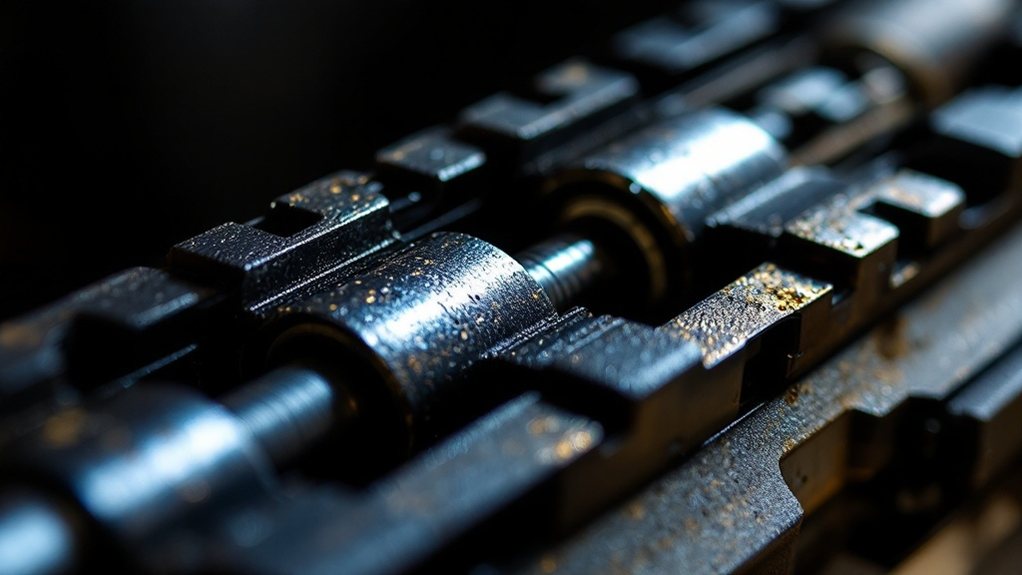
Properly functioning bolt movement within your carrier is essential for reliable AR15 operation. You can’t imagine how quickly performance degrades when wear sets in after thousands of rounds.
When you pull the bolt, if it feels sluggish or stiff, that’s a clear warning sign of wear on critical bearing surfaces.
Pay attention if your bolt develops a little bit more play than usual, either side-to-side or up-and-down within the carrier. This increased movement isn’t normal. Watch for signs that your bolt won’t fully close on a headspace gauge, even with a new barrel installed.
If you notice the bolt or carrier tilting excessively during cycling, or if the bolt won’t lock completely into battery, these issues strongly indicate your carrier group needs replacement.
Chrome Lining Deterioration and Metal Finish Wear
Chrome lining serves as your bolt carrier’s first line of defense against wear and corrosion. As your AR15 sees continued use, this protective layer can gradually deteriorate, revealing the underlying metal. You’ll notice the worn areas developing a distinct polished appearance, particularly in high-friction zones.
Inspect your chrome lined carrier regularly for signs of finish deterioration. Look for shiny patches along the cam pin track and bearing surfaces. Check the gas key area for excessive wear or metal exposure. Monitor the carrier’s overall surface finish for consistent coloring. Watch for any unusual marks or scratches that penetrate the chrome lining.
When you observe significant chrome wear or exposed base metal, it’s time to consider replacement. These wear patterns can accelerate quickly once the protective chrome layer is compromised, potentially affecting your rifle’s reliability and performance.
Frequently Asked Questions
Do AR Bolt Carriers Wear Out?
Your AR-15 bolt carrier won’t typically wear out under normal use thanks to its chrome-lined finish. However, you’ll want to monitor gas key integrity, bolt carrier finish, carrier tilt prevention, and bolt cam pin wear for signs of issues.
While complete wear-out is rare before 1 million rounds, breakage is more common, especially with gas key screws. You’ll extend your carrier’s life significantly by maintaining proper lubrication and replacing wear items regularly.
How Often Should I Replace the Bolt Carrier Group?
You’ll need to replace your bolt carrier group (BCG) every 10,000-15,000 rounds, though this varies based on your firing conditions and maintenance procedures. Proper lubrication frequency and a consistent cleaning schedule can extend your BCG’s lifespan significantly.
Check your bolt face, gas rings, and extractor regularly. While the carrier itself rarely wears out, you should replace the entire BCG when the bolt shows signs of wear or damage.
What Is the Life Expectancy of an AR-15 Bolt?
Your AR-15 bolt’s life expectancy typically ranges from 7,000 to 15,000 rounds, but you’ll get optimal performance by maintaining proper lubrication and a consistent cleaning schedule. Your storage conditions and cycling frequency directly impact longevity.
With careful maintenance, you can expect 10,000 rounds from a quality bolt before replacement becomes necessary. However, it’s critical to inspect your bolt regularly for signs of wear, regardless of round count.
How Many Rounds Should a BCG Last?
Your AR-15’s bolt carrier group (BCG) should last between 7,000 to 15,000 rounds with proper care. You’ll extend this lifespan by following a strict cleaning schedule and maintaining proper lubrication requirements.
With enhanced maintenance protocols and optimal storage conditions, you can push a quality BCG to 20,000 rounds. However, you’ll want to monitor gas ring performance every 2,500 rounds and replace the BCG when installing a new barrel, typically around 10,000 rounds.
Conclusion
Regular inspection of your AR15 bolt carrier group is like checking vital signs – it keeps your rifle running true. When you spot these key warning signs, don’t hesitate to replace this critical component. Your safety and your rifle’s reliability depend on maintaining proper BCG function. Remember, a compromised bolt carrier can lead to catastrophic failures, so monitor these indicators during your routine maintenance checks.


0 Comments