

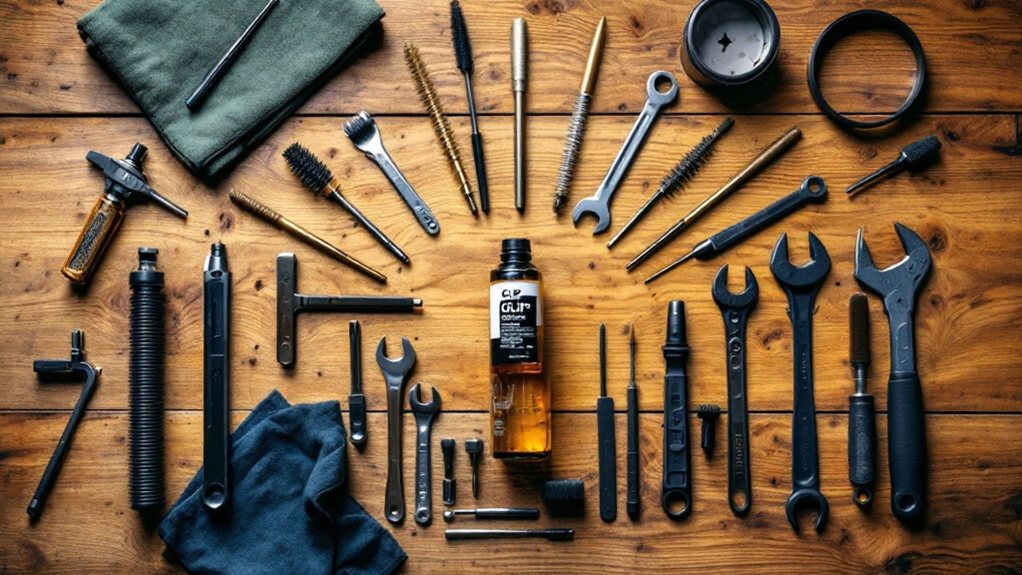
You’ll need three essential tools for proper AR15 home maintenance: a comprehensive cleaning kit with brass jags and bore brushes to keep your firearm functioning reliably, an armorer’s wrench for basic disassembly and parts replacement, and a quality vise block system to securely mount your rifle during maintenance. When combined with proper technique and regular upkeep, these foundational tools will help maintain your AR15’s accuracy and extend its service life.
Key Takeaways
- A quality cleaning solvent like Hoppes #9 is essential for removing carbon buildup and maintaining proper function.
- An armorers wrench enables critical maintenance tasks like barrel nut adjustment and buffer tube installation.
- A sturdy vise block securely holds the upper or lower receiver while performing maintenance work.
- A torque wrench ensures proper tightening of components to manufacturer specifications for safety and reliability.
- Brass cleaning jags and brushes prevent damage to the barrel while effectively removing debris and fouling.
Essential Cleaning Kit Components For Your AR15
While a basic universal cleaning kit provides a solid foundation, building a comprehensive AR15 maintenance setup requires several essential components. You’ll need a quality cleaning solvent like Hoppes #9, alongside durable brass jags rather than plastic ones from universal kits.
For proper upper receiver maintenance, invest in a sturdy vise block and torque wrench to ensure secure mounting during cleaning.
Your kit should include specialized tools like a roll pin punch, castle nut wrench, and gas tube alignment tools. Keep an abundance of cleaning patches on hand, and consider adding inexpensive scissors to cut them to size. Mount your upper receiver in a high-quality American or German-made vise for stability during barrel cleaning and maintenance tasks.
With these components, you’ll be equipped to maintain your AR15’s functionality and accuracy.
Specialized Wrenches and Blocks For Basic Repairs
Proper assembly and maintenance of your AR15 requires specialized wrenches and blocks designed for specific tasks. You’ll need a quality armorers wrench, such as the Tapco, DPMS, or Magpul models, along with upper vise blocks and mag well blocks to secure components during work.
A torque wrench is crucial for installing the barrel nut within the specified 30-80 ft-lbs range. Don’t forget to apply lithium grease to the threads. The Model 1 Pivot Pin Detent Installation Tool helps you manage small parts during assembly, while a buffer tube wrench ensures proper installation of the buffer system.
For maximum stability during maintenance, use both upper and lower receiver vise blocks or a Reaction Rod. These tools prevent damage to your AR while providing the secure platform needed for detailed work and repairs.
Proper Storage Solutions For Your Maintenance Tools
Investing in organized storage systems protects your specialized AR-15 maintenance tools and extends their service life. When you’re working on tasks like gas system cleaning and maintenance or using a breaker bar on the barrel extension, you’ll want quick access to your punch set and multi tool.
- Choose a lockable toolbox with foam inserts to secure your tools and prevent damage
- Label compartments clearly for quick identification of cleaning supplies and specialty items
- Use portable roll-up organizers for range visits, keeping your tools protected yet accessible
Years ago, improper storage led to lost or damaged tools – make sure that doesn’t happen to you. It’s a good idea to maintain an inventory checklist of your Rifle Cleaning supplies and maintenance equipment. This systematic approach ensures your tools stay organized and ready for any repair task.
Frequently Asked Questions
What Kind of Cleaning Kit Do I Need for an AR-15?
You’ll need a comprehensive cleaning kit for your AR-15 that includes essential gun cleaning supplies like bore brushes, cleaning rods, and patches. Start with a universal kit containing suitable gun cleaning solvents like CLP or Hoppes #9, recommended gun lubricants, and proper tools for disassembly.
Include brass jags and multiple brushes for thorough cleaning. You can customize your kit over time, but ensure you’ve got the basics for regular maintenance according to your shooting frequency.
What Parts Need to Be Oiled on an AR-15?
You’ll need to oil several key components of your AR-15. Start with the bolt carrier group, including the bolt, firing pin, and extractor. Apply light lubrication to the buffer spring and buffer tube assembly.
Keep the charging handle rails lubricated, and don’t forget the trigger group components. Add oil to your magazine well and release button. Finally, apply a thin coat to the barrel extension and chamber area for optimal function.
How Often Does an AR-15 Need to Be Cleaned?
For optimal performance, you’ll need to clean your AR-15 every 500-1,000 rounds fired, though your specific firing schedule may vary.
If you’re a recreational shooter, establish a maintenance schedule of cleaning after every 2-3 range sessions.
For corrosion prevention, you’ll want to clean more frequently if you’re shooting corrosive ammunition or operating in humid conditions.
Lubrication frequency should match your cleaning routine, and you’ll want to perform a thorough disassembly process and cleaning after any exposure to harsh elements.
What Tools Are Needed for Gunsmithing?
For professional gunsmithing, you’ll need several essential tools: a sturdy gunsmithing vise to secure firearms, a quality hammer and punch set for pin removal, and a calibrated torque wrench for precise assembly.
You’ll also require headspace gauges, precision measuring tools, and a bore snake for maintenance. For advanced work, you’ll want machine shop equipment like a milling machine, lathe, and drill press. A soldering iron is crucial for electrical components and sight installation.
Conclusion
You’ll find that proper AR15 maintenance isn’t rocket science, but it’s certainly more complex than wiping down grandpa’s old hunting rifle. With these three essential tool categories – cleaning supplies, specialized wrenches, and storage solutions – you’re equipped to handle 90% of basic maintenance tasks. Just remember: all the fancy tools in the world won’t compensate for poor technique or irregular maintenance schedules.


0 Comments