

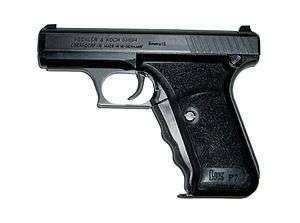
The H&K P7 is a 9mm pistol introduced in the 1970s that features a revolutionary squeeze-cocking mechanism and gas-delayed blowback system. You’ll find a 4.1-inch barrel with polygonal rifling, delivering exceptional accuracy in a compact 27.7-ounce package. Its 8+1 capacity comes in a single-stack configuration, while the ambidextrous controls offer natural handling. The P7’s unique gas system and squeeze-cocker represent significant innovations that changed modern pistol design. Understanding its mechanical complexity reveals why collectors value it at $600-$3000.
Key Takeaways
- The P7 is a unique 9mm pistol featuring a squeeze-cocker mechanism that acts as both safety and slide release.
- Manufactured by Heckler & Koch in the 1970s, it uses a gas-delayed blowback system for enhanced recoil management.
- The pistol has a 4.1-inch barrel with polygonal rifling, delivering exceptional accuracy and an 8+1 round capacity.
- Prices range from $600 for well-used examples to $3000 for rare variants, reflecting its collectible status.
- Despite excellent reliability, the P7’s gas system can heat up during rapid fire and requires more complex maintenance.
Description
The Heckler & Koch P7 represents a significant advancement in pistol design from the 1970s, featuring a gas-delayed blowback system and innovative squeeze-cocker mechanism.
You’ll find a fixed 4.1-inch barrel with polygonal rifling that delivers exceptional accuracy. The pistol’s gas-delayed blowback system helps manage recoil, while the squeeze-cocker mechanism serves as both a safety and slide release.
Price Range
Whether you’re seeking a collector’s piece or a functional firearm, P7 prices vary significantly in today’s market, ranging from $600 for well-used examples to north of $2,000 for pristine specimens.
| Condition | Price Range | Market Category |
|---|---|---|
| Well-Used | $600-$1000 | Shooter Grade |
| Good | $1200-$1500 | Police/Service |
| Excellent | $1500-$2000 | Collector Grade |
| Rare/Prototype | $2000-$3000 | Investment Grade |
You’ll find this effective pistol commanding premium prices due to its unique squeeze-cocking mechanism and limited production numbers.
Specifications
The H&K P7’s steel construction and gas-delayed blowback system contribute to its 27.7-ounce weight, making it a substantial yet manageable carry pistol. You’ll find the 4.1-inch barrel equipped with polygonal rifling, chambered in 9mm Luger, delivering consistent accuracy and reliability. The single-stack magazine configuration provides an 8+1 round capacity, striking a balance between concealability and defensive capability.
| Specification | Measurement | Type |
|---|---|---|
| Barrel Length | 4.1 inches | Fixed |
| Overall Length | 6.5 inches | Compact |
| Weight | 27.7 ounces | Unloaded |
Weight
Weighing between 785 to 1,250 grams unloaded, Heckler & Koch’s P7 series demonstrates significant variance across its model range.
The PSP model features the lightest configuration at 785 grams, while the P7M10 tops the scale at 1,250 grams.
You’ll find the pistol’s weight is optimized through its blowback-operated slide mechanism, making it ideal for law enforcement when paired with its innovative cocking lever and barrel design.
Barrel Length
Featuring a fixed barrel length of 4.1 inches, H&K’s P7 incorporates polygonal rifling that set new standards for pistol accuracy in its era. The fixed barrel design enhances reliability while maintaining precision, and you’ll find the compact and maneuverable dimensions ideal for tactical applications.
The innovative barrel configuration also accommodates suppressor attachments effectively, making it a versatile choice for specialized operations.
Material Made Out Of
Built from high-strength steel components, H&K’s P7 combines a durable frame and slide with a chrome-molybdenum steel barrel for maximum structural integrity.
The front strap houses a low-bore axis gas piston system, while corrosion-resistant alloy components, including the cocking lever, ensure reliable operation. You’ll find polymer grip panels that enhance ergonomics and provide a secure hold during shooting.
Chambered In
When introduced, the H&K P7 came chambered in 9mm Luger (9x19mm Parabellum), offering an 8-round single-stack magazine capacity in its standard configuration.
Later production models expanded the pistol’s caliber options to include .22 LR, .380 ACP, and .40 S&W variants. The P7 M13 model featured an enhanced double-stack magazine that increased capacity to 13 rounds while maintaining the weight requirements for police and military service.
Capacity
The standard P7’s single-stack magazine held 8 rounds of 9mm ammunition, while the later P7 M13 variant expanded capacity to 13 rounds through its double-stack design.
Different magazine capacities were offered across various models of this German police semi-automatic pistol, with versions available in .22 LR, .380 ACP, and .40 S&W calibers. The magazine release mechanism maintained reliable feeding across all configurations.
Trigger Pull
Standard trigger pull specifications for the P7 range between 4.5 to 5 pounds, delivering a true single-action operation once the squeeze-cocking lever is engaged.
When you pull the trigger on a cocked and ready P7 pistol, you’ll feel initial slack followed by smooth creep and a crisp break. The flat, serrated trigger sits comfortably within the trigger guard, resetting with an audible click upon release.
Safety?
Safety innovations distinguish the P7’s unique squeeze-cocker mechanism, which requires 10-15 pounds of initial force to engage. Once activated, you’ll only need 1.5 pounds of pressure to maintain the single-action trigger pull.
The gas pressure system limits slide velocity for enhanced safety while releasing the squeeze-cocker safely de-cocks the striker. When clearing malfunctions, you can de-cock before the slide locks back or sends the slide home.
Action
Built around a gas-delayed blowback system, the P7’s action sets it apart from conventional pistol designs.
The pistol features a 105mm barrel length with innovative polygonal rifling, enhancing accuracy and durability. Its semi-automatic operation accommodates various magazine capacities, from 8-round single-stack to 13-round double-stack configurations.
The gas-delayed mechanism ensures reliable function while maintaining compact dimensions.
Optic Ready?
Original P7 models came without any optic mounting provisions, reflecting their 1970s-era development before the widespread adoption of pistol-mounted red dots. Designed to make German special forces more effective with fixed sights, the P7’s gas-delayed blowback system and unique internal design make aftermarket optic modifications challenging.
You’ll find no factory-produced variants with optic mounting capabilities on this classic pistol.
Review
You’ll find the P7’s squeeze-cocker mechanism and low bore axis deliver exceptional accuracy and control, while its gas-delayed blowback system ensures reliable operation with minimal recoil.
The pistol’s drawbacks include heat buildup during rapid fire, a relatively high production cost, and a limited magazine capacity of 8 rounds. Its robust construction and innovative safety features have proven reliable in military and law enforcement service, though proper maintenance is essential due to the complexity of its gas system.
Pros
When examining the P7’s strengths, the squeeze-cocker mechanism stands out as its defining feature, delivering a consistent single-action trigger pull that enhances accuracy and control. The gas-delayed blowback system paired with the fixed barrel ensures exceptional shooting performance.
| Feature | Benefit |
|---|---|
| Polygonal Rifling | Superior Accuracy |
| Grip Safety | Enhanced Protection |
| Ambidextrous Controls | Natural Handling |
The P7’s innovative design merges combat reliability with precision engineering, making it a standout choice for discerning shooters.
Cons
Despite its engineering excellence, the P7 comes with several notable drawbacks that potential users should consider. The gas cylinder can heat up significantly during rapid fire, even with the plastic heat shield. You’ll notice the distinctive “clack” when de-cocking, potentially compromising tactical situations. The loaded chamber indicator’s design and limited aftermarket support may affect your customization options.
| Issue | Impact | Solution |
|---|---|---|
| Hot Gas Cylinder | Hand Burns | Limited Use |
| De-cocking Sound | Position Reveal | Slower Operation |
| Limited Parts | Maintenance Cost | Factory Service |
| Felt Recoil | Accuracy Impact | Training Required |
Reliability
Through decades of rigorous testing and real-world use, the P7’s gas-delayed blowback system has proven itself as one of the most reliable handgun designs ever created.
The pistol’s robust construction ensures consistent cycling in harsh conditions, while its simple field-stripping process makes maintenance straightforward.
You’ll find it handles a wide range of ammunition reliably, from standard loads to +P rounds.
Similar Models
Several variants of the P7 were developed to accommodate different calibers and user requirements. These included the P7K3 chambered in .22 LR, .32 ACP, and .380 ACP; the P7M10 in .40 S&W introduced in 1991; and the P7M13 featuring a 13-round double-stack magazine.
The P7PT8 served as a training variant for 9x19mm PT ammunition, while the P7M8 Jubilee edition offered enhanced features like a larger trigger guard and thumb magazine release.
Similar Models From Other Manufacturers
During the 1970s German police trials that launched the P7, competing manufacturers developed their own innovative service pistols. The Sig Sauer P225 and Walther P5 vied for police forces’ attention, with the P5 featuring a distinct double-action/single-action trigger, unlike the P7’s squeeze-cocker.
Later, the Beretta M9 shareda similar blowback operation, while Walther’s CCP would eventually adopt the P7’s gas-delayed system.
Maintenance
While other manufacturers developed alternative service pistols, the P7’s unique gas-delayed system demands specific maintenance protocols. You’re required to keep the weapon properly oiled and cleaned to prevent rust.
The simple disassembly process involves a frame-mounted button, but you must carefully align the gas piston during reassembly. Regular cleaning with H&K’s specialized tools extends the pistol’s service life, especially given the limited parts availability.
History
Heckler & Koch introduced the P7 pistol in 1976 as a modern replacement for the .32 ACP Walther PP in German police service.
The pistol designed by H&K competed successfully against the SIG P225 and Walther P5 before entering production in 1979.
The P7’s adoption by GSG 9 and German special forces proved it was safe to carry.
Despite carrying the pistol to US Army trials, it lost to Beretta’s M9.
Frequently Asked Questions
Why Is the HK P7 so Expensive?
You’ll find the P7’s high price reflects its innovative features and scarcity. Its ergonomic design features, including the unique squeeze-cocker, set new standards for handgun safety.
The gas-delayed blowback mechanism offers exceptional accuracy and recoil control. Limited production runs, with manufacturing ending in the 2000s, have made it highly collectible. These innovative safety mechanisms and precision engineering justify its premium cost in today’s market.
How Much Is P7 Worth?
You’ll find current market prices for P7s ranging from $600 to over $2,000, though pristine models can fetch $4,000+ from collectors. The resale value largely depends on the pistol’s condition, production year, and variant type.
Early 1980s models command premium prices due to their collector’s item status. Don’t forget to factor in maintenance costs, as replacement parts are increasingly scarce. The P7M13’s introduction has affected single-stack variants’ values.
What H&K Pistol Did John Wick Use?
In the John Wick films, you’ll see the character using the Heckler & Koch VP9, a modern striker-fired pistol. While not as unique in design as some other H&K models, the VP9’s safe trigger operation and advanced engineering make it ideal for high-intensity action sequences.
The pistol’s reliability and ergonomics align with Wick’s tactical needs, though it doesn’t have the limited production status of some other H&K firearms.
Why Are H&K Pistols so Expensive?
With manufacturing costs up to 30% higher than standard pistols, you’ll find H&K firearms command premium prices for good reason. Their exceptional pistol build quality relies on specialized manufacturing techniques that don’t cut corners.
You’re paying for premium design features like polygonal rifling and unique safety systems. Limited production runs, especially for civilian markets, drive costs higher since H&K focuses primarily on military contracts, making their pistols more exclusive and expensive.
Conclusion
You’ll find the H&K P7’s legacy lives on through its innovative squeeze-cocking mechanism and gas-delayed blowback system, which blazed a trail like a shooting star through firearms history. From its 1976 debut to its 2008 discontinuation, this German masterpiece has maintained its status as a precision instrument. Though production has ceased, the P7’s engineering influence continues to shape modern pistol designs.
0 Comments