


To protect your firearms from humidity damage, maintain storage conditions between 30-50% humidity and below 70°F. Install a quality electric dehumidifier in your gun safe, supplemented with silica gel packets for backup protection. Don’t place your safe in damp areas like basements or sheds. Monitor humidity levels daily with a hygrometer and regularly inspect your firearms for signs of rust. Proper moisture control strategy combines equipment, location, and maintenance for optimal firearm preservation.
Key Takeaways
- Maintain humidity levels between 30-50% using a reliable electric dehumidifier in your gun safe to prevent rust and corrosion.
- Install a digital hygrometer to monitor moisture levels daily and detect concerning humidity changes before damage occurs.
- Place silica gel packets throughout your gun safe as an additional safeguard against moisture, replacing them when saturated.
- Store firearms in a climate-controlled indoor location away from basements, avoiding areas prone to temperature and humidity fluctuations.
- Clean firearms regularly with metalophilic oil and space them properly in the safe to allow adequate air circulation.
Understanding the Science of Humidity and Rust Formation
While firearms represent a significant investment that demands proper care, understanding the science of humidity-related damage is essential for effective prevention. Your weapons face constant threats from moisture in the air, which triggers a destructive chemical reaction between iron and oxygen. This process creates rust that can compromise your firearm’s safe operation and integrity.
High humidity doesn’t just affect metal components – it can promote mold growth on wooden stocks and polymer parts. The risk increases when moisture combines with skin oils left from handling. Even more concerning, when dissimilar metals in your firearm come into contact in humid conditions, galvanic corrosion can occur.
To protect your investment, you’ll need to maintain dry storage conditions using tools like dehumidifiers, heat, or silica gel desiccants to control moisture levels in the air.
Optimal Temperature and Moisture Levels for Gun Storage
Maintaining specific temperature and humidity levels stands at the forefront of proper firearm storage. Your gun safe’s environment should stay between 30-50% humidity and below 70°F to prevent rust, corrosion, and material degradation. You’ll need a reliable dehumidifier or desiccant like silica gel to achieve these conditions.
| Condition | Optimal Range | Effects if Exceeded |
|---|---|---|
| Humidity | 30-50% | Rust, corrosion, wood swelling |
| Temperature | Below 70°F | Material degradation, finish damage |
| Moisture Control | Active monitoring | Galvanic corrosion, metal damage |
Don’t let your wood stocks crack from extreme dryness or swell from excess moisture. Monitor your storage environment regularly and adjust your dehumidifier settings accordingly. Remember that preventing damage is easier and less expensive than repairing it, so invest in proper moisture control methods.
Choosing and Placing Your Gun Safe for Maximum Protection
Proper placement of your gun safe serves as the foundation for effective firearms protection. You’ll want to avoid placing it in damp areas like basements or storage sheds where humidity can promote rust formation. Instead, choose a controlled indoor environment with consistent temperature levels, away from direct sunlight that could cause heat buildup.
If you’re dealing with high humidity, install a dehumidifier to maintain the recommended 30-50% moisture range. While organizing your firearms, remember that overcrowding can restrict air circulation. Leave adequate space between guns to allow proper airflow, which helps prevent moisture accumulation. Consider using desiccants or silica gel packets as an additional safeguard against humidity.
Strategic placement combined with proper moisture control will significantly extend the life of your firearms and maintain their operational reliability.
Essential Dehumidifying Equipment and Solutions
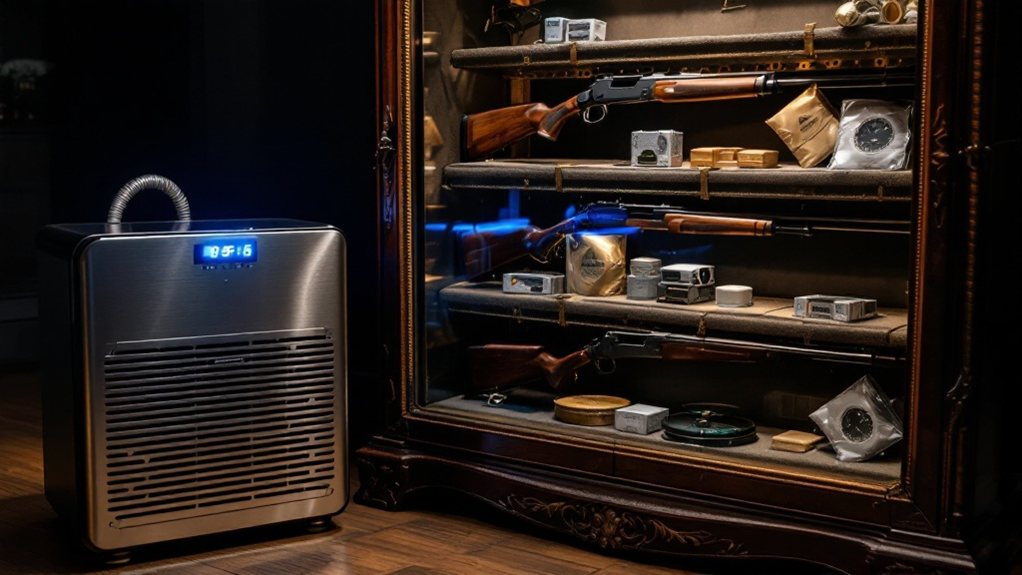
A well-equipped gun safe requires reliable humidity control equipment to protect your firearms from corrosion and damage. When choosing your dehumidifier, you’ll find plug-in electrical models are most effective at maintaining the ideal 30-50% humidity range. These units offer consistent performance but require constant power.
If you don’t have access to electricity, consider a rechargeable desiccant dehumidifier. While you’ll need to recharge it periodically, it works continuously without power. Silica gel packs are an affordable backup option, but their limited moisture absorption capacity means frequent replacement.
Don’t rely on light bulbs for dehumidification – they’ll raise temperature without controlling humidity. Whatever solution you choose, proper placement within your gun safe is crucial. Size your dehumidifier appropriately for your storage space to ensure comprehensive moisture control throughout.
Monitoring and Maintenance Strategies for Long-Term Preservation
Because long-term firearm preservation depends on consistent monitoring, you’ll need to establish a routine inspection schedule for your storage environment. Use a hygrometer to check humidity levels daily, ensuring they stay within 30-50%. Your humidity monitor will help you determine when to activate dehumidifiers or replace desiccant packs.
Maintain your humidity control devices regularly by cleaning components and replacing worn desiccant as needed. Don’t forget to disassemble your firearms for thorough inspection, paying close attention to metal surfaces for signs of rust or corrosion. Apply metalophilic oil to exposed parts after cleaning, and wipe down your firearms with a lightly oiled cloth. This comprehensive approach to monitoring and maintenance will protect your valuable firearms from moisture damage and ensure their longevity.
Frequently Asked Questions
What Is the Best Thing to Put in a Gun Safe for Moisture?
You’ll get the best moisture control in your gun safe by using electric closet dehumidifiers as your primary solution, supplemented with silica gel packets and moisture absorbing pouches.
Don’t rely solely on passive humidity absorbers – invest in rechargeable dehumidifier units for consistent protection.
Install a hygrometer monitoring system to track humidity levels, and ensure they stay between 30-50%.
Consider adding desiccant canisters near your firearms for extra protection.
What Is the Best Way to Keep Humidity Down?
You’ll get the best humidity control by using multiple methods together. Start with a mechanical or rechargeable dehumidifier as your primary defense, then add moisture-absorbing packets and desiccant silica gel as backup.
Ensure proper ventilation and avoid airtight enclosures that can trap moisture. Install humidity monitoring devices to track levels, and if possible, keep your items in climate-controlled storage.
Don’t forget to maintain consistent temperature control, as temperature fluctuations affect humidity.
Should I Put a Dehumidifier in My Gun Safe?
Like a shield against the invisible enemy of rust, you should definitely install a dehumidifier in your gun safe. A rechargeable dehumidifier or silica gel packets are essential for proper condensation management strategies.
Don’t rely on gun safe ventilation alone – you’ll need active moisture control. Consider using humidity monitoring devices to track levels and mechanical dehumidifiers for larger safes.
Climate controlled cabinets and desiccant pouches offer additional protection for your valuable firearms.
Can I Put Baking Soda in My Gun Safe?
While you can put baking soda in your gun safe, it’s not recommended as an effective humidity control solution. Instead, you’ll want to use proper safe desiccant packets, silica gel crystals, or rechargeable dehumidifiers.
Monitor your safe’s environment with a hygrometer device to maintain ideal humidity levels. Consider upgrading to controlled climate systems for optimal protection. The safe placement location and ventilation techniques also play crucial roles in moisture control more effectively than baking soda ever could.
Conclusion
Protecting your firearms from humidity isn’t optional – it’s essential. Studies show that rust can begin forming on unprotected steel at just 50% relative humidity, potentially damaging your investment within days. By implementing proper moisture control methods, maintaining optimal 30-50% humidity levels, and regularly monitoring your storage conditions, you’ll ensure your firearms remain functional and preserve their value for generations to come.


0 Comments