


Always keep your muzzle pointed downrange toward the backstop – this is the most critical range safety rule. Don’t let your muzzle sweep across other shooters during movement, loading, or malfunction clearing. Keep your finger off the trigger and maintain strict muzzle awareness when transitioning between positions. Point the muzzle straight up when moving between stations. These fundamental muzzle control practices will help you become a safer, more responsible shooter.
Key Takeaways
- Always keep the muzzle pointed downrange toward the backstop, regardless of whether the firearm is loaded or unloaded.
- Never allow the muzzle to sweep across other shooters, range personnel, or any part of your body.
- Keep your finger off the trigger and maintain strict muzzle control when moving between firing positions.
- When loading, unloading, or clearing malfunctions, ensure the muzzle remains pointed in a safe direction at all times.
- Immediately comply with range officer commands regarding muzzle direction and correct any unsafe muzzle positioning.
Keeping Your Muzzle Pointed Downrange
Proper muzzle control is your primary responsibility whenever you handle a firearm at the range. Your muzzle must always point downrange toward the backstop, regardless of whether your firearm is loaded or unloaded.
When you’re at the firing line, keep your firearm pointed in a safe direction, especially during critical moments like loading, unloading, or clearing malfunctions.
If you need to look away from your firearm or step away from the firing line, maintain strict muzzle awareness. Never allow the muzzle to sweep across other shooters or range personnel. Keep the muzzle pointed downrange even during transitions or when addressing equipment issues.
Remember that proper muzzle control isn’t optional – it’s a fundamental safety rule that protects everyone at the range.
Common Muzzle Direction Mistakes to Avoid
Even experienced shooters can make dangerous muzzle direction errors at the range. Never sweep your muzzle across other shooters while moving between firing positions or loading your firearm. Don’t turn around with your firearm to talk to others – keep the muzzle pointed down range at all times.
You’ll need to maintain control of the muzzle when clearing malfunctions or changing magazines. Watch that you don’t inadvertently point upward or to the side while manipulating your firearm. If you need to move your firearm from the firing line, ensure it’s pointed in a safe direction and cleared first.
The range officer will immediately stop anyone who fails to keep their muzzle pointed down range. Remember, a moment of careless muzzle direction can have devastating consequences.
Maintaining Control During Loading and Unloading
Loading and unloading your firearm are critical moments that demand strict muzzle control. You’ll need to maintain proper muzzle direction downrange throughout these operations, ensuring you never sweep across other shooters or unintended targets. Only load your firearm when you’re on the firing line and ready to shoot.
| Action | Muzzle Direction | Safety Check |
|---|---|---|
| Removing from case | Keep downrange | Verify clear |
| Loading on line | Point downrange | Check surroundings |
| Clearing malfunction | Maintain downrange | Follow protocols |
| Return to bench | Control direction | Confirm unloaded |
Remember to unload immediately after completing your string of fire. Whether you’re placing your firearm on the bench or dealing with a malfunction, maintaining proper muzzle discipline isn’t optional – it’s a critical safety requirement that protects everyone at the range.
Safe Muzzle Practices When Moving Between Stations
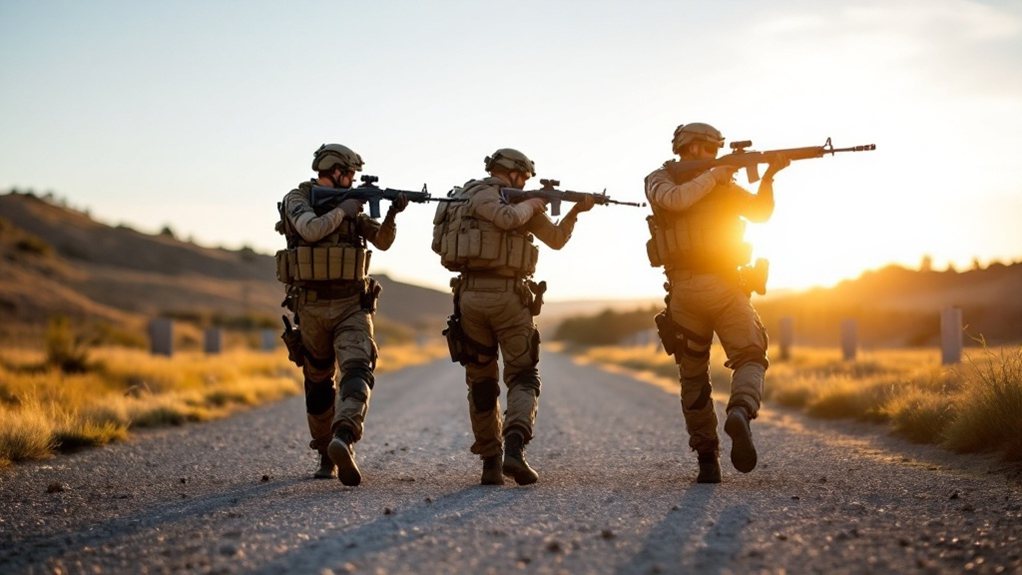
Moving safely between firing stations demands consistent muzzle control and heightened awareness. Keep your finger off the trigger and point the muzzle straight up when transitioning between positions. Make sure you maintain this upward muzzle orientation throughout your movement to prevent accidentally sweeping other shooters on the range.
When handling firearms and ammunition during station changes, you’ll need to be especially vigilant about where your muzzle is pointed. Every firearm must be carried with the barrel pointing skyward, never allowing it to dip or swing horizontally. You’ll want to move deliberately and maintain awareness of your surroundings at all times. This upward muzzle position is the safest way to transport your firearm between stations, as it ensures the muzzle remains pointed in a consistently safe direction.
Frequently Asked Questions
Can I Keep My Gun at a Gun Range?
Yes, you can store your gun at many ranges, but you’ll need to follow specific range safety regulations and firearm storage procedures. Your weapon must be unloaded and properly cased.
Check with your range’s specific policies, as storage options vary by facility. If you’re using a rental, you can’t take it off-premises.
How Far From the Muzzle Do Most Muzzle Control Incidents Happen?
While you’re focused on downrange awareness and sight alignment, it’s crucial to know that most muzzle control incidents occur within just 3 feet of the firearm’s muzzle. That’s where you’re most vulnerable, even with proper grip and trigger discipline.
This critical zone demands extra attention to muzzle orientation and safe transitions between targets. Remember, your awareness of this 3-foot radius can mean the difference between a safe session and a serious incident.
What Kind of Ammo Is Not Allowed at the Range?
You can’t bring any ammunition designed to penetrate metal or armor to the range. This includes tracer ammunition, incendiary ammunition, armor piercing ammunition, and high explosive ammunition.
Steel shot and steel core bullets are strictly prohibited. All corrosive ammunition is banned, and you must only use standard commercial or properly reloaded ammunition.
If you’re renting a firearm, you’ll need to purchase and use the range’s ammunition exclusively.
What Are the 4 Primary Rules of Firearm Safety?
First, always keep your firearm pointed in a safe direction – never at anything you don’t intend to shoot. Second, keep your finger off the trigger until you’re ready to shoot.
Third, keep your firearm unloaded until you’re ready to use it. Fourth, be sure of your target and what’s beyond it – know your backdrop. Never compromise on these rules.
Conclusion
Proper practice promotes positive progress at the range. You’ll stay safer and shoot better by keeping these four fundamental muzzle control rules firmly fixed in your mind. Whether you’re moving, loading, or lining up your shot, maintaining mindful muzzle discipline must remain your top priority. Don’t let distractions derail your dedication to safety – it’s your responsibility to protect yourself and others.


0 Comments