


Your difficulty focusing on the front sight is primarily due to your eye’s natural limitations and age-related changes. As your lens hardens over time, it becomes harder to maintain sharp focus at the optimal distance needed for proper sight alignment. This physical constraint, combined with muscle fatigue, can cause rapid focus loss and blurred sight pictures. Specialized shooting glasses with diopter corrections and proper training techniques can help overcome these common vision challenges.
Key Takeaways
- Age-related hardening of the eye’s lens makes it increasingly difficult to focus clearly on close objects like front sights.
- The eye naturally struggles to maintain focus at the optimal distance required for front sight clarity over extended periods.
- Muscle fatigue in eye muscles can cause rapid loss of focus when attempting to maintain sight picture.
- Depth of field limitations prevent simultaneously achieving sharp focus on front sight, rear sight, and target.
- Vision changes, particularly after age 40, reduce the eye’s ability to quickly shift focus between different distances.
The Science Behind Eye Focus and Sight Alignment
Looking through your sights effectively requires understanding how your eyes physically work during the aiming process. Your eye’s lens naturally loses flexibility as you age, making it progressively harder to achieve a clear focus on your front sight while maintaining target awareness.
This challenge stems from the relationship between depth of field and hyperfocal distance – the physics that determine what appears sharp at different distances.
You can overcome these vision limitations through proper corrective solutions. Working with an optometrist to get specialized shooting glasses with precise diopter corrections will help shift your focal point to where you need it.
If you have different vision strengths between eyes, consider split-vision contact lenses designed specifically for shooting. Regular eye exams are essential to track these age-related changes and maintain optimal sight alignment capabilities.
Common Front Sight Focus Challenges
Most shooters encounter specific front sight focus challenges that directly affect their accuracy and consistency. As you age, your eye’s lens naturally hardens, making it increasingly difficult to maintain a clear front sight focus for extended periods. You’ll notice your sight picture becomes blurry when trying to align your front sight, rear sight, and target simultaneously.
The key challenge lies in your eye’s diminishing ability to focus at the optimal focal point between your sights and target. While you can’t prevent these natural vision changes, you can adapt by using prescription glasses specifically designed for shooting. Working with an optometrist to determine the correct diopter correction will help shift your relaxed focal point to an ideal distance, improving your sight focus and overall shooting performance.
Age-Related Vision Changes and Solutions
Age catches up with every shooter’s vision, impacting their ability to maintain a crisp front sight focus. Your eye’s lens hardens over time, and the focusing muscles fatigue within 1-2 seconds, making it difficult to maintain sight alignment.
| Age-Related Changes | Impact | Solution |
|---|---|---|
| Lens Hardening | Reduced front sight clarity | Diopter correction |
| Muscle Fatigue | Quick focus loss | Quick sight acquisition |
| Hyperfocal Issues | Blurred sight picture | Vision correction surgery |
You’ve got options to combat these vision challenges. Shooting glasses with +0.5 or +0.75 diopter corrections can shift your focal point closer, improving front sight clarity. For more permanent solutions, consider cataract surgery or laser procedures. These vision correction options can restore your ability to maintain proper sight alignment and target focus, helping you shoot more accurately and confidently.
Training Methods to Improve Sight Focus

Effective training methods can help you overcome front sight focus challenges, even with visual limitations. Start with wall drills to train your eyes, focusing deliberately on your front sight while maintaining proper shooting positions.
If you’re experiencing blurry rear sights, consider specialized shooting glasses with diopter corrections to optimize your focal point.
Understanding your vision’s depth of field is crucial for sight alignment. Work with an optometrist to develop a customized solution that matches your specific needs. You’ll find that proper vision correction, whether through contact lenses or specialized eyewear with lens inserts, significantly improves your ability to maintain front sight focus.
These tools, combined with consistent practice, will help you achieve clearer sight pictures and better target acquisition, regardless of age-related vision changes.
Equipment Considerations for Better Visibility
Your front sight visibility can be dramatically improved by upgrading to high-contrast options like fiber optic or painted sights, which naturally draw your eye’s focus. You’ll need to carefully match any lens correction to your specific vision needs through proper diopter selection and prescription shooting glasses.
Consider complementing these improvements with sight picture enhancement tools like hooded rear sights, which help eliminate distracting visual elements and channel your focus toward the front sight.
Contrast Front Sight Options
Modern shooters have several front sight options to enhance visibility and sight acquisition. When you’re struggling to focus on your front sight, contrast enhancement can make a significant difference in your shooting performance.
To improve your front sight visibility, consider these proven options:
- Install a fiber optic sight that naturally gathers ambient light, making your front sight appear brighter and easier to see
- Use high-contrast paint in white or yellow to create a clear distinction between your front sight and target
- Combine a bright front sight with an uncluttered rear sight design to help your eye naturally focus where needed
- Consider tritium night sights for low-light shooting, but pair them with a high-visibility front sight option for optimal daytime use
These solutions can significantly improve your ability to maintain proper sight focus during shooting.
Lens Power Selection Guide
Selecting the right lens power for shooting glasses plays a crucial role in achieving optimal front sight focus. If you wear glasses or contacts, you’ll need to determine whether a +0.5 or +0.75 diopter correction best suits your sight alignment needs.
For rifle shooting, opt for +0.5 diopter lenses since the longer sight radius requires less correction. Handgun shooters should consider +0.75 diopter lenses to compensate for the shorter sight use distance. You can enhance front sight focus by using hooded rear sights with lens inserts, which provide additional magnification.
Before making adjustments, consult an optometrist or specialized provider like Shooting Sight to evaluate your vision profile. They’ll help determine if stacking multiple positive power lenses might benefit your specific situation, ensuring you avoid overcorrection that could compromise your shooting accuracy.
Sight Picture Enhancement Tools
When struggling with front sight focus, several equipment modifications can significantly improve sight picture clarity and target acquisition. Your sight system can be optimized through proven enhancement tools that aid in focusing on the front sight.
Consider these sight enhancement options:
- Install high-visibility front sights using fiber optic or tritium inserts for better contrast and easier acquisition
- Select uncluttered black rear sights to create optimal contrast with your bright front sight
- Use specialized shooting glasses with diopter corrections to shift your focal point closer
- Add a hooded rear sight with lens insert to magnify the front sight
Before making changes to your current sight system, evaluate your specific vision needs and shooting requirements. What works well for others may not be the optimal solution for your particular situation.
Balancing Target and Sight Focus
Mastering the balance between target and sight focus makes up a critical component of accurate shooting. You’ll need to develop a hard front sight focus while maintaining target awareness. The key is understanding when to shift your visual attention between these elements.
| Focus Point | Primary Task |
|---|---|
| Front Sight | Maintain sharp clarity |
| Rear Sight | Align with front sight |
| Target | Keep in peripheral vision |
| Sight Picture | Blend all elements |
| Trigger Press | Time with sight alignment |
When you see the target, deliberately shift to your front sights before pressing the trigger. Your eye can’t focus on multiple distances simultaneously, so prioritize your front sight focus. Keep your target slightly blurred in the background while your front sights remain crisp and clear. This technique ensures consistent shot placement and helps maintain proper sight alignment throughout your shooting sequence.
Vision Correction Options for Shooters
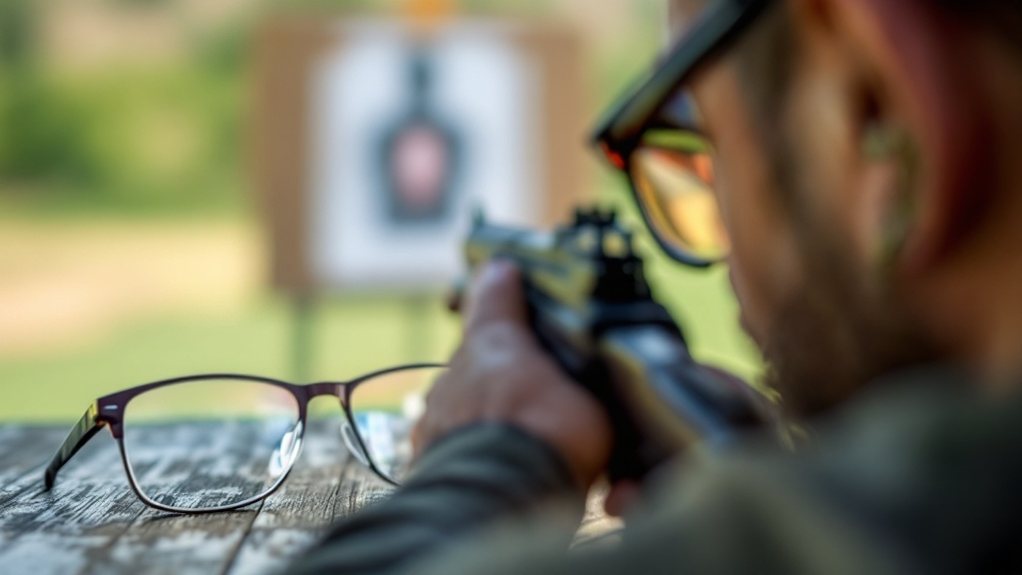
Vision correction technology offers numerous solutions for shooters struggling with front sight focus. Your options range from specialized shooting glasses to surgical procedures, each designed to optimize your sight picture and target acquisition.
Try diopter-corrected shooting glasses with +0.5 or +0.75 power to shift your focal point closer to the front sight.
Explore split-vision contacts that let you maintain both clear sights and target visibility.
Consider cataract surgery or laser procedures if you’re dealing with more serious vision issues.
Use safety glasses with specialty lens inserts for task-specific vision correction.
These solutions can significantly enhance your ability to maintain proper sight alignment and focus while shooting. Choose the option that best matches your specific vision needs and shooting requirements.
Practicing Front Sight Focus Under Stress
Front sight focus demands more than perfect vision – it requires consistent performance under real-world stress. You’ll need to develop this critical skill through structured training that replicates high-pressure situations.
Start with dry-fire drills that emphasize rapid target acquisition through your rear sight window while focusing on the front sight. Progress to reaction-based exercises where you must quickly draw and align your sights while focusing on randomly activated targets. Like law enforcement training, incorporate emergency reloads and malfunction clearance drills without losing sight alignment.
Advance to dynamic scenarios involving movement and multiple targets, forcing quick transitions between threats while using the sights effectively. Challenge yourself further with low-light training, where maintaining proper sight alignment becomes even more critical for accurate shot placement. This systematic approach builds the muscle memory needed for consistent front sight focus under stress.
Combat Vs Competition Sight Focus Techniques
The fundamental differences between combat and competition shooting demand distinct sight focus techniques. When you’re using a normal handgun with iron sights, you’ll need to adapt your approach based on the situation.
Combat scenarios require target focus to maintain situational awareness, though you’ll still need to use the sights for accuracy. Competition shooting allows for more deliberate front sight focus, especially during precision stages.
One eye or both eyes open depends on your specific shooting discipline and personal preference. Your sight attention should match your distance to target – closer targets need less front sight focus.
Remember that shifting focus between sights takes precious time. While front sight focus remains crucial for precision shooting, you’ll need to balance sight attention with target awareness in dynamic situations, whether you’re competing or training for defensive scenarios.
Frequently Asked Questions
Should You Focus on Front Sight?
You should focus on your front sight for precision shooting, but the situation dictates your focus choice. When accuracy is crucial, maintain front sight focus while establishing proper sight alignment and sight picture. Combine this with proper grip, trigger control, and breath control for optimal results.
However, in defensive or competition scenarios, you may need to shift to target focus for faster target acquisition and practical accuracy.
What Is the Purpose of the Front Sight?
Did you know that competitive shooters spend up to 80% of their training time perfecting sight picture alignment? Your front sight serves as the critical reference point for accurate shooting. It establishes your sight focal plane and determines sight acquisition speed.
You’ll need proper sight adjustment techniques to maintain precision, while regular sight maintenance importance can’t be overlooked. The front sight is your primary aiming tool – it’s what you’ll align with your target to achieve consistent accuracy.
What Is the Difference Between a Rear Sight and a Front Sight?
Your rear sight and front sight serve distinct roles in achieving proper sight alignment. The rear sight is larger and typically features a notch or aperture that frames your front sight.
You’ll find the front sight is smaller and more precise, usually a post or blade design. When creating your sight picture, you’ll want sight clarity on the front sight while maintaining sight contrast with the rear sight for optimal shooting accuracy.
What Does “Watch Your Front Sight” Mean?
“Watch your front sight” means you need to maintain crystal-clear sight focus on your front sight post while shooting. It’s a fundamental principle that drives proper sight alignment and sight picture.
When you’re acquiring your target, you’ll want your front sight to be razor-sharp while your rear sight and target appear slightly blurred. This sight tracking technique ensures you’re getting the most accurate shots possible.
Conclusion
You’re experiencing front sight focus difficulties because of natural visual limitations – your eyes can only focus on one focal plane at a time. Like competitive shooter Jerry Miculek demonstrated, even world-class shooters must train their eyes specifically for sight alignment. Maintain regular vision checkups, use appropriate vision correction, and practice proper focal techniques. When you can’t achieve perfect focus, concentrate on a crisp front sight while accepting a slightly blurred target.


0 Comments