


Range safety rules protect your life and the lives of others through proven protocols that have stood the test of time. You’ll need to master fundamental principles like muzzle control, trigger discipline, and proper protective equipment before stepping onto any range. Following range commands instantly and maintaining strict firearm handling discipline aren’t optional – they’re essential requirements that keep everyone safe. Understanding these time-tested safety systems will make you a more confident, responsible shooter.
Key Takeaways
- Range rules prevent accidental injuries by establishing proven safety protocols for handling firearms in a controlled environment.
- Following commands immediately ensures coordinated actions among all shooters and maintains situational awareness on the range.
- Proper equipment and attire requirements protect shooters from hot brass, noise damage, and eye injuries.
- Standardized target engagement rules prevent dangerous cross-firing and ensure bullets impact only approved backstop areas.
- Consistent firearms handling procedures reduce risk of negligent discharges and create predictable safety behavior patterns.
Core Safety Principles Every Range Visitor Must Know

Every firearms range operates on four fundamental safety rules that form the bedrock of responsible shooting. You must always point firearms in a safe direction, typically downrange toward the backstop. Keep your finger off the trigger until you’re ready to shoot at your intended target. You’ll need to treat every firearm as if it’s loaded, even when you’re certain it isn’t.
Before approaching the firing line, you must put on proper eye and ear protection – no exceptions. Follow the range safety officer’s commands immediately and precisely. When you hear “cease fire,” stop shooting at once. Range rules exist to protect everyone present, so there’s zero tolerance for violations. Remember, you’re responsible not only for your safety but also for those around you at the range.
Essential Equipment and Proper Attire Requirements
Proper preparation for range shooting starts with the right equipment and attire. When you’re heading to the shooting range, you’ll need to wear eye and ear protection – this isn’t optional, it’s mandatory. Your shooting glasses and ear protection must be in place before you step onto the range to shield you from both noise and potential debris.
You’ll need to dress appropriately too. Choose clothing that covers your torso and legs, and wear proper closed-toe shoes. Avoid loose or baggy clothing that could interfere with gun safety and proper firearm operation.
Remember to bring the correct ammunition that matches your firearm’s specifications – using the wrong type or caliber can be dangerous. These requirements aren’t just rules; they’re essential safeguards that protect you and others while you’re practicing at the target range.
Understanding Range Commands and Protocols
Safety at the shooting range depends on clear communication and strict adherence to range commands. You’ll need to understand and immediately respond to basic commands like “Cease Fire” and “Range is Hot.”
When you hear “Range is Hot,” you may approach the firing line and handle your firearms. During a “Cold Range,” you must unload your firearms, remove magazines, and keep actions open before stepping away from the line.
Safe Firearm Transportation and Storage at the Range
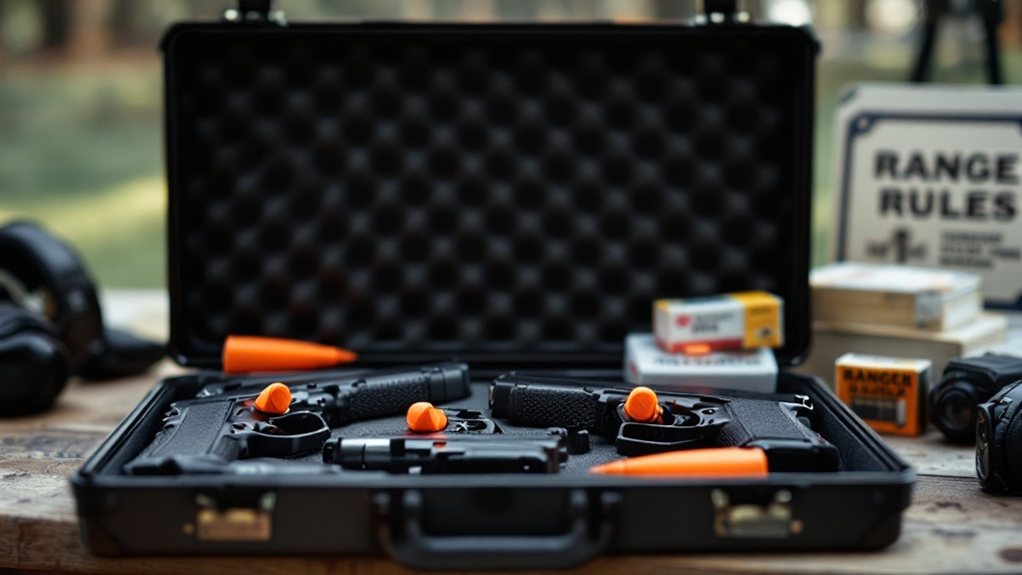
You’ll need to transport your firearms to and from the range in approved, locked cases that comply with local regulations and range policies. Once you arrive at the range’s staging area, keep your firearms cased until you’ve checked in with range staff and received permission to handle them.
You must follow the range’s specific protocols for where to place and uncase your firearms, which typically means facing all muzzles downrange while maintaining strict muzzle control.
Cases During Transport
All firearms must be transported to and from the range in appropriate cases or containers that fully enclose the weapon. Firearms must remain unloaded during transport, with ammunition stored separately in a designated container. Always keep firearms pointed in a safe direction when loading or unloading them from cases.
| Case Type | Best Used For |
|---|---|
| Hard Case | Long-term storage, air travel |
| Soft Case | Local range trips, car transport |
| Range Bag | Handguns, ammo, accessories |
Choose a case that’s padded and lockable to protect your firearm during transport. You’ll need easy access to your range gear while maintaining security. When removing firearms from cases at the range, always point the muzzle downrange and follow the range safety officer’s instructions for a safe transition to the firing line.
Staging Area Protocols
When arriving at the range’s staging area, keep your firearm cased and unloaded until you’re at your designated firing position. The staging area requires strict adherence to safety protocols while transporting and preparing your firearms. Remember to keep the action open and magazines removed at all times before reaching the firing line.
- Your careful attention to these protocols could save someone’s life
- Each safety step you follow sets a positive example for other shooters
- Your disciplined approach helps maintain a culture of safety
- Your commitment to proper staging shows respect for fellow shooters
Never handle firearms in the staging area – wait until you’re at your shooting position and the range has been declared “hot.” After shooting, return to the staging area with unloaded firearms, actions open, and properly cased for transport home.
Proper Target Setup and Engagement Rules
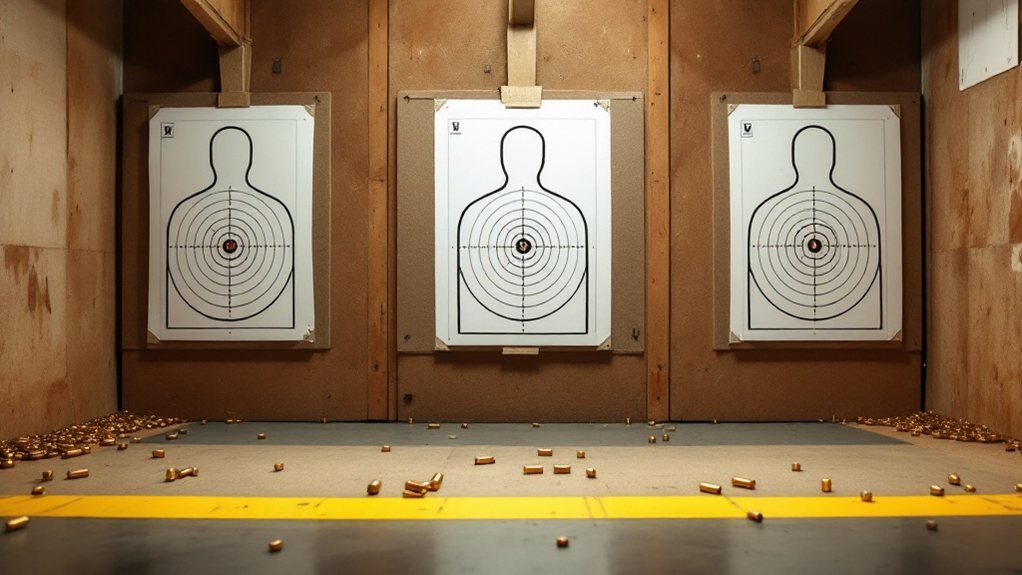
Safe target engagement begins with proper target setup and disciplined shooting practices. You must position your targets directly in front of your designated firing line to ensure bullets impact the backstop safely. Your finger off the trigger until you’re ready to shoot at approved paper or cardboard targets only.
You’ll need to align your target precisely with your shooting position – no cross-lane shooting or angled shots that could cause dangerous ricochets. Remember, you’re only permitted to use official range targets, and shooting at steel, reactive, or human-like targets isn’t allowed. Protection of everyone at the range depends on your adherence to these rules.
When you’ve finished shooting, take responsibility for removing your targets and returning any range equipment to its designated storage area.
Common Range Violations to Avoid
Despite proper training, new shooters sometimes commit preventable safety violations that demand immediate correction. These mistakes can create dangerous situations at the range or shooting area, potentially leading to serious accidents. You’ll need to remain vigilant and mindful of essential safety protocols at all times.
Never ignore the CEASE FIRE command – it could mean the difference between life and death for someone downrange. Keep your finger off the trigger until you’re ready to fire – this isn’t a movie, and trigger discipline saves lives. KEEP THE MUZZLE POINTED in a safe direction at all times – even a brief lapse can have devastating consequences. Don’t handle firearms during cease-fire periods – watching others make this mistake should make your blood run cold.
These violations aren’t just rules – they’re critical safety boundaries that protect everyone’s lives.
Emergency Procedures and Response Guidelines
Every shooting range maintains detailed emergency response protocols that you must understand before handling firearms. When emergencies occur, you’ll need to act swiftly while maintaining strict safety measures. Immediately notify range staff if your firearm fails to fire or malfunctions – they’re trained to handle these situations safely.
ALWAYS KEEP THE MUZZLE pointed downrange during any emergency, even when responding to cease-fire commands. If severe weather or other dangerous conditions arise, follow staff directions for proper range evacuation.
Remember that range officers are specifically trained to manage issues with firearms and ammunition, medical emergencies, and safety incidents. Trust their expertise and follow their instructions without hesitation. Your compliance with emergency procedures helps maintain a safe environment for everyone on the firing line.
Etiquette and Communication With Fellow Shooters
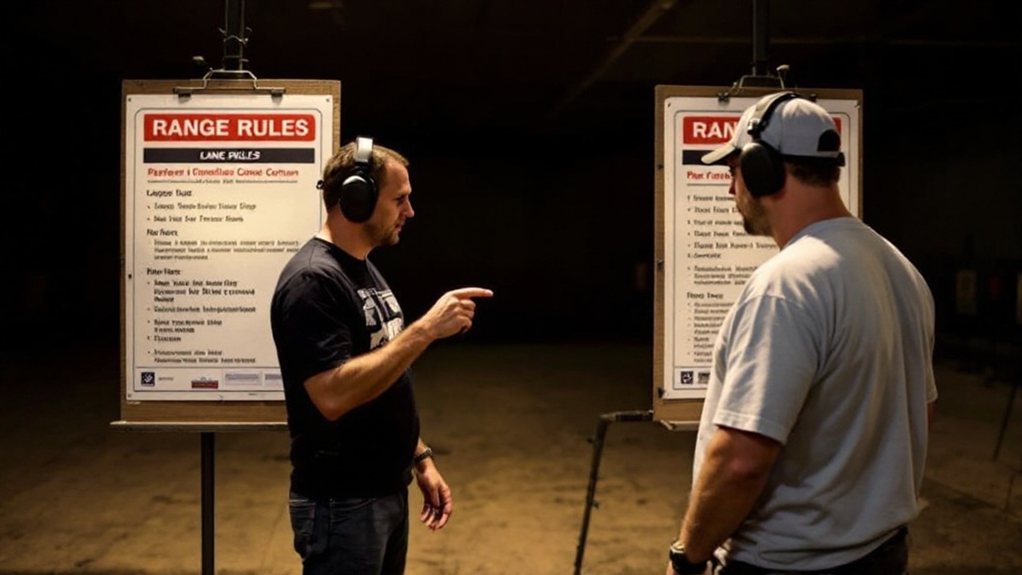
When you’re at the shooting range, you’ll need to use clear, unambiguous range commands and respond promptly to safety officers’ instructions. Your fellow shooters depend on you to communicate effectively and maintain safe firearm handling practices at all times.
Be mindful of other shooters’ personal space and shooting lanes, giving them adequate room to focus on their practice without interference or distraction.
Clear Range Commands Matter
Since range safety depends on clear communication, understanding and following range commands is non-negotiable for all shooters. When you hear “Cease Fire,” you must immediately stop shooting, keep your actions open, and step back from the firing line. Shooters must always verify their firearms are unloaded and check with others before heading downrange.
- Your life and others’ lives depend on your immediate response to range commands
- You’ll be removed from the range if you ignore safety instructions
- You’re part of a community that values mutual respect and protection
- Your alertness and compliance create a secure environment for everyone
Never handle firearms or approach the firing line until the range is declared “hot.” Remember, clear communication between shooters ensures everyone can enjoy their range time safely and responsibly.
Respect Other Shooters’ Space
Following range commands is just one part of responsible shooting – showing respect for your fellow shooters’ space and comfort creates a positive range environment for everyone. When you’re target shooting, maintain adequate distance between yourself and other shooters. Don’t hover over another person’s shoulder or handle firearms at their shooting station without permission.
Within the confines of shooting ranges, be mindful of your movements and equipment placement. Keep your gear organized and contained to your assigned lane or area. If you need to communicate with fellow shooters, wait for an appropriate break in their shooting sequence. Never distract someone who’s actively handling firearms. If you’re unsure about proper spacing or etiquette, don’t hesitate to ask range staff for guidance.
Range-Specific Equipment Restrictions and Limitations
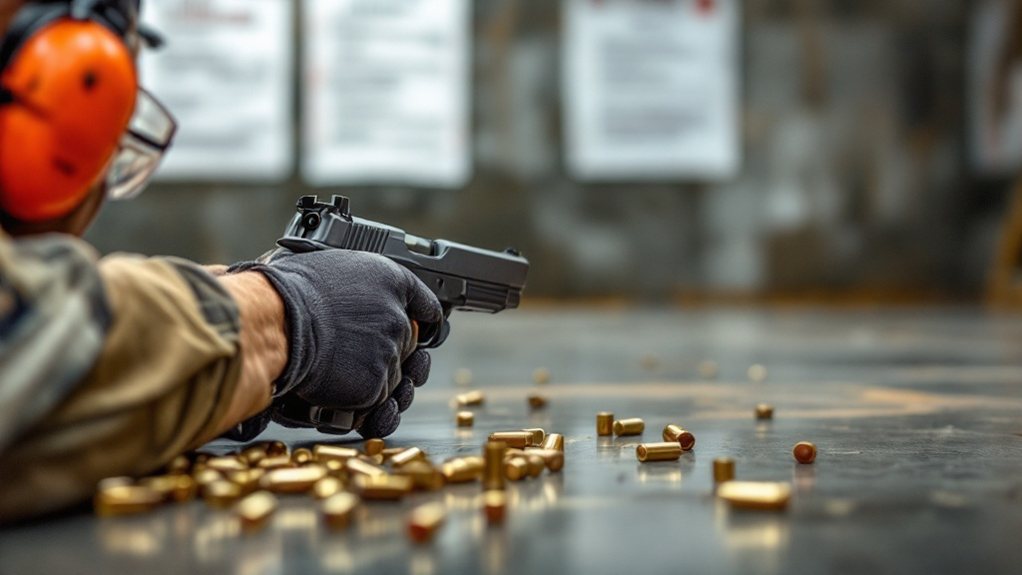
Each shooting range maintains its own set of equipment rules and limitations that you must strictly follow. The range officer will verify your equipment meets safety standards before any trigger is pulled. It’s crucial to use only correct ammunition and approved target frames to prevent accidents and property damage.
Your ear protection must be worn at all times – there’s nothing more devastating than permanent hearing loss from a preventable mistake. Steel core or armor-piercing ammunition is prohibited on most ranges to protect equipment and prevent ricochet injuries. You’ll need proper eye protection that meets current safety standards – your vision is irreplaceable. Only use range-approved target frames and holders – makeshift solutions can create dangerous situations.
Always check the range’s specific rules before arriving, as requirements can vary significantly between facilities.
Maintaining a Clean and Responsible Shooting Environment
A clean and well-maintained shooting range creates a safer environment for everyone while fostering a culture of responsibility. When you’re at the range, you must follow strict protocols to ensure safety and cleanliness. Protection must be worn at all times – both eye and ear protection are non-negotiable requirements before approaching the firing line.
Never leave spent brass placed on the ground; always collect and dispose of it properly. Similarly, remove your targets when you’re finished. Prohibited ammunition, including armor-piercing, tracer, and incendiary rounds, can damage facilities and create hazards. Before departing your lane, carefully open the action of your firearm and ensure it’s clear. Keep food, drinks, and tobacco products away from the firing line, and respect posted time limits so others can enjoy the facility. These practices maintain professional standards and keep the range inviting for all users.
Frequently Asked Questions
How Old Do You Need to Be to Shoot at a Range?
Age requirements vary by range, but you’ll typically need to be at least 18 to shoot unsupervised. If you’re under 18, you’ll need parental consent and adult supervision.
Many ranges offer youth programs starting as young as 10-12 years old through supervised sessions. Always call ahead to check specific requirements, as policies differ between facilities.
Some ranges may require adults to accompany shooters until they’re 21, especially for handgun use.
Can I Bring My Own Targets to the Shooting Range?
Last week, a shooter brought cardboard targets that splintered dangerously on impact.
While you can usually bring your own targets, you’ll need to check your range’s specific rules first. Most ranges have strict target material selection guidelines, approved target hanging techniques, and proper disposal procedures. They’ll often require paper or cardboard targets without metal components.
Always inspect your targets before use and store them properly to prevent damage or deterioration.
Are Photography or Video Recordings Allowed at the Range?
Before you take out your camera at the range, you’ll need to check their specific recording policy enforcement. Most ranges have strict photography restrictions and video recording protocols in place.
You’ll typically need image capture authorization from range staff and other shooters in view. Camera use guidelines often prohibit flash photography and live streaming for safety reasons.
How Many Rounds Can I Shoot During One Range Session?
You could shoot a million rounds if your shoulder could take it! The number of rounds you’ll fire during a session depends on several factors: your ammo selection, target distance, and shooting stance all affect how quickly you fatigue.
For optimal range safety and shooting form, it’s smart to start with 50-100 rounds per session. As you build experience and stamina, you can gradually increase your round count while maintaining proper technique.
What Happens if There’s a Medical Emergency While I’m Shooting?
If you experience or witness a medical emergency while shooting, immediately cease fire and keep your firearm pointed downrange. Alert range staff immediately – they’re trained in emergency protocols and will take control of the situation.
They’ll access first aid kits and contact emergency services while assisting the injured shooter. Don’t move an injured person unless absolutely necessary. Follow all staff instructions and help keep the area clear for first responders.
Conclusion
Following range rules is like wearing a seat belt – it’s non-negotiable for everyone’s safety. You’ll find that mastering these protocols isn’t just about compliance; it’s about becoming part of a responsible shooting community. Remember, you’re handling lethal tools that demand respect and careful attention. By consistently following these guidelines, you’re protecting yourself and others while building essential skills for a lifetime of safe shooting.


0 Comments