


Select essential gun cleaning tools with safety as your priority. You’ll need a high-quality single-piece cleaning rod made of carbon fiber or brass, caliber-specific bronze or nylon bore brushes, and non-abrasive cotton patches. Choose non-toxic solvents like Hoppes No. 9, and ensure proper storage away from heat sources. Consider both material compatibility and scratch resistance when selecting components. Proper tool selection forms the foundation of responsible firearm maintenance.
Key Takeaways
- Choose a single-piece carbon fiber cleaning rod to minimize barrel scratching while providing optimal strength and flexibility.
- Select caliber-specific bronze or brass bore brushes to effectively remove fouling without damaging the barrel’s rifling.
- Use high-quality cotton or microfiber cleaning patches that match your firearm’s bore diameter for thorough cleaning.
- Invest in non-toxic cleaning solvents like Hoppes No. 9, and ensure proper ventilation during use.
- Store cleaning supplies in original containers away from heat sources, and keep incompatible chemicals separate.
Essential Components of a Quality Cleaning Kit
When assembling a comprehensive gun cleaning kit, you’ll need several essential components to maintain your firearm’s performance and longevity. Start with a high-quality single-piece cleaning rod made of steel, brass, or carbon fiber to protect your barrel’s integrity.
Select caliber-specific bore brushes crafted from bronze, brass, nylon, or stainless steel to effectively remove fouling without damaging the rifling. Include brass or plastic cleaning jags in both slotted and form-fitting designs to accommodate various cleaning patches. You’ll also need high-absorbency cleaning swabs and mops for thorough chamber and bore maintenance.
Complete your kit with versatile bore snakes, which offer efficient one-pass cleaning capability. Remember to choose components that match your firearm’s specifications to ensure safe and effective cleaning while preserving your weapon’s accuracy and reliability.
Understanding Cleaning Rod Materials and Safety
When selecting a cleaning rod for your firearm, you’ll need to consider both material safety features and barrel protection capabilities to prevent potential damage during maintenance. Carbon fiber rods offer optimal protection with their combination of strength and scratch resistance, while brass provides a softer alternative that won’t mar your barrel’s rifling.
You’ll want to avoid using bare steel rods without proper coating or guides, as their hardness can potentially damage your barrel’s interior if misaligned during the cleaning process.
Rod Material Safety Features
Every cleaning rod material offers distinct safety advantages and potential risks that directly impact your firearm’s longevity. When selecting a rod material, you’ll need to weigh these key characteristics carefully.
Brass rods provide excellent barrel protection but require you to monitor their integrity due to lower strength and potential bending. Stainless steel delivers superior durability, though you’ll need steady technique to prevent barrel damage.
Carbon fiber emerges as a modern solution, combining strength and flexibility while minimizing scratching risks. You’ll find sectional cleaning rods particularly useful for field maintenance, though you must ensure tight connections between segments.
Whatever material you choose, proper handling technique remains crucial – always keep the rod centered and avoid excessive pressure. Each rod material’s unique properties will influence your cleaning effectiveness and barrel preservation.
Barrel Protection During Cleaning
Protecting your firearm’s barrel during cleaning requires a thorough understanding of cleaning rod materials and their interaction with barrel surfaces. When removing carbon buildup from your bore, you’ll need to choose your cleaning tools wisely to maintain your firearm’s accuracy and longevity.
Each cleaning rod material offers distinct advantages for barrel protection:
- Carbon fiber rods provide optimal balance between strength and barrel safety, making them ideal for routine maintenance
- Brass rods offer gentler contact with your bore but require careful handling to prevent bending while using brass brushes
- Steel rods deliver maximum durability but demand extra caution to avoid barrel damage
Always match your rod’s diameter to your firearm’s caliber and apply lubricating oil appropriately. Remember that even the safest cleaning tools can cause harm if used improperly.
Proper Brush Selection for Your Caliber
Selecting the right bore brush goes hand-in-hand with maintaining your firearm’s accuracy and longevity. You’ll need to match your bore brush precisely to your firearm’s caliber to ensure effective cleaning without compromising the barrel’s rifling.
When choosing between materials, consider brass and bronze brushes as your primary options. They’re tough enough to remove fouling but won’t damage your barrel.
While stainless steel bore brushes offer superior durability, you’ll want to use them sparingly to prevent excessive wear. For older or more delicate firearms, opt for nylon brushes that provide gentler cleaning action.
Never compromise by using an incorrect brush size. The wrong diameter won’t properly engage with your barrel’s rifling, leading to inconsistent cleaning and potential damage. Always verify your caliber before selecting cleaning tools.
Choosing Non-Abrasive Cleaning Patches
When deep cleaning your firearm’s bore, choosing the right non-abrasive cleaning patches is critical for maintaining optimal performance. You’ll find various patch materials in quality gun cleaning kits, each serving specific purposes alongside your cleaning rods and brushes.
For optimal results when selecting cleaning patches, focus on these key factors:
- Material compatibility – Cotton patches provide excellent absorbency and gentle surface contact
- Lint-free properties – Terrycloth or microfiber patches prevent residue accumulation in your bore
- Size precision – Match patch diameter to your firearm’s bore for effective cleaning
Pre-treated patches with cleaning solvents offer convenience, while felt patches deliver thorough bore cleaning without abrading surfaces. Remember, using the correct patch size ensures proper contact with the bore walls, leading to more effective removal of fouling and contaminants.
Safe Chemical Solvents and Storage
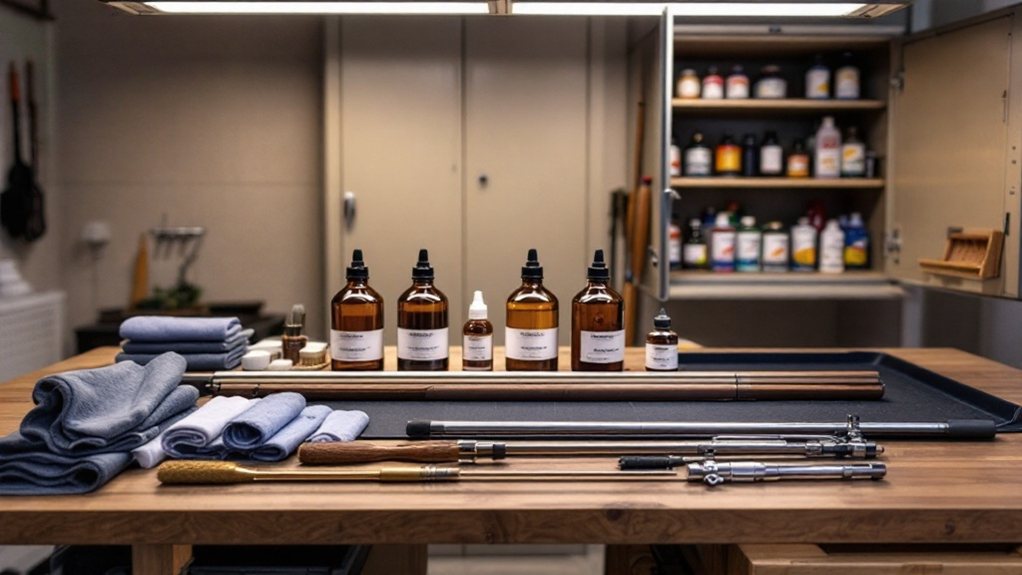
When working with gun cleaning solvents, you’ll need to prioritize safety by using them in well-ventilated spaces and selecting non-toxic options like Hoppes No. 9 or Gunslick Pro to protect your health.
You must store your cleaning chemicals in their original containers, keeping them away from heat sources and out of children’s reach. Always dispose of used cleaning materials according to your local hazardous waste guidelines, and never reuse contaminated rags or patches that could pose safety risks.
Chemical Safety Precautions
Safe handling of gun cleaning chemicals requires strict adherence to proper storage and usage protocols. When working with cleaning solvents and lubricants, you’ll need proper ventilation to avoid inhaling harmful vapors. Always protect your skin from direct contact with these chemicals, as they can be harmful to your health.
Keep these essential safety measures in mind:
- Use only gun-specific solvents that won’t damage firearm components
- Store chemicals in original containers away from heat sources
- Maintain quick access to a first aid kit during cleaning sessions
Never use household chemicals as substitutes for proper gun cleaning products. Dispose of hazardous waste according to your local regulations. Remember that proper chemical handling isn’t just about protecting your firearm – it’s about ensuring your safety during maintenance procedures.
Proper Solvent Storage Methods
Proper storage of gun cleaning solvents demands meticulous attention to environmental conditions and safety protocols. You’ll need to maintain a cool, dry storage area away from potential ignition sources to prevent fire hazards. Keep all solvent containers tightly sealed to control evaporation and minimize harmful vapor release.
When organizing your chemical storage, separate incompatible solvents, particularly those with ammonia and acid bases, to prevent dangerous reactions. Always ensure proper ventilation in your storage area, and never store hazardous materials in confined, poorly ventilated spaces.
When it’s time for disposal, follow your local regulations for hazardous waste management – never dispose of chemicals in regular trash or drains. By following these storage protocols, you’ll maintain both the effectiveness of your cleaning solvents and a safe maintenance environment.
Maintaining Kit Organization and Accessibility

Maintaining an organized gun cleaning kit serves as the foundation for efficient and reliable firearm maintenance. You’ll want a high-quality range bag with clearly labeled compartments to store your sturdy brass tools, jags and brushes, and cotton swabs. Select a compact and lightweight case made from high-quality materials that features a transparent lid for quick visual inventory.
For optimal organization, follow these essential steps:
- Group similar tools together in designated pouches
- Store weighted end components in separate compartments
- Position frequently used items near the top for easy access
Return each tool to its designated spot after use to maintain your kit’s organization. This disciplined approach ensures you’ll always have the right tool at hand when it’s time to clean your firearm, saving valuable time and preventing misplaced equipment.
Protective Equipment for Safe Cleaning
When handling firearms and cleaning chemicals, protective equipment serves as your first line of defense against potential hazards. You’ll need proper eye protection to shield your eyes from flying debris during cleaning procedures. Always wear chemical-resistant gloves to prevent harmful solvents from contacting your skin.
Choose a well-ventilated workspace to avoid inhaling toxic fumes from cleaning solutions. A quality gun cleaning mat isn’t just for organization – it protects both your work surface and your firearm’s finish from scratches and chemical damage.
Remember to dispose of used cleaning materials properly to minimize environmental impact. Collect used patches, empty solvent containers, and other waste in appropriate receptacles rather than throwing them in regular trash. These safety measures ensure both your protection and responsible gun maintenance.
Portable Vs Stationary Cleaning Stations
With safety equipment in place, gun owners face an important decision between portable and stationary cleaning solutions. Your choice should align with your specific firearms maintenance needs and usage patterns.
Stationary cleaning stations offer these key advantages:
- Enhanced cleaning capability with specialized tools like gun vises
- Superior support for thorough disassembly and deep cleaning
- Additional accessories including bore guides and degreasers
Portable cleaning kits trade comprehensive tools for convenience, making them ideal for field maintenance and quick cleanings. While they’re particularly effective for handguns and smaller firearms, they can’t match the thorough cleaning capabilities of stationary setups. Consider your priorities: if you’re a dedicated enthusiast requiring meticulous maintenance, invest in a stationary station. If you need on-the-go solutions, a portable kit will serve your basic cleaning needs effectively.
Specialty Tools for Different Firearm Types

When selecting cleaning tools for your firearms, you’ll need distinct equipment based on your weapon type. AR-platform rifles require specialized star chamber brushes and bolt carrier group scrapers, while revolvers need shorter cleaning rods and caliber-specific cylinder brushes.
Long guns, including bolt-action rifles and shotguns, demand extended cleaning rods, larger bore brushes, and often specialized components like choke tube cleaners to maintain their longer barrels effectively.
AR-Platform Tools
Several specialized cleaning tools are essential for maintaining AR-platform rifles due to their unique design and operating system. Your AR15 cleaning kit should include polymer-bristled bore brushes that protect the rifling while effectively removing fouling. Double-ended gun cleaning brushes with chamber-specific designs help you reach the extractor recess.
For thorough maintenance, you’ll need:
- Star chamber brush and mops for accessing hard-to-reach chamber areas
- Gas tube brushes to prevent reliability-impacting carbon buildup
- Ultralight cleaning rods with modular sections for complete barrel access
These Universal Cleaning tools are specifically engineered for AR-platform firearms, ensuring proper maintenance without damaging critical components. When selecting chamber brushes, choose those with angled tips designed for AR-specific dimensions. This specialized approach to cleaning helps maintain your rifle’s accuracy and reliability.
Revolver Maintenance Equipment
Maintaining a revolver requires specific tools designed for its unique cylinder-and-barrel configuration. You’ll need a specialized cleaning kit that includes bore brushes, jags, and cleaning mops tailored to your revolver’s dimensions. Unlike bolt carrier components in other firearms, revolvers demand particular attention to their cylinder chambers and extractor rod.
Your toolkit should contain cleaning rods equipped with patch holders for applying cleaning solution effectively. Don’t forget the star-shaped chamber brush, which is crucial for removing fouling from cylinder walls. Cleaning brushes, including steel wool varieties, help tackle stubborn deposits in hard-to-reach areas. Keep cotton patches and solvent-soaked swabs handy for detailed cleaning, and always use quality gun oil for lubrication. Following your revolver’s cleaning manual ensures proper disassembly and reassembly during maintenance procedures.
Long Gun Cleaning Kits
Long gun cleaning kits serve distinct purposes based on your firearm type, building upon the specialized approach needed for revolvers. You’ll need specific tools like cleaning rods, brushes, and bore snakes matched to your firearm’s caliber for thorough cleaning. When selecting a gun cleaning kit, consider your weapon’s unique maintenance requirements.
For optimal firearms bore maintenance, focus on these critical components:
- Caliber-specific bore brushes and jags for rifles
- Chamber brushes and specialized mops for shotguns
- Carbon scrapers and gas tube tools for AR-15 platforms
Regular cleaning demands proper solvent and oil application using the right tools. Rimfire firearms require delicate tools for their sensitive mechanisms, while lever-actions need specialized equipment for their intricate actions. Always match your cleaning kit’s components to your specific long gun’s requirements.
Cleaning Kit Maintenance and Replacement Schedule
To ensure reliable performance of your cleaning tools, proper maintenance and timely replacement of kit components are essential. After every use, clean your brushes, jags, and patches to remove solvent residue and debris. Oil moving parts of your cleaning rods and handles to prevent rust and maintain smooth operation.
Replace bronze brushes every 3-4 cleanings, as worn bristles can’t be removed effectively. Inspect cleaning rods for bends or damage that might scratch your gun’s bore. Cotton patches and swabs are single-use items that should never be reused.
Keep your cleaning solvents tightly sealed and stored in a cool, dry place. Tools made of metal should be lightly oiled to prevent corrosion. Maintain a log to track component usage and schedule replacements before they compromise your firearm’s maintenance quality.
Frequently Asked Questions
Is WD-40 Ok for Gun Cleaning?
No, you shouldn’t use WD-40 for gun cleaning as it’s not recommended and can create serious safety risks. The product’s chemical reactions can cause corrosion concerns and potentially dissolve gun components over time.
You’ll also expose yourself to hazardous fumes during application. WD-40’s improper lubrication properties can lead to firearm malfunctions. Instead, you should use specialized gun cleaning solvents and lubricants designed specifically for firearms maintenance.
What Equipment Is Recommended When Cleaning a Firearm?
You’ll need essential tools for proper firearm maintenance, including bore brushes, gun rods, and gun solvents for barrel cleaning.
A gun vise will securely hold your firearm during cleaning. Keep bore solvents and gun lube separate, as they serve different purposes. Use quality gun cloths for wiping down surfaces, and always store cleaning supplies in locked gun safes when not in use.
Remember to match brush sizes to your specific caliber.
What Does the US Military USe to Clean Guns?
The U.S. military primarily relies on the Otis Cleaning System, which you’ll find includes specialized bore brushes, patch pullers, and muzzle guides. You’ll see military personnel using chamber brushes and gun vices at armorers’ benches for detailed maintenance.
For intensive cleaning, they’ll employ solvent tanks and ultrasonic cleaners. The military’s system ensures thorough cleaning through precise, caliber-specific tools that won’t damage the weapon’s barrel or internal components.
What Is the Best Thing to Clean a Gun With?
You’ll need a comprehensive set of tools for optimal gun cleaning. Start with a quality bore cleaner and solvent-soaked patches to dissolve carbon and metal fouling. Use cleaning rods with appropriate bore brushes to scrub the barrel thoroughly.
Apply gun oil or lubricant to protect metal surfaces and ensure smooth operation. Don’t forget cotton swabs for hard-to-reach areas and microfiber cloths for exterior cleaning. Always follow the manufacturer’s guidelines and safety protocols.
Conclusion
Properly maintaining your firearms with quality cleaning tools isn’t just about performance – it’s essential for safety. Studies show that 27% of firearm malfunctions stem from inadequate cleaning practices. You’ll need to regularly inspect your cleaning equipment, replace worn components every 6-12 months, and store your tools in a climate-controlled environment. By investing in proper cleaning tools and following strict maintenance protocols, you’re protecting both your firearms and yourself.


0 Comments