

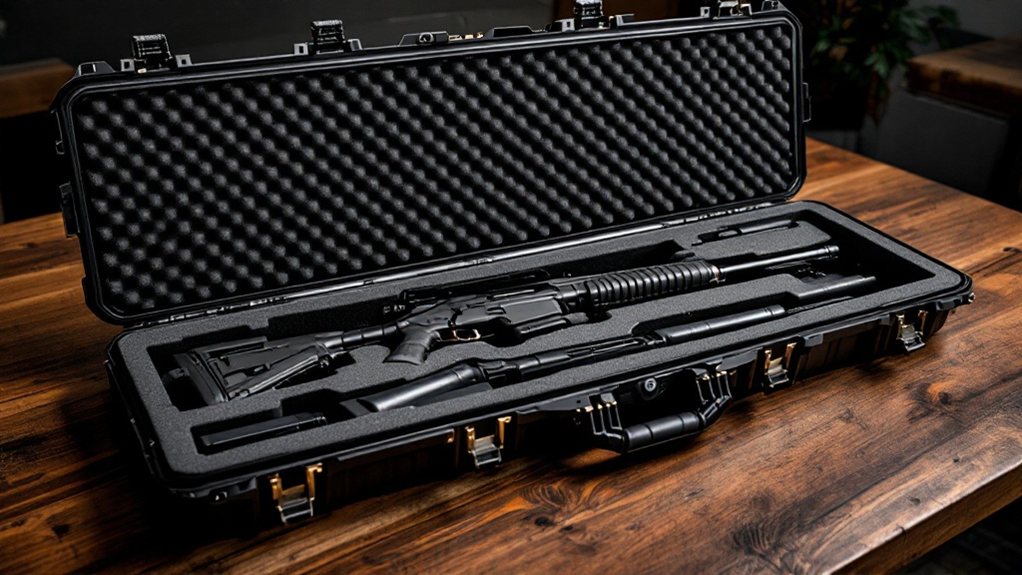
A compliant gun case must feature TSA-approved locks, impact-resistant materials, and comprehensive interior padding to protect your firearm during transport. You’ll need weather-resistant seals with rubber gaskets to prevent moisture damage, plus customizable foam inserts that prevent shifting. Ensure your case includes dedicated compartments for accessories and meets airline regulations through tamper-evident hardware and robust construction. Understanding these essential features will enhance your transport safety protocol.
Key Takeaways
- TSA-approved locks and tamper-evident hardware must be installed to ensure legal compliance during commercial air travel.
- Impact-resistant construction with reinforced materials protects firearms from damage during transportation and handling.
- High-density foam padding with custom-fitted compartments prevents movement and protects sensitive components.
- Weather-resistant seals and gaskets protect firearms from moisture, dust, and environmental damage during transit.
- Dedicated storage spaces for magazines, ammunition, and accessories must be properly separated and secured.
Secure Locking Mechanisms and TSA Compliance
When transporting firearms by air, secure locking mechanisms serve as your first line of defense for TSA compliance and overall safety. You’ll need to equip your gun case with TSA-approved locks that effectively prevent unauthorized access during your journey. Safeguarding your firearms isn’t just about protection – it’s a mandatory requirement for air travel.
Your gun case must feature tamper-evident hardware and robust locking systems that meet strict TSA regulations. When selecting a case, ensure it’s equipped with sturdy, compliant locks that demonstrate your commitment to safety protocols. Remember that compliance with regulations isn’t optional – it’s essential for legal firearm transport on commercial flights. By investing in a properly secured case with reliable locking mechanisms, you’ll ensure smooth passage through security checkpoints while maintaining the highest safety standards.
Impact-Resistant Materials and Construction
Three critical components define a reliable gun case’s impact resistance: reinforced materials, strategic construction, and protective layering. When you’re selecting a hard case for your firearm, you’ll want to focus on impact-resistant materials like reinforced plastic or metal that can withstand the rigors of transport.
The case’s construction should feature robust hinges and latches that won’t buckle under pressure, while maintaining structural integrity during drops or impacts. You’ll find layered foam padding inside quality cases provides essential cushioning that absorbs shocks and vibrations your firearm might encounter during transit.
This multi-layered protection system works together to prevent damage from environmental stresses and physical trauma, whether you’re traveling by car, plane, or boat. Your firearm’s safety depends on these protective elements working in harmony.
Interior Padding and Shock Absorption
Interior padding serves as your firearm’s first line of defense against harmful impacts and vibrations during transport. Quality gun cases ensure comprehensive protection through high-density, closed-cell foam that effectively dissipates kinetic energy.
While soft rifle cases offer convenience, they can’t match the protection of well-padded hard storage solutions.
To maximize your firearm’s protection during transport, focus on these critical padding elements:
- Strategic placement of foam dividers to lock your firearm in position and prevent unwanted movement
- Proper foam density matched to your specific firearm’s weight and sensitivity
- Adequate padding thickness in high-impact areas, especially around delicate sights and components
Don’t compromise on interior cushioning – it’s essential for meeting transportation requirements and maintaining your firearm’s condition throughout its journey.
Weather-Resistant Seals and Protection

A reliable weather-resistant seal system forms the crucial barrier between your firearm and damaging environmental elements. When selecting a case, you’ll want to ensure it features sealed seams and specialized waterproof coatings that prevent moisture infiltration.
Look for designs incorporating pressure-relief valves and robust rubber gaskets that maintain a tight, protective seal during transport.
Your case’s weather-resistant properties should include reinforced plastic or metal construction, protecting your firearm from dust, debris, and extreme temperatures. The combination of durable materials and waterproof barriers creates a secure environment that maintains your weapon’s integrity in challenging conditions.
Whether you’re facing heavy rain or harsh environments, a properly sealed, weather-resistant case offers the essential protection you need for safe, compliant firearm transport.
Proper Sizing and Firearm Fit Requirements
Selecting the right case size for your firearm requires precise measurements and careful consideration of your weapon’s unique dimensions. Your firearm measurements must include length, width, and height, accounting for any attached accessories to guarantee proper storage and transportation.
A well-fitted case ensures your weapon’s protection through:
- Precise interior dimensions that match your firearm’s specific measurements
- Customizable foam padding that creates a snug fit around all components
- Sufficient space allocation for accessories without compromising security
Don’t compromise on size specifications when selecting your case. A properly sized container prevents movement during transport, while inadequate dimensions can result in damage to your firearm.
Remember that each weapon has unique characteristics, so you’ll need to match the case’s internal configuration to your specific firearm’s requirements for optimal protection and compliance.
Accessory Storage and Organization Features
Smart organization within your gun case sets up a secure foundation for transporting both your firearm and essential accessories. Modern gun cases offer specialized compartments designed specifically for your firearms, with customizable foam inserts that prevent shifting during transit.
You’ll find dedicated spaces for magazines and accessories, ensuring everything stays in its designated place.
Look for cases with padded dividers that protect multiple firearms or optics from contact damage. Zippered mesh pockets provide quick access to cleaning supplies and smaller components while keeping them securely contained.
When selecting a case, prioritize those with well-thought-out internal organization features – they’ll make packing and unpacking more efficient while maintaining compliance with transport regulations. The right organizational layout helps you maintain accountability for all components while protecting your valuable equipment.
Airline Transportation Regulations and Standards
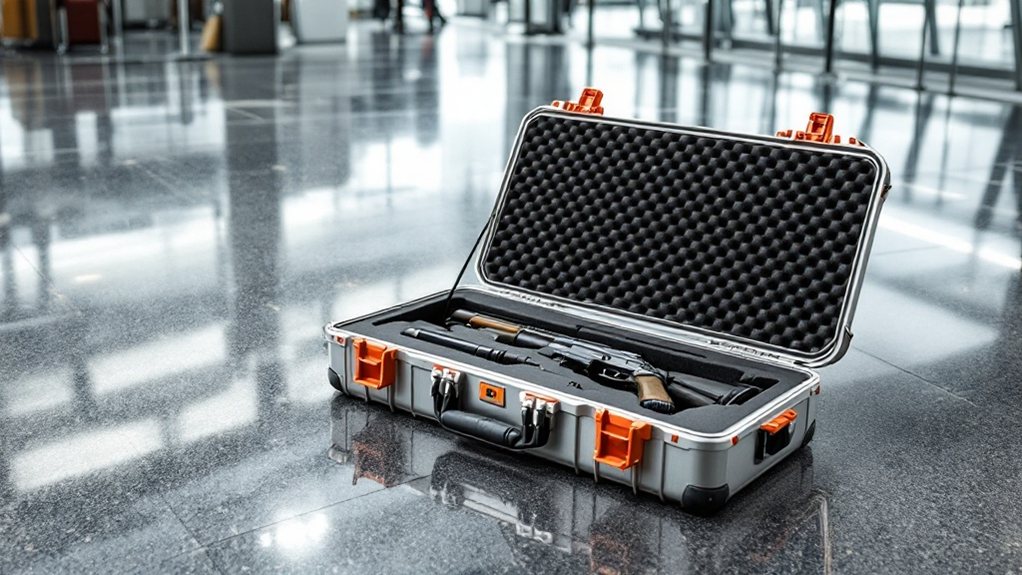
When flying with firearms, you’ll need a gun case equipped with TSA-approved locks that securely fastens to prevent unauthorized access during transport. Before your flight, you must declare your firearm at check-in and present proper documentation while ensuring your hard-sided case meets airline material standards for durability and tamper resistance.
Your case should be manufactured from high-strength materials like reinforced polymer or aluminum that exceed the minimum TSA requirements for structural integrity and security features.
TSA Lock Requirements
Two critical aspects of TSA lock requirements govern the secure transport of firearms during air travel. Your firearm storage case must be equipped with locks that comply with TSA specifications, and the container must completely secure the weapon from unauthorized access.
When selecting a TSA-approved locking system for your gun case, ensure you’re following these essential requirements:
- Use combination locks or key-operated locks that are compatible with the TSA master key system
- Install multiple locks on the case to prevent any shifting or movement during transport
- Verify that your chosen locks meet current TSA standards and regulations to avoid delays or penalties
Declare and Document Process
Before boarding any flight with a firearm, you’ll need to follow a strict declaration and documentation process that ensures compliance with both airline and TSA regulations. When checking in, inform the airline representative that you’re transporting an unloaded rifle or gun. You’ll be required to complete a Firearms Declaration Form, confirming your firearm is unloaded and properly secured in a TSA-compliant case.
Keep your documentation readily available throughout your journey, as airline personnel may need to verify your compliance at various checkpoints. Remember that each airline might’ve specific requirements beyond standard TSA regulations, so it’s essential to research your carrier’s policies before travel.
Failing to properly declare your firearm or complete the required documentation can result in significant delays, fines, or being denied transport altogether.
Case Material Standards
Meeting stringent airline requirements for firearm transport starts with choosing a case made from appropriate materials. You’ll need to avoid any soft rifle case options, as airlines mandate rigid construction using high-strength materials like aluminum or impact-resistant polycarbonate. Your case offers must meet specific thickness standards while providing superior protection during transit.
When selecting an approved gun case, ensure it meets these critical requirements:
- Construction from airline-approved materials that offer impact resistance and structural integrity
- Appropriate surface finishing that doesn’t resemble tactical or military equipment
- Built-in pressure equalization features like venting systems or release valves
Remember to obtain all necessary permits before transport, and verify your case’s specifications against current airline regulations. The right case material isn’t just about compliance—it’s essential for your firearm’s safety during air travel.
Durability Testing and Quality Certifications
When selecting a gun case for transport, you’ll need military-grade drop protection validated through rigorous testing protocols and standards like MIL-STD-810G.
Third-party laboratories subject these cases to comprehensive impact certification tests that verify their ability to protect your firearms from drops, shocks, and collisions.
Your investment in a certified, durability-tested case ensures reliable protection during transport while maintaining compliance with airline and transportation regulations.
Military-Grade Drop Standards
Military-grade hard cases must endure three essential drop tests to ensure your firearm’s safety during transport. Unlike a soft gun case, these reinforced containers prevent unauthorized access while protecting your valuable firearms from impact damage during the most demanding conditions.
When selecting a military-grade case, verify it meets these critical standards:
- Survives multiple drops from 5-foot heights onto various impact surfaces
- Features high-density foam padding to absorb shock and eliminate internal movement
- Includes reinforced construction using industrial-grade plastics and metals
Independent testing facilities certify these cases’ ability to withstand repeated impacts, giving you confidence in their protective capabilities. You’ll find this level of durability essential for maintaining your firearm’s condition during transport, whether you’re heading to the range or traveling cross-country.
Third-Party Impact Certification
Independent impact certification provides essential verification that your gun case meets rigorous durability standards. When you choose a case made with third-party impact certification, like MIL-STD-810G, you’re investing in proven protection that’s been thoroughly tested for drops, compression, and impacts.
To ensure your firearm remains secure during transport, look for cases that have undergone comprehensive independent testing. These certifications demonstrate the manufacturer’s commitment to quality and compliance with airline regulations. The testing process subjects cases to extreme conditions, validating their ability to protect your firearms during shipping and handling.
This third-party impact certification isn’t just a marketing feature – it’s your assurance that the case will perform when it matters most, keeping your firearms safe and meeting transport requirements across all modes of travel.
State-Specific Transport Requirements
Since firearm transport regulations differ substantially across state lines, you’ll need to thoroughly research the specific requirements for each jurisdiction along your travel route. Your gun case must be designed to meet various local laws and legal requirements to ensure compliant transport across different regions.
Consider these critical state-specific requirements when selecting a transport case:
- Some states mandate hard-sided cases with multiple locking points to prevent unauthorized access during transport
- Certain jurisdictions require separate compartments for ammunition and firearms, making dual-chamber cases essential
- Many states specify minimum security standards, including requirements for built-in locks or specific case materials
Always verify current regulations before traveling, as non-compliance can result in serious legal consequences. Select a case that exceeds the strictest requirements of all states on your route.
Storage Configuration and Customization Options
Beyond meeting legal requirements, your gun case’s internal configuration plays a key role in protecting your firearms during transport. The case not only protects your investment but also demonstrates responsible firearm ownership through proper storage solutions.
| Feature | Benefit |
|---|---|
| Foam Inserts | Custom-fit protection for specific firearms |
| Modular Dividers | Adaptable space for multiple weapons |
| Specialized Compartments | Organized storage for accessories |
You’ll find that customizable foam inserts and adjustable dividers allow you to create the perfect fit for your specific needs, enhancing your overall transport security. Whether you’re carrying a single handgun or multiple firearms, modular designs let you configure your case precisely. The versatile interior options, including personalized compartments and secure strapping systems, ensure your equipment stays firmly in place during transit.
Frequently Asked Questions
What Are the TSA Approved Gun Cases Requirements?
You’ll need a gun case that meets strict TSA standards for air travel. Your case must have lockable compartments with secure latches or combination locks.
Choose one with durable construction, like reinforced plastic or metal, that’s built to withstand handling. Make sure it has airline approved dimensions and a discreet appearance.
Are Harbor Freight Gun Cases TSA Approved?
Even if you searched every square inch of Harbor Freight’s inventory, you won’t find TSA-approved gun cases there. Their cases don’t meet the legal requirements for air travel, which include specific size limitations, lockable design features, and protective padding standards.
You’ll need to invest in a properly certified case from manufacturers who specialize in TSA-compliant firearm storage. Don’t risk legal issues – skip Harbor Freight for air travel gun cases.
What Paperwork Do You Need to Travel With a Gun?
You’ll need several key documents when traveling with a firearm. First, complete the airline’s firearm declaration form at check-in. You must have your valid gun license or permit, and research state regulations for both departure and arrival locations, as transportation permits may be required.
If traveling internationally, you’ll need additional documentation like import/export permits. Always verify current requirements with your airline and local authorities before your trip.
What Is the Best Material to Line a Gun Case With?
For optimal firearm protection, you’ll want to use closed-cell polyethylene foam as your primary cushioned lining. This material offers superior shock absorption while remaining lightweight.
Layer your protective layers with high-density pluck foam, which you can customize to create a perfect fit for your firearm. For added security, consider adding a velvet-like padded interior against your gun’s surface, preventing scratches while the reinforced exteriors handle external impacts.
Conclusion
You’ll ensure complete transport compliance by selecting a gun case that’s built like a fortress, incorporating all these essential features. From TSA-approved locks to weather-tight seals, each element works together to protect your firearm and keep you within legal bounds. Don’t compromise on quality or skip any requirements—your investment in proper transport equipment directly translates to peace of mind and regulatory adherence.


0 Comments