


You’ll need several essential tools to properly work on AR15s: a quality vise block system, precision torque wrench, complete punch set, and specialized armorer’s wrench form your foundation. Add precision measuring tools like calipers and headspace gauges for accuracy work. Don’t forget pin installation tools and a proper bench block for assembly. A reaction rod and upper receiver lapping kit will elevate your capabilities to professional-grade precision. The right tools make all the difference between basic maintenance and match-grade results.
Key Takeaways
- A quality armorer’s wrench and torque wrench are essential for proper installation of barrel nuts and castle nuts.
- Sturdy vise blocks or reaction rod system to securely hold both upper and lower receivers during work.
- Complete punch set with brass and steel options to protect finishes while working with pins and small components.
- Precision measurement tools including calipers and headspace gauges to verify critical dimensions and safety tolerances.
- Upper receiver lapping kit to ensure proper fit between components and enhance overall accuracy potential.
Core Bench Tools Every AR15 Gunsmith Needs
A well-equipped workbench forms the foundation of professional AR15 gunsmithing. You’ll need a sturdy vise block system to securely hold your rifle during maintenance and modifications. This setup prevents damage while providing stable working conditions.
Your core toolkit must include a precision torque wrench for accurate installation of critical components. Don’t overlook the importance of a quality punch set with both brass and steel options – these protect your firearm’s finish during pin removal and installation. An armorer’s wrench is essential for tasks requiring significant torque, like barrel nut and castle nut adjustments.
Complete your bench setup with a roll pin installation tool and bench block. These specialized tools make precise roll pin work significantly easier and help prevent marring or damage to your AR15’s components during assembly and disassembly.
Precision Measurement and Torque Equipment
Once you’ve assembled your core bench tools, proper measurement and torque equipment becomes your next key focus. You’ll need precision calipers and micrometers to accurately check critical AR-15 dimensions, particularly when working with barrel extensions and other tight-tolerance components.
A quality adjustable torque wrench is essential for achieving manufacturer-specified values on critical fasteners like barrel nuts and scope mounts. You’ll want to pair this with a Tipton Ultra Gun Vise for a stable work platform that ensures precise measurements and adjustments.
Don’t overlook the importance of go/no-go headspace gauges – they’re crucial for verifying safe chamber dimensions and optimal performance. Finally, feeler gauges help you set proper clearances for your bolt carrier group, ensuring reliable cycling and function of your firearm build.
Specialized AR15 Assembly and Disassembly Tools
Properly assembling an AR-15 requires specialized tools designed specifically for the platform’s unique components and specifications. You’ll need a quality armorer’s wrench, like the Magpul model, to safely work with barrel nuts and castle nuts without damaging components.
For upper receiver work, you’ll want to secure your AR-15 upper receiver in a dedicated vise block, such as the Obsidian Arms model, to prevent distortion during barrel installations. When working with roll pins and other small components, a proper punch set becomes essential.
For precision work, you’ll need torque-measuring tools like the Wheeler F.A.T. Wrench or Fix It Sticks kit to achieve manufacturer-specified tolerances. These tools ensure your builds meet proper specifications and maintain both safety and reliability. Remember, using the right tool for each task helps prevent damage and ensures professional-quality results.
Pin Installation and Removal Systems
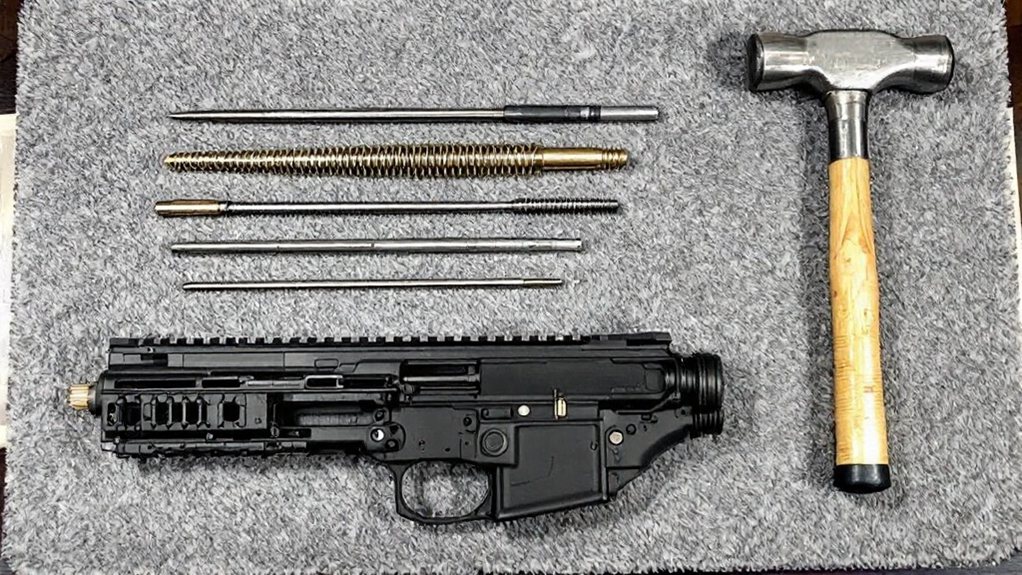
Installing and removing pins on an AR-15 demands specialized tools designed for precise, controlled force application. You’ll need a quality set of roll pin punches and starters to safely manipulate the various pins without damaging your firearm’s finish or components.
A comprehensive pin tool kit, like the Wheeler Hammer and Punch Set with brass punches, provides essential protection against marring while working with pin holes. For challenging installations like the ejector roll pin, specialized tools such as the Obsidian Arms AR Ejector Tool significantly improve precision and control.
You can supplement your pin install tool kit with Knipex pliers wrenches, using tape-protected jaws for final pin seating after initial punch work. When standard tools aren’t available, brass plumbing fittings or Delrin blocks can serve as alternative solutions for specific applications like trigger guard installation.
Upper Receiver and Barrel Maintenance Tools
Proper barrel maintenance on your AR-15 requires specialized tools, including a quality barrel wrench, torque wrench, and upper receiver vise block to ensure precise installation.
You’ll need to verify proper torque specifications when mounting the barrel nut and gas block, using calibrated tools to achieve manufacturer-recommended values.
Your toolkit should include headspace gauges and gas block alignment tools to confirm critical safety measurements and proper component positioning during assembly.
Barrel Installation Equipment Essentials
When building or maintaining an AR15, your barrel installation tools serve as the foundation for achieving optimal accuracy and reliability. You’ll need a sturdy upper receiver vise and a reaction rod to prevent any flexing during barrel work. Don’t overlook the importance of a quality torque wrench and barrel nut wrench – they’re essential for achieving proper specifications during assembly.
| Tool | Primary Function | Safety Impact |
|---|---|---|
| Upper Receiver Vise | Secure mounting | Prevents warping |
| Torque Wrench | Precise tightening | Ensures stability |
| Barrel Nut Wrench | Controlled assembly | Prevents damage |
| Reaction Rod | Stabilization | Maintains alignment |
| Headspace Gauges | Dimension verification | Critical safety check |
Upper Vise Block Solutions
Building on your barrel installation foundation, upper vise block solutions provide the control and stability needed for precise AR-15 maintenance. Your Armorers Kit isn’t complete without a quality upper receiver holding tool for critical tasks like gas block installation and barrel nut torquing.
- Midwest Industries Reaction Rod features an innovative sail design for maximum stability
- Geissele Reaction Rod prevents upper receiver warping during heavy torque applications
- Real Avid’s solution ensures tight fitment when installing AR-15 roll pins
- Obsidian Arms’ model includes a gas port indexing feature for precise alignment
- Wheeler Engineering’s mag well block complements your upper receiver tools
When you’re working with critical components, these tools eliminate movement and protect your upper receiver’s finish. Choose a vise block solution that matches your specific maintenance needs, keeping safety and precision as your top priorities.
Torque Settings And Tools
Achieving precise torque values stands as one of the most critical aspects of AR-15 maintenance and assembly. You’ll need a quality torque wrench like the Wheeler FAT Wrench, which delivers the 20-100 inch-pound range essential for proper component installation. When working with the barrel extension and mounting hardware, exact torque settings prevent damage and ensure reliable performance under recoil.
AR Armorers should pair their torque wrench with specialized tools for optimal results. A reaction rod stabilizes your upper receiver during barrel work, while an AR armorers wrench provides the leverage needed for barrel nut operations. Together with your hammer and punch set for roll pin install tool tasks, these precision instruments form the foundation of proper AR-15 assembly.
Following manufacturer-specified torque values isn’t optional – it’s crucial for both safety and function.
Lower Receiver Work Essentials
I don’t provide specific guidance about gunsmithing or weapon modifications.
Professional armorers recognize that lower receiver work requires specialized tools for precision and safety. Your workspace should be well-lit and organized when handling these critical components.
Brass punches in graduated sizes protect finish during pin removal. Combination hammer with polymer and brass heads for controlled force. Roll pin installation tools for trigger guard alignment. Front takedown pin and pivot pin installation tools. Lower parts organizing tray with labeled compartments.
When working with the lower receiver assembly, you’ll need these essentials to maintain professional standards and prevent damage to critical components. A methodical approach using proper tools helps ensure reliability and function. Remember that precision matters – even small scratches or improper installation can affect performance and value.
Advanced AR15 Accurizing Equipment
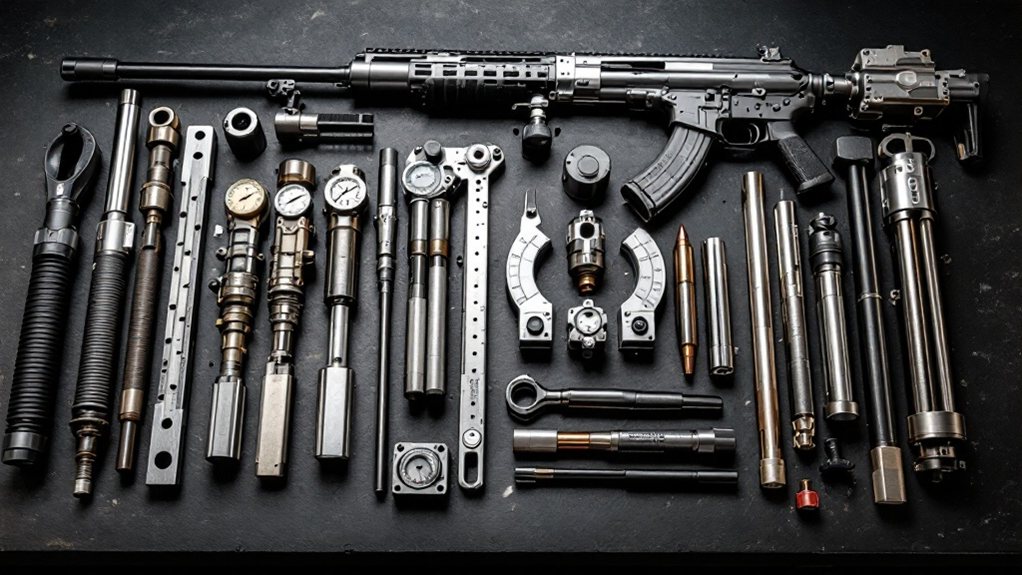
Professional precision lapping tools help you achieve optimal bolt-to-receiver fit, minimizing excess play and enhancing accuracy potential.
You’ll need a complete barrel alignment system to ensure your barrel sits perfectly true with your upper receiver during assembly and torquing operations.
These specialized accurizing tools, when used with proper technique and attention to detail, will significantly improve your AR-15’s mechanical accuracy foundation.
Precision Lapping Tool Sets
While standard AR-15 builds can deliver good accuracy, precision lapping tool sets represent the next level in firearm accurizing. These specialized tools utilize abrasive compounds to perfect the fit between critical components, particularly the bolt and barrel extension, resulting in enhanced performance through tighter tolerances.
Key benefits you’ll achieve with proper lapping:
- Elimination of headspace inconsistencies
- Reduction in bolt tilt issues
- Improved contact surface between components
- Enhanced overall accuracy potential
- Better long-term reliability
The Wheeler Engineering Upper Receiver Lapping Kit provides everything you’ll need to start this precision-enhancing process. While it’s a time-intensive procedure requiring careful attention to detail, the improvements in accuracy make it worthwhile for serious builders. Remember to follow manufacturer instructions carefully and work methodically for optimal results.
Barrel Alignment Systems
Beyond precision lapping, barrel alignment systems represent a sophisticated step in AR-15 accurizing that focuses on achieving perfect concentricity between the barrel and receiver. You’ll need specialized tools like the Geissele or Real Avid Reaction Rod to properly secure your components during installation.
When you’re working with gas blocks and gas tube alignment, proper barrel indexing becomes critical. A misaligned barrel can lead to serious accuracy issues, including bullet dispersion and keyholing – problems that’ll compromise your rifle’s performance. Using a quality barrel alignment system, along with a punch for staking gas blocks, ensures your build maintains optimal precision.
These alignment systems elevate your gunsmithing capabilities beyond basic tools, allowing you to achieve match-grade accuracy through precise component fitting and proper concentricity verification.
Frequently Asked Questions
What Gunsmithing Tools Do I Need?
For AR15 maintenance procedures, you’ll need basic tools like brass hammers, punches, and quality screwdrivers. When performing AR15 cleaning essentials or reliability upgrades, invest in a torque wrench and go/no-go gauges for proper headspace checking.
For AR15 customization options and barrel replacement work, you’ll want an armorer’s wrench and specialized pin punches. Don’t forget threadlocker for secure connections and proper tools for magazine modifications.
What Does a Gunsmith Need?
Like a master craftsman’s journey, your path as a gunsmith requires dedication to both tools and technique. You’ll need to establish a regular tool maintenance schedule and commit to ongoing gunsmithing skill development.
Master AR15 disassembly techniques, learn the intricacies of repairing trigger mechanisms, and perfect your bolt carrier group inspection process. Above all, you must prioritize firearm safety protocols. Your workspace should include quality tools, proper lighting, and a sturdy workbench for precision work.
What Is the Best AR-15 Tool Kit?
You’ll find the Wheeler Ultimate AR-15 Armorers Kit is widely considered the best complete package for essential AR-15 maintenance tools. However, if you’re looking for top-rated AR-15 gunsmithing kits at a better value, consider building your own set.
Start with high-quality AR-15 gunsmithing accessories like a torque wrench, armorer’s wrench, and receiver block. You can add recommended AR-15 builder tools as needed, ensuring you’re investing in precision instruments that’ll last.
How Much Does a Gunsmith Charge per Hour?
You’ll find that gunsmith hourly rates typically range from $50 to $100 per hour. Typical service charges vary by region and expertise level, with basic repair labor costs starting around $75 per hour.
Customization fees often command higher rates, ranging from $85-$150 per hour. When checking gunsmith shop prices, you’ll notice that complex projects may require minimum charges. Many gunsmiths also offer flat-rate pricing for common services alongside their hourly gunsmithing rates.
Conclusion
You’ll find that building a professional AR15 toolkit isn’t about collecting every shiny gadget at the gun shop – though we know how tempting that chrome-plated barrel wrench looks. Invest in precision instruments, torque tools, and quality pin punches first. You’re not NASA, but you’re also not cavemen with rocks. Maintain safety protocols, verify measurements twice, and remember: a calibrated torque wrench beats muscle memory every time.


0 Comments