

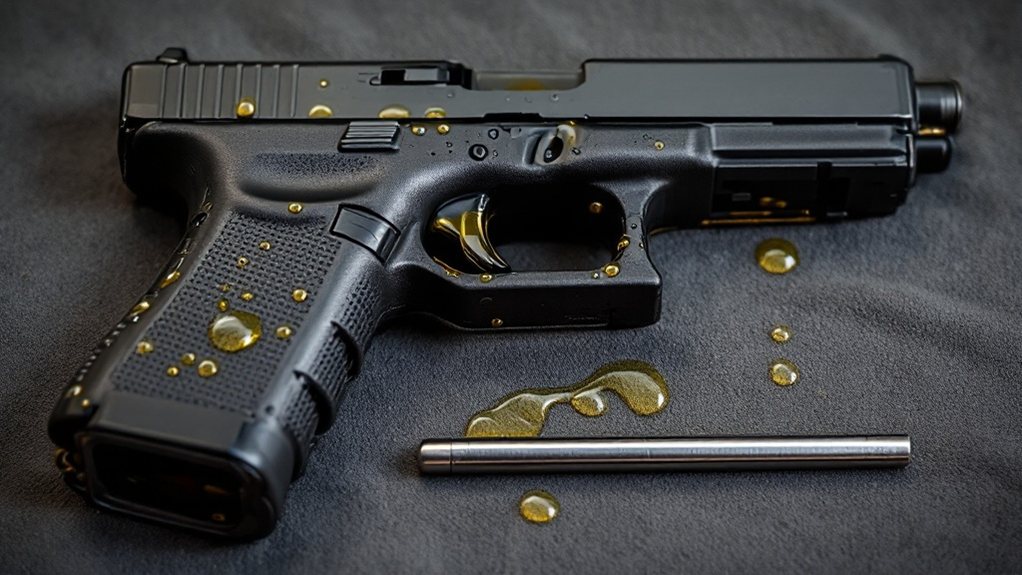
Properly lubricating your Glock requires following the proven 3-2-1 method: apply 3 drops of oil along slide rails, 2 drops on the barrel surface near trigger bar and guide rod, and 1 drop on the connector. Focus on critical contact points including breech-end rails, barrel hood, and connector-trigger bar interface. Don’t over-lubricate, as excess oil attracts debris and impairs function. Mastering these essential lubrication points will maximize your Glock’s reliability and service life.
Key Takeaways
- Apply 3 drops of oil along slide rails, focusing on breech end areas for smooth operation and reduced wear.
- Lubricate barrel hood and lug contact areas with 2 drops of oil to ensure proper barrel-to-slide fit.
- Add 1 drop of oil to connector-trigger bar interface, working it in by cycling the trigger several times.
- Use quality gun oils like Ballistol or Hoppe’s No. 9, avoiding household lubricants that can damage polymer components.
- Keep lubrication minimal but consistent, as over-oiling attracts debris while under-lubrication causes gritty operation.
Understanding Glock’s 3-2-1 Lubrication Method
The 3-2-1 lubrication method is Glock’s standardized approach to maintaining optimal pistol performance. You’ll need to apply exactly three drops of oil along the slide rails, where the most metal-to-metal contact occurs during operation.
Next, place two drops on the barrel surface, ensuring proper coverage near the trigger bar and guide rod areas.
Complete the sequence by adding one precise drop on the connector. This systematic approach prevents over-lubrication, which can attract harmful debris and compromise your pistol’s reliability. You should follow this method when your Glock is new, after each range session, and during monthly maintenance checks.
The 3-2-1 sequence ensures proper oil distribution throughout the critical moving components, maximizing your firearm’s performance and extending its service life.
Critical Slide Rail Lubrication Points
Among key maintenance steps in Glock’s 3-2-1 method, slide rail lubrication demands particular attention for optimal performance. You’ll need to apply exactly three drops of lubricant, placing one drop at the breech end of each slide rail to ensure proper distribution.
Proper lubrication of your Glock’s slide rails serves multiple critical functions. It enables smooth, consistent operation of the slide while preventing excessive wear on the metal surfaces. This careful attention to lubrication directly contributes to your Glock’s reliable cycling and long-term durability.
You’ll want to make this step a priority in your maintenance routine, as it’s essential for maintaining your Glock’s legendary reliability. Remember that inadequate lubrication can compromise performance, while following these precise specifications helps ensure your firearm functions as intended.
Barrel Hood and Lug Contact Areas
Since reliable operation depends heavily on friction reduction, proper lubrication of your Glock’s barrel hood and lug contact areas requires exactly two drops of oil. These critical interface points experience significant wear during firing cycles, making proper lubrication essential for maintaining your GLOCK pistol’s dependability. You’ll need to ensure these surfaces stay clean and properly oiled to prevent premature wear and maintain smooth operation.
- Your GLOCK’s reliability depends on these precise contact points working flawlessly
- Excessive oil attracts debris that can compromise your pistol’s function
- Clean, well-lubricated surfaces provide confidence in your firearm’s performance
- Proper maintenance of these areas helps protect your investment
Apply a light, precise coating to the barrel hood and lug contact areas, focusing on even distribution while avoiding over-application.
Connector-to-Trigger Bar Interface

Because proper trigger function relies on smooth mechanical interaction, maintaining the connector-to-trigger bar interface requires minimal but precise lubrication. The connector’s slight angle creates friction against the trigger bar, making this contact point crucial for your Glock’s performance.
When lubricating this area, you’ll want to apply just a small amount of oil to the connector-trigger bar interface. Don’t be tempted to add a large drop, as excess lubrication can attract debris and accelerate wear on plastic components. After applying the lubricant, work it into the mechanism by squeezing the trigger a few times, stopping just before the wall. This action helps distribute the oil evenly across the contact surfaces.
While maintaining your recoil spring assembly and other components is important, proper attention to this interface ensures consistently smooth trigger operation.
Common Lubrication Mistakes to Avoid
You’ll want to avoid over-oiling your Glock’s moving parts, as excess lubricant attracts debris and can impair reliable function, especially in the firing pin channel.
While applying too little oil to critical contact points like the connector-to-trigger bar interface will result in inconsistent trigger pull and accelerated wear, using the wrong type of lubricant can damage your pistol’s polymer components.
For optimal performance, use only manufacturer-recommended gun oils in moderate amounts, focusing on metal-to-metal contact surfaces while keeping polymer parts relatively dry.
Over-Oiling Moving Parts
While proper lubrication is essential for your Glock’s reliability, over-oiling can create serious performance issues. When you apply excessive lubrication, you’re inviting dirt and debris to accumulate on critical components, particularly affecting the pistol’s plastic parts.
Over-oiling the trigger mechanism can compromise your trigger’s feel and function, while too much oil in the firing pin channel may cause dangerous misfires.
- Your trigger bar and connector won’t perform better with extra oil – they’ll actually work worse
- Excess oil in the firing pin channel could leave you with a dead trigger when you need it most
- Slide rail saturation will turn your Glock into a dirt magnet
- Over-lubricated plastic components can degrade faster, compromising your firearm’s longevity
Remember: Glock designed their pistols to operate efficiently with minimal lubrication. Follow the manufacturer’s guidelines for optimal performance.
Neglecting Contact Points
Proper lubrication of critical contact points remains one of the most overlooked aspects of Glock maintenance. When you neglect these crucial areas, you’re setting yourself up for potential performance issues and accelerated wear.
Pay close attention to your firing pin channel, as insufficient lubrication here can cause binding and increased wear on this essential component. Don’t forget the extractor and its spring – proper lubrication of this assembly is vital for reliable case extraction.
Your slide rails require careful attention too, as inadequate lubrication leads to excessive friction and premature wear.
The connector-to-trigger bar interface deserves special consideration, as missing this contact point can result in a heavier trigger pull and inconsistent feel. Remember, while proper lubrication is essential, avoid over-applying oil, which can attract debris and cause reliability issues.
Wrong Oil Selection
Just as important as knowing where to apply lubricant is selecting the right type for your Glock. Using inappropriate lubricants like penetrating oil, heavy grease, or silicone-based lubricants can seriously compromise your firearm’s reliability and performance. You’ll want to avoid petroleum-based products that offer minimal corrosion protection, especially in humid conditions.
Your Glock’s polymer frame could deteriorate and swell when exposed to silicone-based products. Excessive lubrication creates a magnet for dirt and debris, leading to malfunctions. Using penetrating oils can cause internal components to wear prematurely. Heavy grease applications trap contaminants that accelerate parts degradation.
Choose only firearm-specific lubricants designed for polymer pistols. By selecting the correct oil type and applying proper amounts, you’ll maintain optimal function while protecting your investment from unnecessary wear and potential failure.
Seasonal Maintenance Requirements
Your Glock requires different lubricants based on seasonal temperature changes to maintain optimal performance.
In summer’s heat and humidity, you’ll need heavier lubricants to combat rust and corrosion, while ensuring all metal-on-metal contact points remain properly protected.
During winter months, switch to thinner lubricants to prevent stiffness and maintain reliable function in cold conditions.
Summer Heat Protection Tips
Summer’s intense heat and humidity create unique challenges for Glock maintenance that require special attention. You’ll need to increase your lubrication frequency as high temperatures and sweat can quickly break down protective oils, leaving your firearm vulnerable to galling and binding. When training or competing in hot weather, pay particular attention to metal-on-metal contact points.
- Your sweat contains corrosive salts that can damage your Glock’s finish and internal components
- Heat-induced perspiration can wash away critical lubricants during extended shooting sessions
- Summer conditions accelerate wear on moving parts if not properly maintained
- Saltwater exposure from beach carry demands immediate cleaning and re-lubrication
Inspect your Glock more frequently during summer months, especially after prolonged exposure to heat or humidity. Don’t wait for signs of binding before adding fresh lubricant to critical wear points.
Winter Storage Maintenance
When storing your Glock during winter months, proper preparation becomes crucial to prevent corrosion and maintain optimal functionality. One drop of lubricant on key metal surfaces provides essential protection, but remember that a small amount goes a long way on this platform.
Begin by completely disassembling your Glock and thoroughly cleaning each component. Apply a light coating of gun oil to all metal surfaces, ensuring you’ve removed any excess that could attract debris. The recoil spring assembly includes critical components that you’ll need to inspect and replace if worn before storage.
Store your disassembled Glock in a cool, dry environment, and check it periodically through the off-season. Many shooters use the forum to share storage tips, but the fundamentals remain consistent: clean, lubricate, and maintain proper environmental conditions.
Signs of Under and Over-Lubrication
Maintaining proper lubrication levels for your Glock is critical, as both under and over-lubrication can lead to serious performance issues. Under-lubrication causes excessive wear and potential malfunctions, while over-lubrication attracts harmful debris. You’ll need to monitor key components for optimal performance.
- You’ll feel a gritty, resistant slide operation when your rails are under-lubricated – a clear warning sign that demands immediate attention
- Your trigger will feel uncomfortably heavy or coarse when the connector lacks proper lubrication
- The slide’s movement will feel unnaturally slick and attract debris when over-lubricated
- Your recoil spring assembly might cycle inconsistently or feel sluggish, compromising reliability and accuracy
Watch for these warning signs and adjust your lubrication accordingly to maintain your Glock’s optimal performance and reliability.
Recommended Oils and Lubricants

Proper lubrication starts with selecting the right products for your Glock. You’ll want to stick with high-quality, lightweight gun oils and silicone-based lubricants specifically designed for firearms. Three Glock-approved options include Ballistol, Hoppe’s No. 9, and Lucas Gun Oil, which provide optimal protection without attracting excess debris.
When lubricating the connector-to-trigger bar interface, apply a small amount of lightweight oil or gun grease. Don’t make the mistake of reaching for WD-40 or other household lubricants – these can damage your Glock’s materials over time. Heavy-duty, viscous oils and greases are also off-limits, as they’ll collect dirt and potentially interfere with your firearm’s operation. Always prioritize manufacturer-recommended products to maintain your Glock’s reliability and longevity.
Field Testing After Lubrication
Once you’ve completed the lubrication process, it’s essential to field test your Glock to ensure proper function. Run several magazines through your firearm to work the lubricant into the action properly.
During operation, pay close attention to the trigger pull and listen for any unusual sounds that might indicate problems. If you notice any issues, you’ll need to repeat the lubrication process and test again before returning the firearm to service.
- Your Glock’s reliable performance could mean the difference between life and death in a critical situation
- Proper lubrication ensures smooth operation when you need it most
- Field testing builds confidence in your firearm’s functionality
- Regular maintenance habits demonstrate responsible firearm ownership
Monitor for consistent performance and any residue buildup during your field test session. This verification step confirms your lubrication work was successful.
Frequently Asked Questions
What Parts of a Glock Need Lubrication?
You’ll need to properly lubricate three main areas of your Glock for optimal performance. Apply one drop of oil to each slide assembly rail, two drops to the barrel lugs and muzzle area, and one drop to the trigger mechanism where the connector meets the trigger bar.
Don’t over-lubricate, as excess oil can attract debris. Keep the magazine well clean and dry, as it doesn’t require lubrication.
What Every Glock Owner Needs?
You’ll need more than just a positive mindset to be a responsible Glock owner. Essential items include a quality cleaning kit, appropriate lubricant, and knowledge of best lubrication practices.
You should maintain a regular cleaning schedule and understand proper cleaning intervals. Don’t forget safety equipment like eye protection and a maintenance mat.
Most importantly, you’ll need thorough training in firearm safety, handling, and the importance of maintenance to ensure reliable operation.
Should I Oil the Inside of My Glock Barrel?
No, you shouldn’t oil the inside of your Glock barrel. The barrel’s interior is designed with corrosion-resistant steel that doesn’t require lubrication.
Instead, focus on proper lubrication of the firing mechanism and applying lubrication to the recoil spring, slide rails, and barrel lugs. Adding oil inside the barrel can actually collect debris and potentially affect accuracy.
Keep the barrel’s exterior clean with minimal oil, but leave the interior dry.
Can You Over Lubricate a Glock?
Yes, you can over-lubricate a Glock – in fact, nearly 40% of reliability issues stem from excess lubrication considerations.
When you apply too much oil, it’ll attract debris and can harden into a problematic residue. Improper lubrication consequences include accelerated wear on plastic components and potential malfunctions.
Stick to Glock’s appropriate lubrication techniques: just 6 drops total in a 3-2-1 pattern (3 on slide, 2 on barrel, 1 on connector).
Conclusion
Proper lubrication maintenance of your defensive tool isn’t just about function – it’s about reliability when you need it most. You’ll want to follow the 3-2-1 method precisely while being mindful not to over-apply your chosen protectant. Always conduct function testing after servicing and verify smooth operation of all control surfaces. Regular attention to these critical care points ensures your equipment remains in optimal working order under any conditions.


0 Comments