


For ultrasonic gun cleaning, you’ll get optimal results with either commercial or DIY solutions. Brownells’ specialized formula and L&R’s professional concentrate excel for thorough cleaning, while 50/50 mixtures of Simple Green or Purple Power with water offer budget-friendly alternatives. Choose water-based solutions for routine maintenance and polymer parts, or solvent-based options for enhanced corrosion protection. Always verify chemical compatibility with your firearm’s materials before use. The key differences between solution types will determine your cleaning success.
Key Takeaways
- Brownells’ specialized ultrasonic solution offers versatile cleaning for all firearm materials while protecting sensitive surfaces and components.
- Simple Green mixed 50/50 with water provides an economical yet effective cleaning solution for removing carbon and powder residues.
- L&R’s professional-grade concentrate delivers superior results for deep cleaning and includes a two-step system for cleaning and lubrication.
- Dawn dishsoap mixture works well for basic maintenance and is particularly safe for polymer frames and plastic components.
- Purple Power’s 50/50 solution effectively removes stubborn carbon and lead deposits while remaining budget-friendly for regular use.
Understanding Ultrasonic Gun Cleaning Chemistry
While traditional gun cleaning methods rely on manual scrubbing, ultrasonic cleaning harnesses specialized chemical solutions that work in harmony with sound waves to deep-clean firearms.
The process involves two distinct types of cleaning solutions: water-based solutions for initial cleaning and petroleum-based solutions for rinsing. You’ll find that water-based solutions are specifically engineered to dissolve carbon, lead, and powder residues through carefully balanced pH levels and surfactants. These solutions create optimal cavitation – the formation and collapse of microscopic bubbles that dislodge contaminants from hard-to-reach areas.
To achieve maximum effectiveness, you’ll need to understand how cleaning solution chemistry affects performance. The combination of chelating agents and surfactants in ultrasonic cleaning solutions ensures thorough contamination removal while protecting your firearm’s finish and components.
Top Commercial Cleaning Solutions and Their Properties
You’ll find several proven ultrasonic cleaning solutions in today’s market, from Brownells’ specialized formula to L&R’s professional-grade concentrate. For budget-conscious options, you can achieve effective results with either a 50/50 mix of Simple Green and water or a combination of Dawn dishsoap and water.
When selecting your solution, you’ll need to consider factors like the level of carbon buildup, types of metals being cleaned, and whether you’re working with precision parts that require specific formulations.
Popular Solution Brands
Several trusted brands stand out in the ultrasonic gun cleaning solution market, each offering distinct advantages for different cleaning needs. When selecting a cleaner solution for your ultrasonic gun cleaners, you’ll find Brownells water-soluble formula excels at safely cleaning aluminum and polymer components.
Simple Green, diluted 50/50 with water, provides an economical yet effective option for routine maintenance.
For those seeking specialized solutions, L&R’s purpose-built gun cleaning formula delivers exceptional results. If you’re working with a tighter budget, Purple Power’s 50/50 mixture effectively tackles carbon and lead deposits. Dawn dishsoap mixed with water serves as a basic but capable alternative for general cleaning tasks. Each of these solutions offers unique benefits, allowing you to choose based on your specific cleaning requirements and firearm materials.
Effectiveness By Solution Type
Each commercial ultrasonic cleaning solution brings distinct properties that set it apart for specific gun cleaning tasks. You’ll find Brownells solution particularly effective for its versatility, safely cleaning both aluminum and plastic parts without damage. For budget-conscious options, a 50/50 mix of Simple Green or Purple Power with water delivers reliable results in your ultrasonic cleaner.
| Solution Type | Best For |
|---|---|
| Brownells | All-purpose, sensitive parts |
| Simple Green Mix | Heavy carbon buildup |
| L&R Specialized | Professional-grade cleaning |
When choosing your ultrasonic cleaning solution, consider the specific materials you’re working with. L&R’s specialized formula excels in ultrasonic machines, while Dawn’s gentle approach works well for basic maintenance. Each solution offers unique advantages, from Purple Power’s aggressive cleaning action to Simple Green’s eco-friendly formula, ensuring you’ll find the right match for your firearms’ needs.
Specialized Application Methods
While professional cleaning solutions vary in composition, leading manufacturers have developed specialized formulations that maximize ultrasonic cleaning effectiveness. When using L&R’s two-step process, make sure to first apply their water-based Safety Ultrasonic Weapon Cleaning Solution, followed by their lubricating solution for optimal results.
For Cleaner Concentrate options, you’ll find Brownells’ water-soluble solution specifically engineered for ultrasonic Cleaning Systems. When working with budget-friendly alternatives, mix Simple Green or Purple Power in a 50/50 ratio with water. If you’re cleaning sensitive finishes, Dawn dishsoap mixed with water provides gentle yet effective cleaning action. Always follow manufacturer-recommended dilution ratios and cleaning times to protect your firearms while achieving maximum cleaning efficiency.
Water-Based vs. Solvent-Based Solutions Compared
The fundamental difference between water-based and solvent-based ultrasonic cleaning solutions presents firearm owners with an important choice for their maintenance routine. Water-based options like Brownells gun cleaning solution offer easy rinsing and cost-effective alternatives, including Simple Green or Dawn dishsoap mixtures.
However, you’ll need to be vigilant about thoroughly drying components to prevent rust.
Solvent-based solutions like C&S Dunkit provide added protection through their oil coating residue, making them ideal if you’re concerned about corrosion. While they require less drying time, they’re typically more expensive than water-based alternatives. Your choice should depend on your specific cleaning requirements and risk tolerance for water exposure.
Consider mixing methods by using water-based solutions for initial cleaning, followed by a solvent-based solution for final protection.
Specialized Solutions for Different Firearm Materials
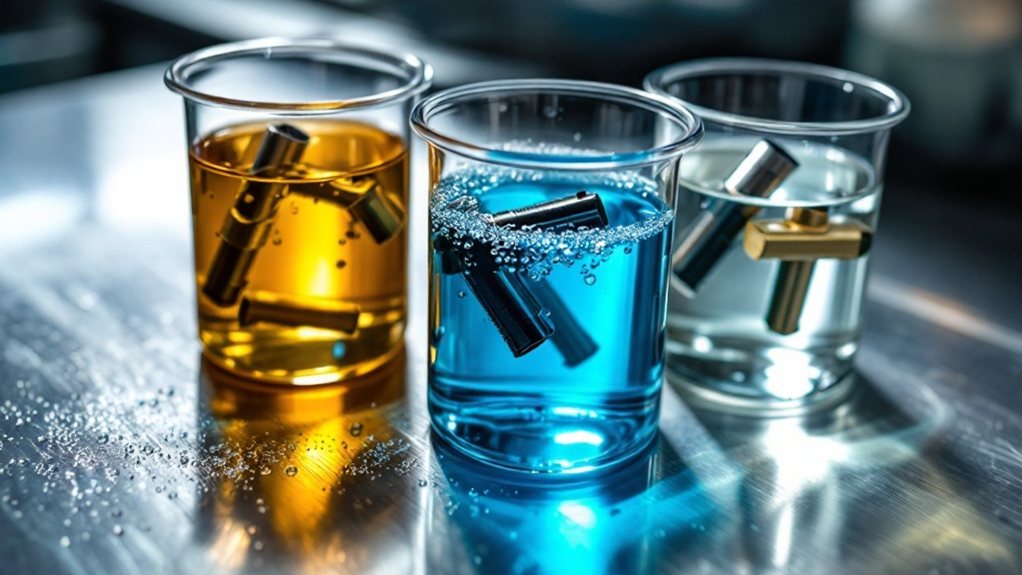
Different firearm materials demand specific ultrasonic cleaning solutions to maintain their integrity and finish. When using an ultrasonic gun cleaning machine, you’ll need to match your solution to your firearm’s composition. Water-based solutions like Brownells and Simple Green mixtures are safe for aluminum, polymer, and plastic components, while providing effective cleaning power.
For thorough cleaning of various materials, consider these specialized approaches:
- Use a 50/50 mix of Dawn dishsoap and water for polymer frames and plastic components
- Apply L&R’s two-step system for metal parts requiring both cleaning and lubrication
- Select oil-based solutions like C&S Dunkit for steel components needing corrosion protection
Your ultrasonic gun cleaner’s effectiveness depends on choosing the right solution for each material. Always verify material compatibility before cleaning guns to prevent damage to sensitive surfaces or finishes.
Safety Considerations When Choosing Cleaning Solutions
Before selecting an ultrasonic cleaning solution, you’ll need chemical-resistant gloves, safety goggles, and proper ventilation to protect yourself from harmful vapors and splashes.
You must verify your chosen solution’s compatibility with aluminum, polymers, and specialty finishes by checking the manufacturer’s specifications and material safety data sheets.
To ensure safe operation, you’ll want to test the solution on a small, inconspicuous area first and maintain proper dilution ratios as specified by the manufacturer.
Protective Equipment Requirements
Safety protection must be your top priority when working with ultrasonic gun cleaning solutions. You’ll need proper protective equipment to prevent exposure to potentially harmful chemicals and fumes. Always work in a well-ventilated area to ensure adequate airflow and prevent the accumulation of vapors that could affect your health.
Essential protective equipment requirements:
- Chemical-resistant gloves to protect your hands from direct contact with cleaning solutions and prevent skin irritation
- Safety goggles to shield your eyes from splashes during solution handling and parts transfer
- Face mask or respirator when working with strong solutions in enclosed spaces to prevent inhalation
Proper equipment not only protects you from immediate hazards but also helps prevent long-term exposure risks. Remember to inspect your protective gear regularly for signs of wear or damage to maintain optimal protection against corrosion-causing chemicals.
Chemical Compatibility Checks
Understanding chemical compatibility remains crucial when selecting ultrasonic gun cleaning solutions. You’ll need to verify that your chosen solution won’t react adversely with your gun’s materials, including metals, polymers, and protective finishes.
Before using any cleaning solution, check the manufacturer’s specifications for chemical compatibility with aluminum, steel, brass, and synthetic components. You’ll want to ensure the solution won’t corrode metal surfaces or degrade plastic parts. Perform chemical compatibility checks by testing the solution on a small, inconspicuous area first. If you notice any discoloration, pitting, or material breakdown, switch to a different cleaner.
Don’t mix different cleaning solutions without confirming their compatibility, as this could create harmful chemical reactions that damage your gun or release dangerous fumes.
Proper Solution Mixing and Dilution Ratios
Mixing your ultrasonic gun cleaning solution at the correct ratio is crucial for both cleaning effectiveness and preventing damage to your firearms. Following manufacturer-specified dilution ratios ensures optimal performance while protecting sensitive materials like aluminum and polymer components.
- Mix Simple Green with water in a 50/50 ratio for a safe, effective cleaning solution that won’t harm your firearms
- Create a budget-friendly option by diluting Purple Power with water at a 50/50 ratio
- Follow L&R’s two-step process using their Ultrasonic Weapon Cleaning Solution followed by their lubricating solution for comprehensive care
Never use undiluted solutions, as they can potentially damage your firearms. When working with any commercial cleaning solution, carefully measure your ratios and avoid high concentrations that could compromise your weapon’s integrity. This systematic approach to solution mixing will maximize cleaning effectiveness while maintaining safety.
Maintaining Solution Effectiveness Over Multiple Uses
To maximize your ultrasonic cleaning solution’s lifespan, you’ll need to implement regular filtration methods to remove suspended debris and contaminants.
You can maintain optimal chemical potency by monitoring the solution’s pH levels and adding small amounts of fresh cleaner when effectiveness diminishes.
For best results, combine these maintenance steps with a systematic schedule of complete solution replacement when the liquid becomes visibly discolored or cloudy.
Solution Filtration Methods
While ultrasonic cleaning solutions can effectively remove debris from firearms, proper filtration methods are essential for maintaining the solution’s performance across multiple cleaning sessions. Using a fine mesh filter system will trap particulates and prevent them from recirculating, extending your cleaning solution’s lifespan and effectiveness. You’ll need to regularly monitor the solution’s condition and implement a systematic filtration approach.
Install a fine mesh filter in your ultrasonic cleaner to capture suspended particles between cleaning cycles. Consider investing in a solution recycler or distillation system for heavy-use applications. Replace or replenish the cleaning solution when you notice reduced performance, regardless of filtration methods.
For optimal results, combine proper filtration with regular solution maintenance. This approach not only improves cleaning effectiveness but also reduces your long-term operational costs through extended solution life.
Extending Chemical Potency
Maintaining an ultrasonic cleaning solution’s chemical potency requires systematic monitoring and precise management of key variables. You’ll need to implement regular cleaning protocols to ensure optimal performance, especially when dealing with powder residue and carbon build-up.
| Parameter | Action Required | Frequency |
|---|---|---|
| Filtration | Remove debris | After each use |
| pH Level | Buffer adjustment | Weekly |
| Concentration | Chemical top-off | As needed |
| Contamination | Visual inspection | Daily |
| Solution Life | Complete replacement | Monthly |
Monitor your solution’s effectiveness by checking the pH levels regularly and maintaining proper chemical concentrations. When you notice reduced cleaning performance or excessive contamination, filter the solution to remove particulates. You’ll maximize the solution’s lifespan by avoiding chemical mixing and following proper disposal procedures once the solution becomes too degraded for effective cleaning.
Chemical Compatibility With Firearm Finishes
Since chemical compatibility plays a critical role in preserving your firearm’s appearance and value, choosing the right ultrasonic cleaning solution requires careful consideration of different surface finishes.
Water-based solutions like Simple Green and Dawn work safely with most materials, including Stainless Steel components, when mixed with tap water. However, you’ll want to avoid harsh chemicals that can damage specialized finishes.
- Never use acidic or alkaline solutions that could strip bluing, anodizing, or plating from your firearm’s surface
- Test new cleaning solutions on a small, hidden area before full immersion in ultrasonic cleaners
- Apply oil-based solutions after cleaning for superior corrosion protection
Remember to thoroughly dry all components after cleaning to prevent residual moisture from causing long-term damage. This systematic approach ensures your firearm’s finish remains intact while achieving optimal cleaning results.
Professional-Grade Solutions Vs DIY Alternatives
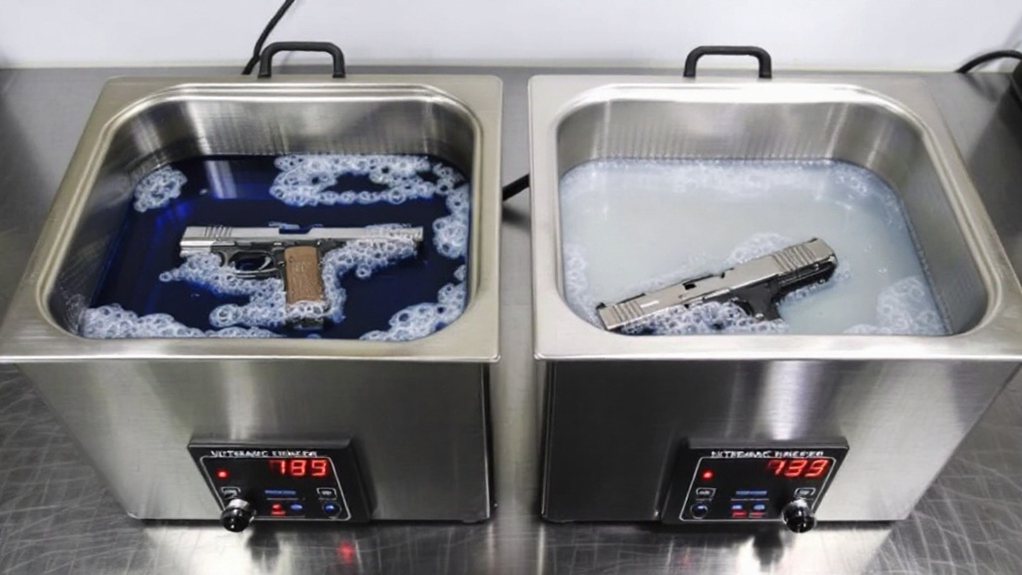
Today’s gun owners face a clear choice between professional-grade ultrasonic cleaning solutions and DIY alternatives for their firearms maintenance.
Professional-grade products like L&R Ultrasonics deliver specialized formulations that effectively remove carbon, lead, and powder residue. These solutions offer consistent, reliable results without the need for experimentation.
In contrast, DIY options such as Simple Green or Dawn mixtures can be cost-effective but require careful testing to determine optimal concentrations.
You’ll need to consider the trade-offs carefully. While water-based DIY solutions can clean effectively, they pose a rust risk if parts aren’t dried thoroughly. Oil-based cleaners provide protective benefits but may be harder to remove completely.
For maximum safety and reliability, specialty solutions containing EDTA and targeted detergents, like RCBS products, offer a middle ground between professional-grade and DIY approaches.
Storage and Disposal of Ultrasonic Cleaning Solutions
Proper storage and disposal protocols for ultrasonic cleaning solutions are critical for both safety and environmental protection. When working with parts cleaner solutions for cleaning and lubricating firearms, you’ll need to store them in sealed, clearly labeled containers away from potential ignition sources. Never mix different solutions or store them near compressed air systems.
Follow these essential steps for safe handling:
- Store solutions in their original containers at room temperature, away from direct sunlight and heat sources
- Change solutions regularly according to manufacturer specifications to maintain optimal cleaning effectiveness
- Contact a licensed waste disposal service for proper disposal of spent solutions containing heavy metals
Frequently Asked Questions
What Is the Best Solution to Use in an Ultrasonic Cleaner for Guns?
For the best ultrasonic cleaning solutions, you’ll want to start with Brownells’ water-soluble formulas at their optimal detergent concentrations.
You can also use a 50/50 mixture of Simple Green and water, which provides excellent results while being cost-effective.
When considering proper chemical dilution ratios, don’t overlook a basic Dawn dishsoap solution – it’s safe and effective.
Remember to always test your solution on a small area first to ensure compatibility.
What Is the Best Cleaner to Use in Ultrasonic Cleaner for Carburetors?
For effective carburetor cleaning process, you’ll get excellent results using a 50/50 mix of water and Simple Green or Dawn dishsoap in your ultrasonic cleaner.
For tougher jobs, commercial carburetor ultrasonic solutions from Berryman or CRC work exceptionally well on stubborn carbon deposits.
Avoid harsh acids that can damage components, and always dry parts thoroughly with compressed air before reassembly to prevent corrosion.
What Is the Best Home Solution for Ultrasonic Cleaners?
For homemade ultrasonic solutions, you’ll find great results with a 50/50 mixture of Simple Green and water. This DIY ultrasonic cleaner mixture is both cost-effective and efficient.
If you prefer natural ultrasonic cleaning agents, try mixing Dawn dish soap with water for excellent cleaning power. You can also create an effective solution using a 50/50 mix of Purple Power and water.
Always ensure proper ventilation and wear gloves when mixing these solutions.
What Should You Never Put in an Ultrasonic Cleaner?
Picture the potential damage as intense sound waves pulse through your cleaner. You should never put flammable liquids or reactive chemicals in your ultrasonic cleaner, as they can create dangerous situations.
Sharp metal objects are also off-limits since they can damage the tank. Additionally, avoid aluminum parts, items with decorative coatings, electrical components, delicate gemstones like pearls, and anything with adhesives – they’ll all be damaged by the powerful ultrasonic vibrations.
Conclusion
Choosing the right ultrasonic cleaning solution isn’t just about cleanliness – it’s about preserving your firearm’s integrity and ensuring safe operation. As the old saying goes, “An ounce of prevention is worth a pound of cure.” You’ll get optimal results by matching solution chemistry to your firearm’s materials, following safety protocols, and maintaining proper solution concentrations. Don’t compromise on quality – your firearm’s longevity depends on it.


0 Comments